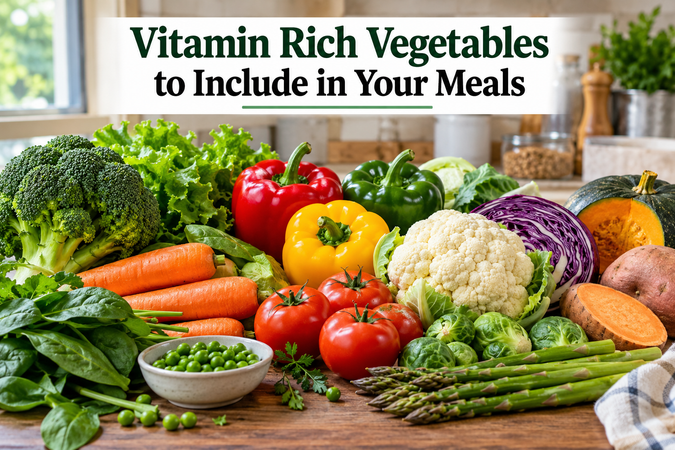
Eating a healthy diet does not have to be complicated. One of the simplest ways to improve everyday nutrition is to include a variety of vitamin rich vegetables in your meals. Vegetables provide important vitamins, minerals, fiber, water, and natural plant compounds that support the body in many ways. They can add color, flavor, texture, and freshness to food while helping you create more balanced meals.
When I think about healthy eating, I prefer to focus on simple foods that can easily become part of daily life. Vegetables are a perfect example. You do not need expensive ingredients or complicated recipes. Many common vegetables found in grocery stores and local markets provide impressive nutritional value.
The best approach is to eat different types of vegetables rather than depending on only one or two favorites. Different vegetables provide different vitamins. By adding several colors and varieties to your meals throughout the week, you can naturally increase the range of nutrients in your diet.
Why Vitamin Rich Vegetables Are Important
Vitamins are nutrients that the body needs in relatively small amounts, but they play important roles in normal body functions. Vegetables are particularly valuable because they can provide vitamins such as vitamin A, vitamin C, vitamin K, folate, and several B vitamins.
They also contain dietary fiber, which supports normal digestion and helps make meals more satisfying. Many vegetables contain a high percentage of water, making them a fresh and useful addition to a balanced eating pattern.
Instead of thinking about vegetables as a side dish that you have to eat, it can be helpful to see them as ingredients that improve an entire meal. Vegetables can be added to soups, curries, rice dishes, salads, sandwiches, pasta, eggs, and many other foods.
Spinach
Spinach is one of the most useful vitamin rich vegetables to include in everyday meals. Its deep green leaves contain nutrients such as vitamin A, vitamin K, vitamin C, and folate.
Spinach is also extremely versatile. Fresh spinach can be added to salads and sandwiches, while cooked spinach works well with eggs, lentils, potatoes, pasta, and traditional vegetable dishes.
One of the easiest ways to eat more spinach is to add a handful to foods you already prepare. It cooks quickly and becomes much smaller after heating, so a generous amount can easily fit into a meal.
Spinach also pairs well with tomatoes, garlic, onions, beans, and chickpeas. These combinations can create simple meals that are both flavorful and nutritious.
Carrots
Carrots are well known for their bright orange color, which comes mainly from natural plant pigments called carotenoids. The body can convert some carotenoids, including beta carotene, into vitamin A.
Vitamin A contributes to normal vision and supports normal immune function. Carrots are also a source of fiber and can be enjoyed raw or cooked.
Raw carrot sticks make a simple snack. Grated carrots can be mixed into salads, wraps, and sandwiches. Cooked carrots can be added to soups, stews, rice dishes, and roasted vegetable trays.
Carrots have a naturally mild sweetness, which makes them appealing to both adults and children. Because they are widely available and usually easy to store, they can be a practical vegetable to keep at home.
Broccoli
Broccoli is another excellent vegetable for anyone trying to increase the vitamin content of everyday meals. It provides vitamin C, vitamin K, folate, fiber, and several other nutrients.
The green florets can be steamed, roasted, lightly boiled, or stir fried. The stems can also be eaten. Instead of throwing them away, peel the tougher outer layer and slice the tender center into thin pieces.
Broccoli can be combined with chicken, rice, pasta, eggs, beans, potatoes, and other vegetables. A small amount of seasoning, garlic, lemon juice, or herbs can make it more flavorful without requiring a complicated recipe.
Avoid cooking broccoli until it becomes extremely soft. Light cooking usually gives it a more pleasant texture and helps preserve its fresh character.
Bell Peppers
Bell peppers are colorful vegetables that can make meals more attractive while providing useful nutrients. Red, yellow, orange, and green peppers all contain vitamins and natural plant compounds.
Red bell peppers are particularly known for their vitamin C content. Vitamin C supports normal immune function and helps the body absorb iron from plant foods.
Bell peppers are also easy to use. Slice them into salads, add them to sandwiches, mix them into scrambled eggs, or cook them with onions and other vegetables.
They can also be stuffed with rice, beans, vegetables, or other fillings. Their crisp texture and slightly sweet flavor make them a useful choice for people who do not enjoy stronger tasting vegetables.
Sweet Potatoes
Sweet potatoes are nutritious root vegetables that can provide beta carotene, especially the orange varieties. They also contain fiber and other important nutrients.
They can be baked, boiled, roasted, or mashed. Sweet potatoes work well as a side dish, but they can also become the main ingredient in soups, vegetable bowls, or mixed dishes.
One simple meal idea is to roast cubes of sweet potato with onions, bell peppers, and a small amount of seasoning. Another option is to serve baked sweet potato with beans and fresh vegetables.
Their naturally sweet flavor means they usually require very little extra seasoning.
Tomatoes
Tomatoes are commonly used in cooking, but they also deserve a place among nutrient rich vegetables in everyday meals. Botanically, tomatoes are fruits, although they are usually treated as vegetables in the kitchen.
Tomatoes provide vitamin C and other nutrients, along with natural plant compounds such as lycopene.
Fresh tomatoes can be added to salads, sandwiches, wraps, and vegetable bowls. Cooked tomatoes form the base of countless sauces, soups, curries, and stews.
Because tomatoes work with so many different foods, they are one of the easiest ingredients to include regularly.
Kale
Kale is a dark leafy green vegetable that contains vitamin A, vitamin C, vitamin K, and other nutrients. Its strong texture makes it slightly different from softer leafy vegetables such as spinach.
Kale can be chopped and added to soups, stews, pasta, and mixed vegetable dishes. It can also be used in salads, although massaging the leaves gently with a dressing can help soften their texture.
People who are new to kale may prefer combining it with familiar ingredients rather than eating a large bowl of it on its own.
For example, a small amount of chopped kale can easily be mixed with potatoes, beans, eggs, or other vegetables.
Green Peas
Green peas are small, but they provide a useful combination of vitamins, fiber, carbohydrates, and plant protein.
They contain nutrients including vitamin C, vitamin K, folate, and several B vitamins.
Peas are especially convenient because frozen peas can be kept for long periods and cooked quickly. They can be added directly to soups, rice, pasta, curries, and mixed vegetable dishes.
Their slightly sweet flavor also makes them a vegetable that many children enjoy.
Keeping frozen peas at home can be helpful on busy days when fresh vegetables are not available.

Brussels Sprouts
Brussels sprouts belong to the same vegetable family as broccoli and cabbage. They provide vitamin C, vitamin K, fiber, and other plant nutrients.
Roasting is one of the easiest ways to prepare them. Cut the sprouts in half, add a small amount of oil and seasoning, and cook them until tender.
Brussels sprouts can also be steamed or lightly sautéed.
Their flavor becomes more enjoyable when they are cooked properly. Overcooking can create a stronger smell and softer texture, so moderate cooking is usually better.
Cauliflower
Cauliflower is a versatile vegetable that contains vitamin C, folate, fiber, and other nutrients.
It has a mild flavor, which allows it to work well in many different meals. Cauliflower can be roasted, steamed, boiled, mashed, or added to curries and soups.
It can also be chopped into small pieces and mixed with rice or other grains.
One of the advantages of cauliflower is that it absorbs seasonings well. Garlic, herbs, pepper, cumin, and many other spices can completely change its flavor.
This makes cauliflower useful for people who enjoy variety in their meals.
Cabbage
Cabbage is an affordable vegetable that deserves more attention in a healthy diet. Different varieties include green cabbage, red cabbage, and Savoy cabbage.
Cabbage provides vitamin C, vitamin K, fiber, and other nutrients.
It can be eaten raw in salads and slaws or cooked in soups, stir fries, curries, and mixed vegetable dishes.
Thinly sliced cabbage cooks quickly and pairs well with carrots, onions, peas, and potatoes.
Because a whole cabbage can last longer than some leafy vegetables when stored properly, it can also be a practical option for households trying to reduce food waste.
Asparagus
Asparagus provides folate along with vitamins such as vitamin K and other nutrients.
It has a distinctive flavor and works particularly well when roasted, grilled, steamed, or lightly sautéed.
Fresh asparagus does not need complicated preparation. Trim the firm ends, cook the tender spears until just soft, and season according to your preference.
Asparagus can be served with eggs, rice, fish, chicken, pasta, or other vegetables.
Pumpkin
Pumpkin is another colorful vegetable that can provide carotenoids that the body can use to make vitamin A.
It can be used in soups, curries, roasted vegetable dishes, and mashed preparations. Its soft texture and mild sweetness make it suitable for many meals.
Pumpkin can also be combined with lentils and other vegetables to make filling home cooked dishes.
Different varieties may have slightly different flavors, but most can be prepared in similar ways.
How to Add More Vitamin Rich Vegetables to Daily Meals
Eating more vegetables becomes easier when you stop treating them as a separate task. Instead, add them to meals you already enjoy.
For breakfast, you might add spinach, tomatoes, onions, mushrooms, or bell peppers to eggs.
For lunch, add lettuce, tomatoes, cucumbers, carrots, cabbage, or peppers to sandwiches and wraps.
At dinner, include vegetables in soups, curries, pasta dishes, rice dishes, or roasted trays.
You can also prepare several vegetables at once and store them in the refrigerator for upcoming meals. Having washed and chopped vegetables ready can make healthy choices more convenient during busy days.
Choose Different Colors
One simple way to increase variety is to choose vegetables of different colors.
Dark green vegetables include spinach, kale, and broccoli. Orange vegetables include carrots, pumpkin, and sweet potatoes. Red vegetables include tomatoes and red bell peppers. Purple vegetables may include red cabbage and some varieties of eggplant.
These colors come from different natural plant compounds. Eating a colorful variety helps make meals visually appealing while providing a broader range of nutrients.
There is no need to include every color in every meal. The goal is simply to create variety over the course of several days.
Fresh and Frozen Vegetables Can Both Be Useful
Fresh vegetables are excellent, but frozen vegetables can also be extremely convenient.
Frozen peas, spinach, broccoli, cauliflower, carrots, and mixed vegetables can make meal preparation easier when you have limited time.
The best choice is often the one that helps you consistently include vegetables in your meals.
When buying packaged vegetables, check the ingredients if sauces or seasonings have already been added. Plain vegetables give you greater control over how you prepare your food.
Cook Vegetables in Simple Ways
Healthy vegetable meals do not require complicated cooking methods.
Steaming, roasting, baking, grilling, boiling, and sautéing can all be used depending on the vegetable.
Try not to cook every vegetable for too long. Overcooking can affect texture, flavor, and some heat sensitive nutrients.
Lightly cooked vegetables often keep more of their natural color and pleasant texture.
At the same time, raw vegetables are not automatically better than cooked vegetables. Some vegetables become easier to eat and digest after cooking, and certain plant compounds may become more available.
A combination of raw and cooked vegetables can provide useful variety.
Build Meals Around Vegetables
Another useful strategy is to increase the proportion of vegetables in meals you already eat.
If you are preparing pasta, add spinach, tomatoes, broccoli, or peppers.
If you are cooking rice, add peas, carrots, cauliflower, or bell peppers.
If you are making soup, include cabbage, carrots, tomatoes, spinach, peas, or potatoes.
If you are preparing eggs, add tomatoes, spinach, onions, mushrooms, or peppers.
Small additions can gradually make a noticeable difference in the variety of your diet.
Do Not Depend on a Single Vegetable
It is easy to find one healthy vegetable and eat it repeatedly, but variety is more useful.
Spinach may provide certain nutrients in good amounts, while carrots provide others. Broccoli, peppers, tomatoes, cabbage, peas, and sweet potatoes each have their own nutritional strengths.
Instead of searching for one perfect vegetable, aim for a collection of vegetables that you genuinely enjoy.
A healthy diet works best when it is realistic enough to follow regularly.
Final Thoughts
Vitamin rich vegetables are an important part of balanced everyday eating. Spinach, carrots, broccoli, bell peppers, sweet potatoes, tomatoes, kale, peas, Brussels sprouts, cauliflower, cabbage, asparagus, and pumpkin are all useful choices that can bring different vitamins and nutrients to your meals.
You do not need to completely change your diet overnight. Start by adding one extra vegetable to meals you already enjoy. Keep different colors at home, experiment with simple cooking methods, and gradually increase the variety you eat.
Healthy eating is often more sustainable when it remains simple. A colorful plate filled with familiar vegetables can provide valuable nutrients while making everyday meals more enjoyable.
By regularly choosing a wide range of vitamin rich vegetables, you can build a balanced eating pattern based on wholesome foods, practical habits, and enjoyable home cooked meals.