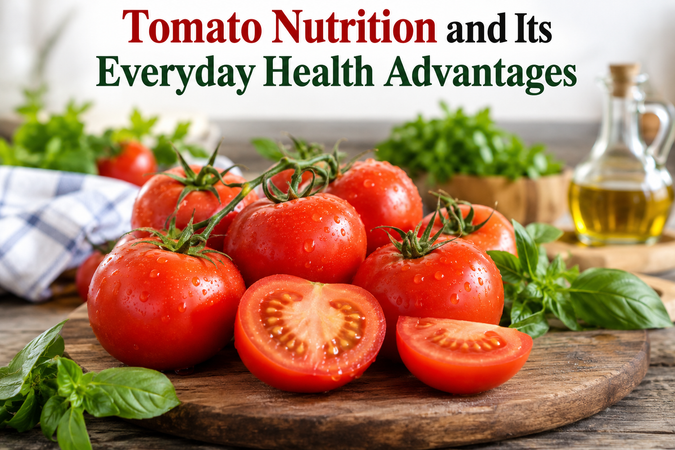
Tomatoes are among the most familiar foods in kitchens around the world. They are used in salads, soups, sauces, curries, sandwiches, and many other everyday meals. Their fresh flavor, attractive red color, and easy availability make them a popular choice for people of all ages. However, tomatoes are valuable for much more than taste. They contain important vitamins, minerals, antioxidants, water, and other natural plant compounds that can contribute to a healthy and balanced diet.
Understanding tomato nutrition can help us appreciate why this simple food deserves a regular place in our meals. Tomatoes are naturally low in calories and contain nutrients that support the heart, skin, eyes, digestion, hydration, and general wellness. They are also easy to combine with many other healthy foods.
Nutritional Value of Tomatoes
Tomatoes contain a useful combination of nutrients while remaining relatively light in calories. A fresh tomato is made mostly of water, which helps make it refreshing and hydrating. It also provides carbohydrates, a small amount of protein, dietary fiber, vitamins, minerals, and antioxidants.
One of the most important nutrients found in tomatoes is vitamin C. This vitamin supports normal immune function and helps protect body cells from oxidative stress. Tomatoes also contain vitamin A related compounds that contribute to normal vision and skin health.
Another valuable nutrient found in tomatoes is potassium. Potassium plays an important role in normal muscle function, fluid balance, nerve activity, and healthy blood pressure.
Tomatoes also provide folate, vitamin K, and several plant compounds. While they may not supply extremely large amounts of every nutrient, they can make a meaningful contribution when eaten regularly as part of a varied diet.
Tomatoes Are Rich in Lycopene
One of the most widely discussed benefits of tomato nutrition comes from lycopene. Lycopene is a natural antioxidant pigment responsible for much of the red color found in ripe tomatoes.
Antioxidants help protect cells against damage caused by unstable molecules known as free radicals. The body naturally produces free radicals during normal processes, but lifestyle and environmental factors may increase oxidative stress.
Including antioxidant rich foods such as tomatoes in a balanced diet can help provide the body with protective plant compounds.
An interesting feature of lycopene is that cooking tomatoes can make it easier for the body to absorb in some circumstances. Tomato sauce, cooked tomatoes, and tomato paste can therefore also be useful sources of lycopene.
Eating cooked tomatoes with a small amount of healthy fat, such as olive oil, may further improve the absorption of this fat soluble plant compound.
Tomatoes Support Heart Health
Heart health depends greatly on overall eating habits. A diet rich in fruits, vegetables, whole grains, legumes, nuts, and healthy fats is generally considered supportive of cardiovascular wellness.
Tomatoes fit easily into this type of eating pattern.
The potassium found in tomatoes contributes to normal blood pressure regulation. Potassium helps the body maintain a healthy balance of fluids and minerals. Eating potassium rich foods while maintaining an appropriate overall diet may support cardiovascular function.
Lycopene and vitamin C also add antioxidant value to tomatoes. These nutrients help protect cells from oxidative stress and may contribute to maintaining healthy body tissues.
Tomatoes should not be viewed as a treatment for heart disease, but they can be a valuable part of a heart conscious eating pattern.
Tomato Nutrition Supports Healthy Skin
Healthy skin depends on hydration, balanced nutrition, sleep, and protection from excessive sun exposure. Tomatoes can contribute certain nutrients that are important for maintaining normal skin.
Vitamin C is especially valuable because the body needs it for collagen production. Collagen is a structural protein that helps maintain the strength and normal condition of skin and other tissues.
Tomatoes also contain antioxidants, including lycopene and beta carotene related compounds. These natural plant substances help protect cells from oxidative stress.
Because tomatoes have a high water content, they can also contribute to daily fluid intake. They cannot replace drinking water, but water rich foods are useful additions to a hydrating diet.
For better skin health, tomatoes can be combined with foods containing protein, healthy fats, vitamin E, zinc, and other nutrients.
Tomatoes May Support Eye Health
Tomatoes contain several plant compounds associated with normal eye function. These include beta carotene, lutein, and other carotenoids.
The body can convert beta carotene into vitamin A when required. Vitamin A is important for maintaining normal vision, particularly the ability to see under low light conditions.
A balanced diet containing colorful vegetables and fruits is one of the best ways to obtain a variety of carotenoids.
Tomatoes can be combined with carrots, spinach, broccoli, peppers, and leafy green vegetables to increase the nutritional variety of meals.
Instead of depending on one food for eye health, eating many differently colored plant foods provides a wider range of protective nutrients.
Tomatoes Can Support Healthy Digestion
Dietary fiber is essential for normal digestive function. Tomatoes provide a modest amount of fiber, particularly when eaten whole with the skin.
Fiber helps food move through the digestive system and supports regular bowel movements. It also contributes to feelings of fullness after meals.
A tomato alone does not contain enough fiber to meet daily requirements, but it can contribute when combined with other fiber rich foods.
For example, a salad containing tomatoes, cucumber, leafy vegetables, beans, and whole grains can provide much more fiber than tomatoes alone.
Eating a variety of plant foods is one of the most practical ways to support digestive health naturally.
Tomatoes Are Naturally Hydrating
One simple everyday health advantage of tomatoes is their high water content.
The human body needs water for nearly every major function. Water supports circulation, temperature control, digestion, nutrient transport, and the removal of waste products.
Most hydration should come from drinking water and other suitable fluids. However, foods with naturally high water content can also contribute.
Tomatoes, cucumbers, watermelon, oranges, strawberries, and similar foods can make meals more refreshing while providing both water and nutrients.
During warm weather, fresh tomato salads can be especially enjoyable as part of a light and balanced meal.

Tomatoes Can Fit Into Weight Conscious Eating
People who want to maintain a healthy body weight often benefit from choosing foods that provide nutrients without excessive calories.
Tomatoes are naturally low in calories and contain a large amount of water. Their fiber content can also contribute slightly to fullness.
Adding tomatoes to meals can increase volume and flavor without greatly increasing calorie content.
For example, tomatoes can be added to omelets, sandwiches, salads, soups, wraps, and vegetable dishes.
However, the health value of a tomato based meal depends on the other ingredients used. A fresh tomato salad and a heavily processed meal containing sugary tomato sauce are nutritionally very different.
For weight management, it is important to consider the complete eating pattern rather than judging foods individually.
Tomatoes Support a Balanced Immune System
Vitamin C is one reason tomatoes can contribute to normal immune function.
The immune system depends on many nutrients, including vitamin C, vitamin A, vitamin D, zinc, selenium, protein, and iron. No single food can create a strong immune system by itself.
Tomatoes simply provide some of the nutrients the body uses in normal immune processes.
Including tomatoes with other colorful vegetables and fruits can help increase the variety of vitamins and antioxidants in the diet.
A balanced lifestyle that includes nutritious food, regular physical activity, sufficient sleep, and appropriate hydration remains more important than relying on any single so called immune boosting food.
Fresh Tomatoes Versus Cooked Tomatoes
Both fresh and cooked tomatoes can be nutritious, but their nutritional characteristics are slightly different.
Fresh tomatoes are refreshing and provide vitamin C, water, fiber, and other nutrients. They work well in salads, sandwiches, wraps, and fresh vegetable dishes.
Cooking may reduce some heat sensitive nutrients, particularly vitamin C. However, cooking can improve the availability of lycopene.
This means that there is no need to choose only raw or only cooked tomatoes.
Eating tomatoes in different forms may be the most practical approach.
Fresh tomatoes can be eaten with lunch, while cooked tomatoes can be used in soup, pasta sauce, beans, vegetables, or homemade curry.
Variety makes healthy eating easier and more enjoyable.
Healthy Ways to Eat Tomatoes Every Day
Tomatoes are incredibly versatile, which makes them easy to include in a daily diet.
Fresh tomatoes can be sliced and added to sandwiches or served beside eggs at breakfast. Chopped tomatoes can be mixed with cucumber, onion, lettuce, herbs, and lemon juice to create a simple salad.
Tomatoes can also be cooked with lentils, beans, chicken, fish, rice, and vegetables.
Homemade tomato soup is another comforting option, particularly when prepared with moderate amounts of salt and healthy ingredients.
Tomato based sauces can also be nutritious. Homemade versions allow better control over added sugar, salt, and fat.
Roasted tomatoes can be served with vegetables or whole grains. Cherry tomatoes make a convenient addition to salads and lunch boxes.
The goal is not to eat tomatoes in large quantities but to use them regularly as one component of a varied diet.
Importance of Choosing Whole Tomatoes
Tomato products can vary greatly in nutritional quality.
Fresh tomatoes and minimally processed tomato products are usually simple choices. However, commercially prepared tomato sauces, ketchup, and canned products may contain significant amounts of added salt or sugar.
This does not mean processed tomato products must always be avoided. Reading food labels can help people choose products with fewer unnecessary ingredients.
When possible, selecting products with lower sodium and little or no added sugar can make tomato based meals healthier.
Homemade tomato sauce is another useful option because the ingredients can be controlled easily.
Tomatoes and Everyday Healthy Eating
The greatest strength of tomatoes is not that they provide a magical health effect. Their value comes from being nutritious, affordable, versatile, and easy to include in normal meals.
Healthy eating is usually built through small daily choices rather than extreme diets.
Adding tomatoes to a salad, using fresh tomatoes in a sandwich, preparing homemade tomato soup, or cooking vegetables in a tomato based sauce are simple examples.
Over time, eating a variety of vegetables and fruits can help improve overall diet quality.
Tomatoes work especially well because they combine easily with vegetables, whole grains, lean protein sources, beans, herbs, and healthy fats.
Who Should Be Careful With Tomatoes?
Tomatoes are suitable for most people, but individual tolerance can vary.
Some people with acid reflux or sensitive digestive systems may notice that tomatoes or acidic tomato products increase discomfort. In such cases, portion size and preparation method may need to be adjusted.
People who have specific medical conditions requiring potassium restriction should follow advice from their doctor or qualified dietitian before making major dietary changes.
Food allergies to tomatoes are less common but can also occur.
For most healthy adults, however, tomatoes can be enjoyed safely as part of a balanced diet.
Final Thoughts
Tomato nutrition offers many everyday advantages because tomatoes provide water, vitamin C, potassium, fiber, carotenoids, and valuable antioxidants such as lycopene. These nutrients contribute to normal heart function, healthy skin, vision, digestion, hydration, immune health, and overall wellbeing.
Tomatoes are also convenient because they can be enjoyed both raw and cooked. Fresh tomatoes provide refreshing flavor and important nutrients, while cooked tomatoes can offer highly available lycopene.
The most important lesson is that good health does not depend on one particular fruit or vegetable. A healthy diet is created through variety, balance, and consistency. Tomatoes can play a useful role in this pattern because they are simple, nutritious, flavorful, and easy to use.
Whether added to salads, soups, sandwiches, sauces, curries, or vegetable dishes, tomatoes provide an easy way to increase the nutritional value of everyday meals. Making them part of a varied diet can support better food choices and contribute to long term healthy eating habits.