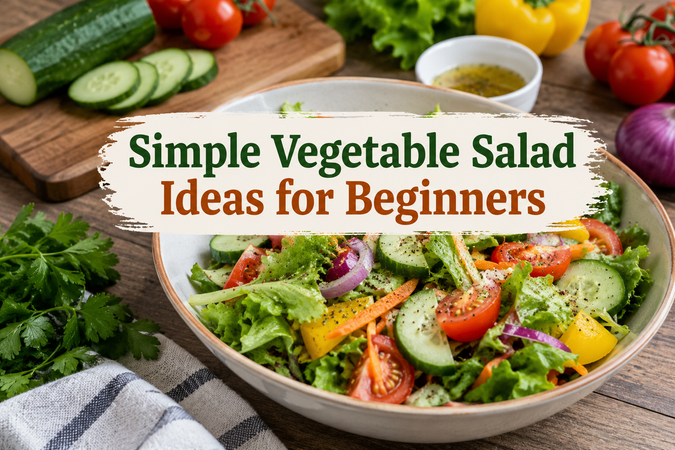
Eating more vegetables does not have to be complicated. One of the easiest ways to add fresh vegetables to your daily meals is through a simple vegetable salad. Salads are quick to prepare, easy to customize, and suitable for almost every meal of the day. You do not need advanced cooking skills or expensive ingredients to make a fresh and satisfying salad at home.
When I first started learning about healthy eating, vegetable salads seemed almost too simple to matter. After reading more about balanced meals and experimenting with different vegetables, I realized that simplicity is actually one of their biggest advantages. A bowl filled with fresh vegetables can provide color, texture, flavor, and useful nutrients without requiring much preparation.
For beginners, the best approach is to start with familiar ingredients and simple combinations. Once you become comfortable making basic salads, you can gradually try new vegetables, herbs, dressings, and toppings.
Why Vegetable Salads Are Great for Beginners
Vegetable salads are among the easiest homemade dishes to prepare. Most vegetables only need washing, peeling when necessary, and chopping. There is usually no complicated cooking process involved.
Another advantage is flexibility. You do not have to follow a recipe exactly. If you do not have one vegetable, you can often replace it with another. This makes vegetable salads convenient for everyday eating.
Fresh vegetables also contain important nutrients. Different vegetables provide different vitamins, minerals, fiber, and natural plant compounds. Eating a variety of vegetables can help make your meals more balanced.
Beginners can also control portions and ingredients when making salads at home. You can decide how much dressing to use and which vegetables to include.
Start With a Basic Cucumber and Tomato Salad
A cucumber and tomato salad is probably one of the easiest vegetable salad ideas for beginners.
You only need a few ingredients:
Cucumber
Tomato
Onion
Fresh coriander or parsley
Lemon juice
A small amount of salt
Wash all the vegetables carefully. Cut the cucumber and tomatoes into bite sized pieces. Slice the onion thinly and add it to the bowl. Sprinkle fresh coriander on top.
Add some fresh lemon juice and a small amount of salt before serving.
This salad tastes fresh and light. Cucumber adds crunch, while tomatoes provide a soft and juicy texture. Onion gives the salad a stronger flavor, and lemon juice brings everything together.
It works well with lunch or dinner and can be prepared within a few minutes.
Try a Colorful Mixed Vegetable Salad
Once you are comfortable with a basic salad, try combining several vegetables in one bowl.
You can use:
Cucumber
Tomato
Carrot
Bell pepper
Lettuce
Cabbage
Onion
Cut everything into small pieces and mix gently. Add lemon juice, black pepper, and a small amount of olive oil if you like.
One thing I enjoy about mixed vegetable salads is their appearance. Different vegetables naturally create a colorful plate. Red tomatoes, orange carrots, green cucumbers, and colorful bell peppers make even a simple meal look more inviting.
Using vegetables of different colors is also a practical way to add variety to your diet.
Make a Simple Carrot and Cabbage Salad
Carrot and cabbage make an excellent combination because both vegetables have a pleasant crunch.
For this salad, finely slice cabbage and grate a fresh carrot. Mix them together in a bowl.
You can add cucumber, coriander, or a little onion if desired.
For a simple dressing, combine lemon juice with a small amount of olive oil and black pepper.
This salad is especially useful when you want something that stays crunchy for longer. Cabbage does not become soft as quickly as some leafy vegetables, making it useful for preparing a salad slightly ahead of time.
Create a Lettuce and Cucumber Salad
If you prefer mild flavors, lettuce and cucumber are a good place to start.
Wash the lettuce carefully and dry it before tearing it into smaller pieces. Slice a cucumber and mix it with the lettuce.
Add tomatoes for color if you have them.
A light dressing made from lemon juice and olive oil works well with this combination.
The important thing when making a lettuce salad is not to use too much dressing. Too much liquid can make the lettuce soft. Add the dressing shortly before serving for the best texture.
Add Bell Peppers for Extra Crunch
Bell peppers can make a basic vegetable salad more colorful and interesting.
They are available in colors such as green, red, yellow, and orange. Their slightly sweet taste works well with cucumbers, tomatoes, lettuce, and cabbage.
For a beginner friendly salad, combine chopped bell pepper with cucumber, tomato, and onion.
Add lemon juice and your preferred herbs.
You can use one color of bell pepper or mix several colors together. This is a simple way to make an everyday salad look more attractive without adding complicated ingredients.
Make a Tomato and Onion Salad
Sometimes the simplest combinations are the most useful.
Tomatoes and onions can make a quick salad when you have very few ingredients at home.
Slice fresh tomatoes and onions. Place them in a bowl and add coriander or parsley if available.
Season with lemon juice, black pepper, and a small amount of salt.
This type of salad pairs well with many homemade meals. It is easy, affordable, and takes very little time to prepare.
Using ripe tomatoes can make a noticeable difference because naturally flavorful tomatoes need very little additional seasoning.
Try a Fresh Corn Vegetable Salad
Corn can add a little sweetness to vegetable salads.
Use cooked corn and allow it to cool before adding it to your salad.
Combine corn with:
Cucumber
Tomato
Bell pepper
Onion
Fresh coriander
Mix the vegetables together and add lemon juice.
Corn provides a softer texture compared with crunchy vegetables such as cucumber and bell pepper. This difference in texture makes the salad more enjoyable.
Beginners who find plain raw vegetables boring may enjoy adding a small amount of corn.

Prepare a Beetroot and Cucumber Salad
Beetroot has a naturally earthy and slightly sweet flavor. It can also give a salad a beautiful deep color.
For a simple version, use cooked beetroot and fresh cucumber.
Cut both into small pieces and mix them together. Add lemon juice and black pepper.
You can also include carrots or onions.
Keep in mind that beetroot can stain other ingredients, so your entire salad may gradually turn pink or purple. This does not affect the taste.
It is a simple way to bring more vegetable variety into your meals.
Experiment With a Simple Yogurt Vegetable Salad
Not every vegetable salad needs an oil based or lemon dressing. Yogurt can also make a refreshing dressing.
Take plain unsweetened yogurt and stir it until smooth.
Add chopped cucumber, tomato, onion, and carrot.
Season lightly with black pepper and fresh herbs.
This creates a creamy salad without needing a complicated dressing. It can be especially refreshing during warm weather.
When using yogurt, prepare only the amount you plan to eat soon and keep it refrigerated until serving.
Learn a Basic Homemade Salad Dressing
Many beginners think salad dressings must contain several ingredients, but a basic homemade dressing can be extremely simple.
Try combining:
Two teaspoons of lemon juice
One teaspoon of olive oil
A small amount of black pepper
A small pinch of salt
Mix everything together and pour it over your salad shortly before eating.
You can adjust the quantities according to your preference.
Fresh herbs such as coriander, parsley, mint, or basil can also be added for more flavor.
Learning one simple dressing makes it much easier to prepare different vegetable salad ideas without having to buy bottled dressings.
Add Protein to Make a More Filling Salad
A vegetable salad can be served as a side dish, but it can also become more filling when combined with a source of protein.
You can add foods such as cooked chickpeas, beans, lentils, boiled eggs, or grilled chicken depending on your eating preferences.
For example, combine cucumber, tomato, carrot, lettuce, and chickpeas in a bowl. Add lemon juice and a little olive oil.
This creates a more complete meal while keeping the vegetables at the center of the dish.
Beginners should start with simple combinations instead of putting too many ingredients into one salad.
Use Fresh Herbs for Natural Flavor
Fresh herbs can completely change the flavor of a vegetable salad.
Coriander works well with cucumber, tomato, carrot, and onion. Mint adds a refreshing taste, especially to cucumber salads. Parsley has a mild fresh flavor and can be used in many mixed salads.
You do not need a large amount.
Wash the herbs carefully, chop them finely, and sprinkle them over the finished salad.
Using herbs can help you create more flavor without relying heavily on salt or bottled sauces.
Keep Salad Ingredients Fresh
Freshness plays a major role in the taste of a vegetable salad.
Choose vegetables that are firm and free from obvious signs of spoilage. Wash them thoroughly before cutting.
Leafy vegetables such as lettuce should be dried after washing because excess water can make the salad watery.
Store vegetables correctly in the refrigerator and cut them close to serving time whenever possible.
If you are preparing salad in advance, keep the dressing separate until you are ready to eat.
This small step helps maintain a better texture.
Avoid Common Beginner Mistakes
One common mistake is adding too many ingredients. A salad does not need ten or fifteen vegetables to taste good. Three or four fresh ingredients can be enough.
Another mistake is using too much dressing. Dressing should lightly coat the vegetables rather than cover their natural taste.
Cutting vegetables into very different sizes can also make a salad harder to eat. Try to keep the pieces reasonably similar.
Finally, do not be afraid to adjust recipes according to your own preferences. If you dislike raw onion, leave it out. If you enjoy cucumber, add more.
A good salad is one that you actually enjoy eating.
Make Vegetable Salads Part of Everyday Meals
Creating a healthy habit becomes easier when the habit is simple.
You can prepare a small vegetable salad with lunch or dinner several times a week. There is no need to make a complicated recipe every day.
Keep a few common salad vegetables at home, such as cucumbers, tomatoes, carrots, lettuce, cabbage, and bell peppers. When these ingredients are available, preparing a fresh salad takes only a few minutes.
You can change one or two ingredients each time to keep things interesting.
One day you might prepare cucumber and tomato salad. The next day you can make carrot and cabbage salad. Later in the week, you can prepare a mixed salad with lettuce and bell peppers.
Small changes can provide plenty of variety.
Final Thoughts
Simple vegetable salad ideas for beginners do not require expensive ingredients, special equipment, or advanced cooking experience. Fresh vegetables, basic seasonings, and a simple homemade dressing are enough to create delicious everyday salads.
Start with familiar combinations such as cucumber and tomato, carrot and cabbage, or lettuce and cucumber. As you gain confidence, experiment with bell peppers, beetroot, corn, herbs, chickpeas, and different homemade dressings.
The most important thing is to keep your salad fresh, colorful, and enjoyable. Instead of trying to make complicated recipes, focus on ingredients you like and combinations that are easy to prepare.
Vegetable salads can become a natural part of everyday eating when they are simple enough to fit into your routine. With a little practice, you will be able to create many fresh and satisfying salads without needing to follow a strict recipe every time.