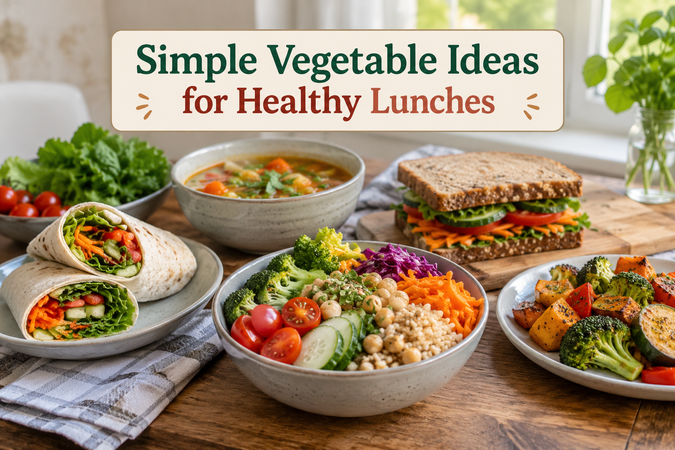
Eating a healthy lunch does not have to be complicated. In my experience, one of the easiest ways to make lunch more nutritious is to include more vegetables. Vegetables bring color, texture, freshness, and natural flavor to everyday meals. They also provide important vitamins, minerals, fiber, antioxidants, and other nutrients that support overall health.
When people hear the words healthy lunch, they sometimes imagine a plain salad or a meal that is difficult to prepare. However, vegetables can be used in many simple and enjoyable ways. They can be added to sandwiches, rice bowls, wraps, soups, pasta, omelets, and many other familiar dishes.
The best approach is to choose vegetables that are easily available and combine them with foods you already enjoy. With a little planning, simple vegetable ideas for healthy lunches can make daily meals more balanced, satisfying, and interesting.
Why Vegetables Are Important for Lunch
Lunch gives the body energy for the second half of the day. A meal that contains vegetables can provide useful nutrients without making the meal unnecessarily heavy.
Vegetables are naturally rich in many essential nutrients. Different vegetables contain different amounts of vitamin A, vitamin C, vitamin K, folate, potassium, and other minerals. They are also a valuable source of dietary fiber.
Fiber is particularly important because it supports normal digestion and can help a meal feel more satisfying. Eating a variety of vegetables also introduces different plant compounds into the diet.
Instead of depending on only one vegetable, I prefer using different colors throughout the week. Green spinach, red tomatoes, orange carrots, purple cabbage, and yellow bell peppers can all make lunch more appealing while improving variety.
Vegetable Sandwiches for a Quick Lunch
A vegetable sandwich is one of the simplest healthy lunch ideas. It requires very little preparation and can easily be adjusted according to personal taste.
Whole grain bread can be filled with sliced cucumber, tomato, lettuce, grated carrot, and bell pepper. A small amount of hummus, yogurt spread, avocado, or another simple spread can add moisture and flavor.
The secret to making a good vegetable sandwich is using fresh ingredients. Crisp vegetables give the sandwich a pleasant texture.
For additional protein, boiled egg, beans, grilled chicken, paneer, or cheese can be included in reasonable portions.
Preparing the vegetables ahead of time can make this lunch even easier. Washed and sliced vegetables stored properly in the refrigerator can be quickly added to sandwiches whenever needed.
Colorful Vegetable Wraps
Vegetable wraps are another convenient option for lunch. They are portable, easy to prepare, and suitable for both home and work.
A simple wrap can include lettuce, cucumber, tomatoes, shredded cabbage, carrots, and bell peppers. Hummus or a yogurt based dressing can help bring all the ingredients together.
Cooked vegetables can also be used. Lightly sautéed mushrooms, onions, spinach, zucchini, and peppers make a warm and satisfying filling.
Beans or chickpeas can be added to increase protein and fiber. The wrap can then be rolled tightly and served with fresh fruit or a small bowl of yogurt.
Vegetable wraps are especially useful when small amounts of different vegetables are left in the refrigerator.
Healthy Vegetable Rice Bowls
Rice bowls are one of my favorite ways to use vegetables because almost any combination works.
Start with a moderate portion of cooked rice. Brown rice can provide additional fiber, but regular rice can also be part of a balanced lunch when combined with nutritious ingredients.
Add vegetables such as peas, carrots, broccoli, corn, bell peppers, spinach, or green beans. These vegetables can be steamed, boiled, roasted, or lightly cooked in a pan.
For protein, add lentils, chickpeas, beans, eggs, tofu, fish, or chicken according to preference.
A little lemon juice, black pepper, herbs, garlic, or a simple homemade dressing can provide flavor without making the meal complicated.
Rice bowls are also excellent for meal preparation because several portions can be prepared in advance.
Simple Vegetable Pasta
Pasta becomes much more colorful and nutritious when vegetables are added.
Instead of serving pasta with only sauce, try adding tomatoes, spinach, mushrooms, broccoli, zucchini, carrots, peas, or bell peppers.
Vegetables can be lightly cooked with garlic and a small amount of oil before being mixed with pasta. Tomato based sauces are especially useful because additional vegetables can easily be added.
Whole grain pasta can be chosen for extra fiber, although regular pasta can also fit into a balanced meal.
The goal is to make vegetables an important part of the dish rather than using only a tiny amount for decoration.
Vegetable Omelet for Lunch
Eggs are often associated with breakfast, but a vegetable omelet can make a quick and satisfying lunch.
Chopped onions, tomatoes, spinach, bell peppers, mushrooms, and fresh herbs can be mixed with eggs before cooking.
The vegetables provide flavor and texture, while the eggs provide protein.
A vegetable omelet can be served with whole grain bread and sliced cucumber or tomatoes on the side. This creates a simple meal that requires very little cooking time.
Leftover cooked vegetables can also be added to an omelet instead of being wasted.
Fresh Vegetable Salad Bowls
Salads do not have to be boring.
A good vegetable salad should contain different colors, textures, and flavors. Lettuce can be combined with cucumber, tomatoes, carrots, cabbage, radish, bell peppers, onions, and fresh herbs.
Adding chickpeas, kidney beans, lentils, boiled eggs, chicken, tuna, or paneer can make the salad more filling.
Seeds or a small amount of nuts can provide additional texture.
For dressing, lemon juice, yogurt, herbs, olive oil, or simple spices can work well. Heavy sauces are not necessary when the vegetables are fresh and flavorful.
A balanced salad should feel like a real meal rather than a small plate of leaves.
Vegetable Soup for a Comforting Lunch
Vegetable soup is an excellent choice when you want something warm and comforting.
Carrots, potatoes, tomatoes, peas, spinach, cabbage, beans, onions, celery, pumpkin, and many other vegetables can be used in homemade soup.
Soup is also a practical way to use vegetables that need to be eaten soon.
For a more satisfying lunch, lentils, beans, chicken, or whole grains can be added.
Homemade vegetable soup allows better control over salt and ingredients. It can also be prepared in larger amounts and stored for future meals.
A bowl of vegetable soup with whole grain bread can create a simple and comforting lunch.
Roasted Vegetable Lunch Plate
Roasting can completely change the flavor of vegetables.
Carrots, cauliflower, broccoli, zucchini, onions, sweet potatoes, pumpkin, and bell peppers all work well for roasting.
Place chopped vegetables on a baking tray, add a small amount of oil and preferred seasonings, and cook until tender.
Roasted vegetables can be served with rice, quinoa, couscous, lentils, chicken, or beans.
Preparing a larger tray of roasted vegetables can save time because they can be used for several lunches.
The leftovers can be added to sandwiches, wraps, pasta, salads, or rice bowls.
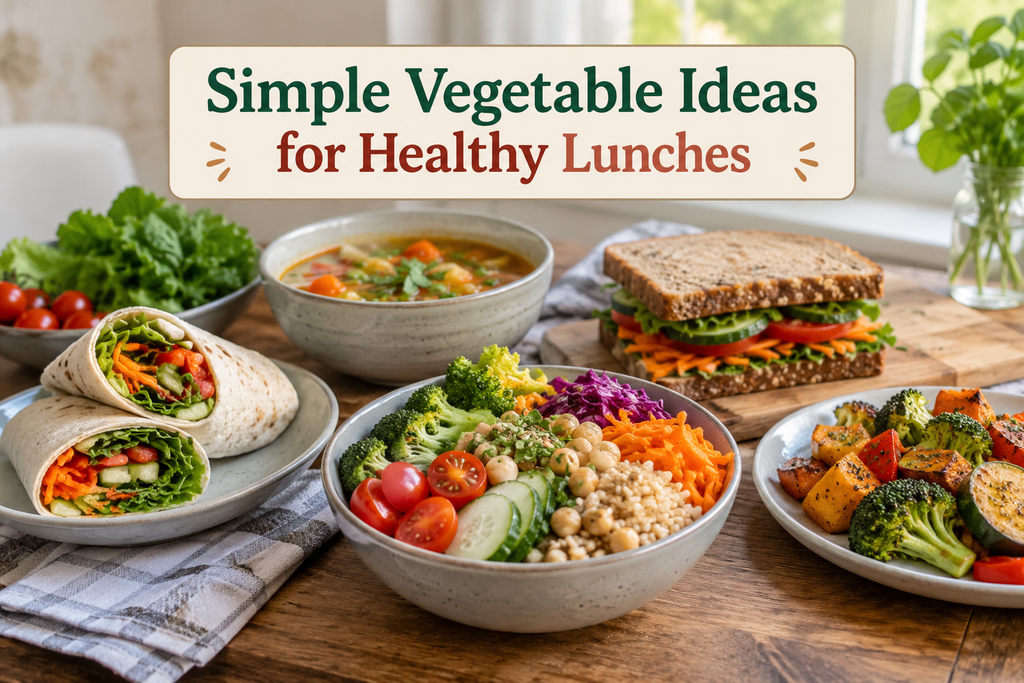
Vegetable Stuffed Potatoes
Potatoes can become the base of a balanced lunch when combined with vegetables and protein.
A baked potato can be opened and filled with cooked spinach, peas, corn, mushrooms, tomatoes, or beans.
Yogurt can be used as a creamy topping. Fresh herbs, black pepper, or a little cheese can add extra flavor.
Sweet potatoes can be prepared in the same way.
The combination of a potato, vegetables, and a protein source creates a filling meal that is still simple to prepare.
Chickpea and Vegetable Bowl
Chickpeas combine especially well with vegetables.
Mix cooked chickpeas with cucumber, tomatoes, onions, bell peppers, carrots, and fresh herbs. Add lemon juice and simple spices for flavor.
This meal requires very little preparation if cooked or canned chickpeas are available.
Chickpeas provide plant based protein and fiber, while the fresh vegetables add crunch and freshness.
The mixture can be eaten as a salad or placed inside a wrap or pita bread.
Vegetable Fried Rice
Homemade vegetable fried rice is a practical way to use leftover rice.
Carrots, peas, cabbage, bell peppers, green onions, corn, and beans can all be added.
Cook the vegetables briefly so they remain colorful and slightly crisp. Add the rice and season lightly.
An egg can also be mixed into the dish for additional protein.
Making vegetable fried rice at home gives you control over the amount of oil and seasoning used.
It is also an excellent way to reduce food waste.
Simple Vegetable Quesadilla
A vegetable quesadilla can make lunch more interesting.
Place cooked peppers, onions, spinach, mushrooms, corn, or tomatoes inside a tortilla with a moderate amount of cheese.
Cook until the outside becomes lightly crisp and the filling is warm.
Serve it with fresh tomato salsa, yogurt, avocado, or a simple salad.
Beans can also be added to make the quesadilla more filling.
This is a useful option for people who want vegetables in a meal that still feels familiar and comforting.
Keep Frozen Vegetables Available
Fresh vegetables are wonderful, but frozen vegetables can make healthy lunches easier.
Frozen peas, spinach, broccoli, carrots, corn, and mixed vegetables can usually be stored for a long time and prepared quickly.
They can be added directly to soups, rice dishes, pasta, curries, and omelets.
Keeping frozen vegetables available also helps on busy days when there is no time to wash and chop fresh produce.
Nutritionally, frozen vegetables can still be a valuable part of a healthy eating pattern.
Prepare Vegetables in Advance
One of the biggest challenges with healthy lunches is preparation time.
Washing and chopping vegetables in advance can make healthy eating much easier during a busy week.
Carrots, cucumbers, bell peppers, cabbage, broccoli, and similar vegetables can be prepared ahead when stored properly.
Cooked vegetables can also be prepared in batches.
When vegetables are ready to use, adding them to lunch becomes almost effortless.
This simple habit can reduce the temptation to choose less nutritious convenience foods.
Use Different Colors Throughout the Week
A colorful plate is not only attractive. It can also encourage dietary variety.
Different vegetables contain different nutrients and plant compounds.
Dark green vegetables such as spinach and broccoli provide one group of nutrients, while orange vegetables such as carrots and pumpkin provide another.
Tomatoes and red peppers add red colors, while cabbage and eggplant can provide purple shades.
There is no need to include every color in every meal. The goal should simply be variety over time.
Changing vegetables throughout the week also prevents healthy meals from becoming repetitive.
Keep Seasoning Simple
Vegetables do not need complicated sauces to taste good.
Lemon juice, garlic, black pepper, fresh herbs, cumin, paprika, yogurt, and other simple seasonings can completely change the flavor of a dish.
Experimenting with herbs and spices can make the same vegetables feel different from one meal to another.
For example, roasted carrots with cumin taste different from carrots mixed into a fresh salad.
Learning a few simple seasoning combinations makes vegetable based lunches much more enjoyable.
Balance Your Vegetable Lunch
Vegetables are important, but a balanced lunch usually includes more than vegetables alone.
Try combining vegetables with a source of protein such as eggs, lentils, beans, chickpeas, fish, chicken, tofu, paneer, or yogurt.
A carbohydrate source such as rice, potatoes, whole grain bread, pasta, or another grain can also provide energy.
Healthy fats from nuts, seeds, avocado, or suitable cooking oils can be included in moderate amounts.
This combination creates a meal that is nutritious and satisfying.
Final Thoughts
Simple vegetable ideas for healthy lunches can make everyday eating easier, more colorful, and more enjoyable. You do not need expensive ingredients or complicated recipes to include more vegetables in your diet.
A vegetable sandwich, colorful wrap, rice bowl, salad, soup, omelet, pasta dish, or chickpea bowl can all become part of a balanced lunch routine.
The most practical approach is to begin with vegetables you already enjoy. Keep them available, prepare some ingredients ahead of time, and experiment with different combinations.
Over time, adding vegetables to lunch becomes a natural habit rather than something that requires extra effort.
Healthy eating works best when it is realistic. By choosing simple ingredients and preparing vegetables in enjoyable ways, you can create lunches that support good nutrition while still tasting delicious. Variety, balance, and consistency are more important than trying to make every meal perfect.