
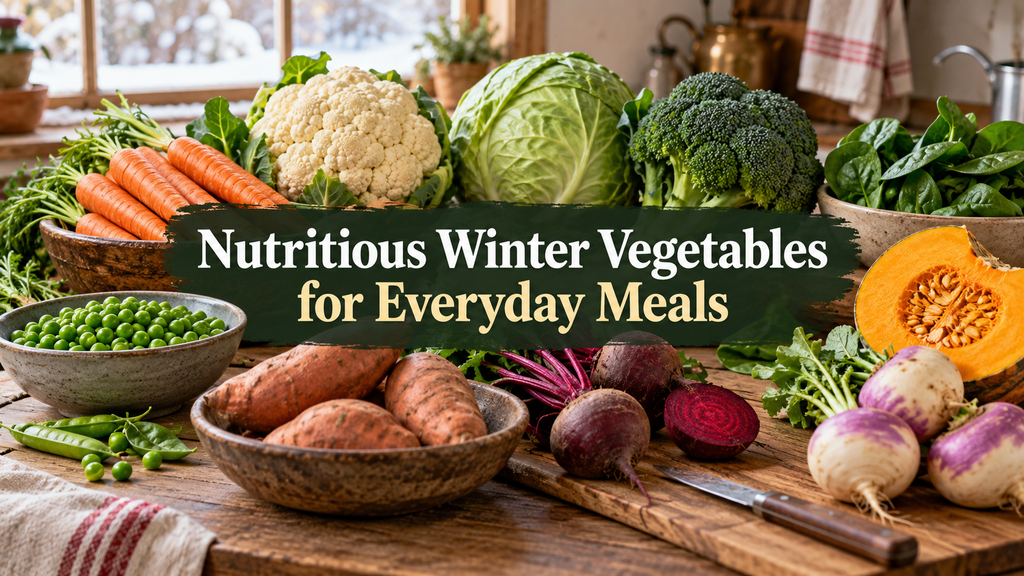
Winter is a season when our daily meals naturally become warmer, richer, and more comforting. Cold weather often makes us look for soups, cooked vegetables, warm salads, curries, and simple homemade dishes. This is also the perfect time to enjoy a wide variety of nutritious winter vegetables. Many vegetables grow particularly well during cooler months and can provide important vitamins, minerals, fiber, and plant nutrients that support a balanced diet.
Adding nutritious winter vegetables to everyday meals does not require complicated recipes. Simple cooking methods such as steaming, roasting, boiling, sautéing, and slow cooking can turn seasonal vegetables into satisfying meals for the whole family. From carrots and spinach to cabbage, cauliflower, peas, and sweet potatoes, winter vegetables offer plenty of choices for breakfast, lunch, dinner, and snacks.
Understanding which vegetables are useful and how to include them in everyday meals can make healthy eating much easier throughout the colder months.
Why Winter Vegetables Are Important
Vegetables are an important part of a balanced diet throughout the year, but winter vegetables can be especially useful because they fit naturally into warm and filling meals. Many seasonal vegetables contain vitamin C, vitamin A, vitamin K, folate, potassium, and dietary fiber.
Fiber supports normal digestion and can also help meals feel more satisfying. Vitamins and minerals support many everyday body functions, while colorful vegetables provide natural plant compounds that contribute to a varied diet.
Eating different vegetables is usually more practical than depending on only one type. A plate containing green, orange, white, purple, and red vegetables can provide a wider variety of nutrients and flavors.
Winter is also a good season to experiment with homemade vegetable dishes because many winter vegetables work well in soups, stews, curries, casseroles, and roasted meals.
Spinach for Simple Winter Meals
Spinach is one of the most useful green vegetables available during the cooler season. It contains several important nutrients, including folate, vitamin K, vitamin A, and iron.
Fresh spinach can be cooked quickly, which makes it convenient for busy days. It can be added to scrambled eggs, lentils, soups, vegetable curries, pasta, and rice dishes.
One of the easiest ways to eat spinach is to sauté it lightly with garlic and a small amount of cooking oil. It can also be mixed with potatoes for a simple homemade meal.
Avoid cooking spinach for longer than necessary. Gentle cooking helps maintain its pleasant color and texture.
Carrots Add Natural Color and Sweetness
Carrots are among the most familiar nutritious winter vegetables. Their natural orange color comes largely from plant pigments called carotenoids, including beta carotene, which the body can convert into vitamin A.
Carrots are extremely versatile. They can be eaten raw, steamed, roasted, boiled, or added to soups and curries.
Chopped carrots work well in mixed vegetable dishes. Grated carrots can be added to salads, sandwiches, and wraps. Roasted carrots develop a pleasant natural sweetness, making them a good side dish for dinner.
Carrots can also be combined with peas, potatoes, and cauliflower to create an easy mixed vegetable meal.
Cauliflower Is Easy to Use
Cauliflower is another popular vegetable during winter. It provides vitamin C, fiber, folate, and other useful nutrients while being relatively easy to prepare.
One of the best things about cauliflower is its ability to absorb the flavors of herbs and spices.
It can be roasted in the oven, cooked in curry, added to soup, or combined with potatoes. Lightly steamed cauliflower also makes a simple side dish.
For a healthier cooking style, avoid covering cauliflower in heavy sauces every time. Roasting it with a little oil and seasoning can create plenty of flavor without making the meal unnecessarily heavy.
Cabbage for Affordable Everyday Cooking
Cabbage is a practical winter vegetable because it is usually affordable, filling, and easy to store. It contains vitamin C, vitamin K, fiber, and several natural plant compounds.
Green cabbage, red cabbage, and other varieties can all be used in everyday meals.
Raw cabbage can be finely sliced for salads and slaws. Cooked cabbage works well in soups, stir fried dishes, and vegetable curries. It can also be lightly sautéed with carrots and peas.
One advantage of cabbage is that a single head can be used for several meals. Properly stored cabbage can remain fresh longer than many delicate leafy vegetables, making it useful for weekly meal planning.
Green Peas Provide Plant Based Nutrition
Green peas may be small, but they can make everyday meals more nutritious and satisfying. They contain fiber, protein, vitamins, and minerals.
Peas can be added to rice, soups, pasta, potatoes, vegetable curries, and salads.
A simple combination of peas and carrots is easy to prepare and works well alongside many main dishes. Peas can also be added to mashed potatoes or mixed into homemade vegetable soup.
Fresh peas are wonderful when available, while frozen peas can also be a convenient choice because they are easy to store and cook quickly.
Sweet Potatoes for Filling Winter Meals
Sweet potatoes are naturally sweet, colorful, and filling. They contain fiber, potassium, vitamin C, and beta carotene, particularly in orange varieties.
Sweet potatoes can be roasted, baked, mashed, or added to soups.
Baked sweet potato is one of the simplest winter meals. It can be served with vegetables, beans, yogurt, or another favorite topping.
Sweet potato cubes can also be roasted with carrots, onions, and cauliflower for a colorful vegetable tray.
Because sweet potatoes already have natural sweetness, they usually do not need sugary toppings to taste enjoyable.
Broccoli for Balanced Winter Eating
Broccoli is another nutritious vegetable worth adding to winter meals. It contains vitamin C, vitamin K, folate, fiber, and several natural plant nutrients.
Broccoli can be steamed, roasted, sautéed, or added to pasta and soup.
The key is to avoid overcooking it. Broccoli that is cooked gently usually keeps a better texture and brighter color.
Try combining broccoli with carrots, bell peppers, or cauliflower. A mixed vegetable plate makes meals more colorful and interesting while encouraging greater vegetable variety.
Beetroot Adds Deep Color
Beetroot has a naturally deep red or purple appearance and provides fiber, folate, potassium, and plant pigments known as betalains.
It can be roasted, boiled, grated, or added to salads.
Roasted beetroot has an earthy sweetness that works particularly well with carrots and other root vegetables. Cooked beetroot can also be sliced and served as a simple side dish.
For lunch, grated beetroot can be combined with carrots, cabbage, cucumber, and leafy greens to create a colorful homemade salad.
Turnips for Traditional Winter Cooking
Turnips are often overlooked, but they can be a valuable part of winter cooking. Both the root and leafy greens can be eaten.
Turnips provide vitamin C, fiber, and other nutrients. They have a mild flavor that becomes softer when cooked.
Turnips can be added to soups, stews, and curries. They also work well when roasted alongside carrots and potatoes.
If you are unfamiliar with turnips, begin by adding a small amount to a mixed vegetable dish. Their flavor blends well with other winter vegetables.
Radishes Offer Fresh Crunch
Radishes bring a fresh, peppery flavor to winter meals. They contain vitamin C and other plant nutrients while providing relatively few calories.
Raw radishes are especially useful for salads. Thinly sliced radishes can be combined with cucumber, carrots, cabbage, and leafy vegetables.
Radish leaves are also edible when fresh and can be cooked similarly to other leafy greens.
Washing radishes properly and keeping them refrigerated can help maintain their crisp texture.
Pumpkin for Warm Comforting Dishes
Pumpkin is perfect for colder weather because it works beautifully in warm dishes. It provides beta carotene, fiber, potassium, and several vitamins.
Pumpkin can be roasted, mashed, added to soup, or cooked in vegetable curries.
Homemade pumpkin soup is an easy winter meal. Cook pumpkin with onion, garlic, herbs, and other vegetables, then blend it until smooth.
Pumpkin can also be roasted in cubes and served alongside green vegetables for a colorful dinner.
Brussels Sprouts for More Variety
Brussels sprouts belong to the same vegetable family as cabbage and broccoli. They contain vitamin C, vitamin K, fiber, and useful plant compounds.
Roasting is one of the easiest ways to prepare Brussels sprouts. Cooking them until slightly browned can create a pleasant flavor and texture.
They can be combined with carrots, sweet potatoes, or cauliflower for a simple winter vegetable tray.
People who do not enjoy boiled Brussels sprouts may find roasted versions much more appealing.
Onions and Garlic as Everyday Ingredients
Onions and garlic may not always be the main vegetables on the plate, but they are important ingredients in winter cooking.
They add aroma and flavor to soups, curries, lentils, sauces, rice, and roasted vegetables.
Using onions, garlic, herbs, and spices can help make vegetable dishes taste more satisfying without relying completely on excessive salt or heavy sauces.
These basic ingredients can turn simple vegetables into flavorful homemade meals.
Build a Colorful Winter Vegetable Plate
A useful approach to healthy eating is to include several vegetable colors during the week.
Green vegetables such as spinach and broccoli offer one group of nutrients. Orange vegetables such as carrots, pumpkin, and sweet potatoes provide another. Purple beetroot, white cauliflower, green peas, and red cabbage add even more variety.
You do not need every color at every meal. Instead, aim for variety across the day and week.
For example, lunch might include spinach and peas, while dinner contains carrots, cauliflower, and sweet potatoes.
This approach keeps meals interesting and prevents healthy eating from becoming repetitive.
Easy Ways to Add Winter Vegetables to Everyday Meals
Healthy meals do not have to be complicated. Start by adding one or two vegetables to foods you already enjoy.
Add spinach, peas, or grated carrots to omelets. Mix cauliflower, carrots, and peas into rice. Add cabbage or spinach to soups. Roast sweet potatoes, broccoli, carrots, and onions together for dinner.
You can also prepare a large amount of roasted vegetables and use them in different meals over the next day or two when stored properly.
Vegetable soup is another convenient choice because several winter vegetables can be combined in one pot.
Keeping washed and prepared vegetables available in the refrigerator may also make it easier to choose them when preparing meals.
Choose Simple Cooking Methods
Cooking method can influence both the taste and overall nutritional quality of vegetable dishes.
Steaming is useful for vegetables such as broccoli, cauliflower, and carrots. Roasting works particularly well for root vegetables, pumpkin, and Brussels sprouts. Sautéing is ideal for spinach, cabbage, and other leafy vegetables.
Boiling can also be useful, but vegetables should not always be cooked until extremely soft.
Using moderate amounts of cooking oil and seasoning helps keep everyday vegetable dishes balanced.
Natural herbs, lemon juice, garlic, black pepper, cumin, and other spices can add flavor without overwhelming the vegetables.
Store Winter Vegetables Properly
Good storage helps reduce waste and makes healthy eating more convenient.
Leafy vegetables such as spinach should generally be refrigerated and kept away from excessive moisture. Carrots, cabbage, cauliflower, broccoli, and radishes usually keep well in the refrigerator.
Potatoes, onions, and some root vegetables often benefit from cool, dry storage with adequate ventilation.
Before storing vegetables, remove any badly damaged or spoiled pieces because they may affect nearby produce.
Buying realistic amounts based on your household needs also helps prevent vegetables from being forgotten and wasted.
Make Vegetables Part of Your Daily Routine
The easiest way to eat more vegetables is to make them a normal part of meals rather than treating them as an occasional health food.
Include vegetables with lunch and dinner whenever possible. Keep simple options available. Try new combinations, but continue using familiar vegetables your family already enjoys.
Healthy eating develops through regular habits.
A bowl of vegetable soup, roasted carrots at dinner, spinach with eggs, cabbage salad at lunch, or peas mixed into rice may seem simple, but these small choices can add meaningful variety to your diet.
Final Thoughts
Nutritious winter vegetables can make everyday meals colorful, filling, and enjoyable. Spinach, carrots, cauliflower, cabbage, peas, sweet potatoes, broccoli, beetroot, turnips, pumpkin, and other seasonal vegetables provide different vitamins, minerals, fiber, and natural plant nutrients.
The best approach is not to depend on one vegetable. Instead, enjoy a variety of vegetables prepared using simple cooking methods.
Winter offers many opportunities to prepare comforting vegetable soups, roasted vegetable trays, warm curries, fresh salads, and mixed vegetable dishes. By choosing seasonal produce, storing it carefully, and including vegetables regularly in everyday meals, you can create a practical and balanced winter eating routine.
Healthy food does not always need complicated recipes or expensive ingredients. Sometimes a simple plate filled with colorful winter vegetables is one of the easiest ways to make everyday meals more nutritious.