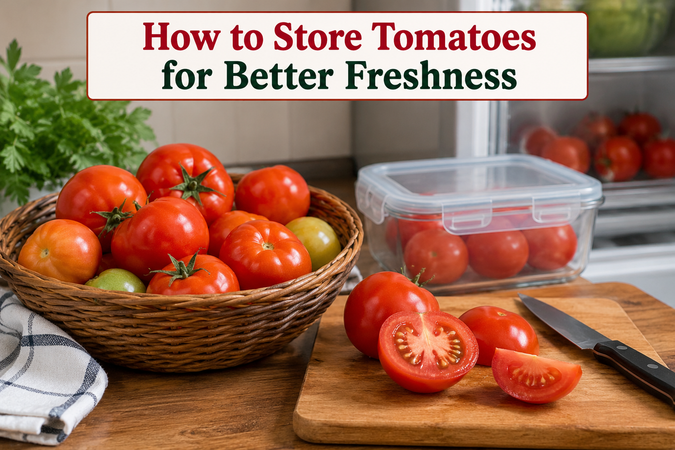
Tomatoes are one of the most common ingredients in everyday cooking. They are used in salads, sandwiches, sauces, soups, curries, pasta, and many other dishes. A fresh tomato has a pleasant aroma, firm texture, bright color, and naturally rich flavor. However, tomatoes can quickly become soft, wrinkled, watery, or spoiled when they are stored incorrectly.
Learning how to store tomatoes for better freshness can help you enjoy their natural taste for a longer time. Proper storage can also reduce food waste and make grocery shopping more economical. The best storage method depends on whether the tomatoes are unripe, fully ripe, cut, or already very soft.
I have found that tomatoes do not always need to be placed in the refrigerator immediately. Their condition and level of ripeness should guide the way they are stored. With a few simple habits, it is possible to keep tomatoes fresh while protecting their flavor and texture.
Understand the Ripeness of Your Tomatoes
Before deciding where to store tomatoes, look at their color and texture.
Unripe tomatoes are usually firm and may have some green areas. Depending on the variety, they gradually develop their full red, orange, yellow, or other natural color as they ripen.
A ripe tomato normally feels slightly soft when gently pressed, but it should not feel mushy. It should also have a fresh tomato aroma and an even color.
Very ripe tomatoes feel noticeably softer and should usually be eaten soon.
Understanding these stages is important because unripe tomatoes and fully ripe tomatoes have different storage needs.
Keep Unripe Tomatoes at Room Temperature
One of the best ways to store unripe tomatoes is at room temperature.
Placing firm, unripe tomatoes in the refrigerator too early may slow the natural ripening process. Instead, keep them somewhere inside your kitchen where the temperature is comfortable and they are protected from excessive heat.
A countertop, kitchen shelf, or pantry area can work well.
The storage area should have reasonable air circulation and should not become extremely hot during the day.
Check the tomatoes daily because ripening can happen faster than expected, especially in warm weather.
Once they reach the level of ripeness you prefer, you can eat them or adjust their storage method.
Avoid Strong Direct Sunlight
It is common to place tomatoes near a sunny window when trying to ripen them quickly. While warmth can encourage ripening, strong direct sunlight is not always ideal.
Too much sunlight can heat the tomatoes unevenly and may cause their skin to soften quickly.
A better approach is to keep tomatoes in a bright or well ventilated kitchen area without exposing them to hours of intense direct sunlight.
Tomatoes can ripen perfectly well at normal room temperature.
Gentle conditions usually help maintain a better balance between ripening and freshness.
Store Tomatoes in a Single Layer
Whenever possible, store whole tomatoes in a single layer.
Stacking several tomatoes on top of one another can put pressure on the tomatoes at the bottom. Soft tomatoes can easily become bruised or damaged.
A shallow bowl, tray, or basket is usually more suitable than a deep container.
Leaving a little space between the tomatoes also allows you to inspect them easily.
If one tomato begins to spoil, you can remove it before it affects nearby produce.
This simple habit can make a noticeable difference when storing several tomatoes at the same time.
Consider Placing Tomatoes Stem Side Down
Tomatoes can gradually lose moisture through the area where the stem was attached.
For whole tomatoes that no longer have their stems, placing them with the stem side facing downward may help protect that delicate area from exposure to air.
A clean flat surface or tray can be used.
You do not need to press the tomato down. Simply place it naturally with the stem scar facing the surface.
Although this is a small storage detail, it can be useful when you want to maintain the quality of fresh tomatoes at room temperature.
Keep Tomatoes Away From Excess Moisture
Moisture can shorten the storage life of many fresh foods, including tomatoes.
If tomatoes are wet when you bring them home, allow them to dry before storing them.
Avoid leaving water collected around the tomatoes or inside their storage container.
A clean, dry surface provides better conditions.
You may also prefer to wash tomatoes just before using them rather than washing the entire batch before storage.
If you do wash them in advance, dry them completely with a clean kitchen towel.
Keeping excess moisture under control is one of the simplest ways to support better tomato freshness.
When Should Tomatoes Go in the Refrigerator?
Refrigeration can be useful when tomatoes are already fully ripe and you are not planning to eat them immediately.
Room temperature is often preferred for developing and maintaining tomato flavor, especially before the tomatoes become fully ripe.
However, once tomatoes are very ripe, cool storage can slow further softening and help prevent them from becoming overripe too quickly.
This can be particularly helpful during warm weather.
Place ripe tomatoes in a clean section of the refrigerator where they will not be crushed by heavier foods.
Try to use refrigerated tomatoes within a reasonable period instead of forgetting them for many days.
Bring Refrigerated Tomatoes to Room Temperature Before Eating
Cold temperatures can temporarily make the flavor and aroma of tomatoes seem less noticeable.
If you have stored ripe tomatoes in the refrigerator, remove them before serving and allow them to warm closer to room temperature.
This can make them more enjoyable in salads, sandwiches, and other fresh dishes.
You do not need to leave them out for an excessive amount of time.
The purpose is simply to remove the strong chill before eating.
This small step can help you enjoy both the convenience of refrigeration and the natural flavor of the tomato.
How to Store Cut Tomatoes
Once a tomato has been cut, it should be handled differently from a whole tomato.
Cut tomatoes should be refrigerated.
Place the remaining tomato in a clean covered container or wrap the exposed surface properly. This helps protect it from drying out and reduces exposure to other foods inside the refrigerator.
Use cut tomatoes as soon as practical for the best texture and quality.
If you regularly need only part of a tomato, consider choosing smaller tomato varieties so you can use the whole fruit at once.
This can reduce leftovers and unnecessary waste.

Use Clean Containers
Clean storage conditions are essential for keeping fresh produce in good condition.
If you use trays, bowls, or refrigerator containers for tomatoes, make sure they are clean and dry.
Old food residue or collected moisture can create poor storage conditions.
You should also keep damaged produce away from fresh tomatoes.
A simple clean container is usually all you need.
There is no need for complicated storage equipment when basic kitchen organization is done properly.
Check Stored Tomatoes Regularly
One of the most useful habits for keeping tomatoes fresh is regular inspection.
Check your tomatoes every day or two.
Look for soft areas, leaking juice, unusual odors, visible mold, or serious skin damage.
A slightly soft tomato may still be perfect for cooking, while a spoiled tomato should be discarded.
Removing spoiled produce quickly also protects nearby tomatoes.
Regular checking helps you decide which tomatoes should be used first.
You can plan your meals around the ripest ones instead of allowing them to go to waste.
Use Soft Tomatoes for Cooking
A tomato does not have to be perfectly firm to be useful.
If a tomato has become very ripe but is still suitable to eat, it can be used in cooked dishes.
Soft ripe tomatoes are excellent for homemade tomato sauce, soup, pasta sauce, curry, salsa, roasted dishes, and other recipes.
Cooking is a practical way to use tomatoes that may no longer have the ideal texture for a fresh salad.
This approach helps reduce food waste while allowing you to benefit from the rich flavor of ripe tomatoes.
Always examine the tomato first and discard it if there are clear signs of spoilage.
Do Not Buy More Tomatoes Than You Can Use
Good tomato storage actually begins at the grocery store or market.
Buying a huge quantity may seem convenient, but it can lead to waste if the tomatoes all ripen at the same time.
Try to estimate how many tomatoes your household normally uses within several days.
If you need tomatoes throughout the week, choosing tomatoes at different stages of ripeness can be useful.
You might select a few fully ripe tomatoes for immediate meals and several firmer tomatoes for later.
This creates a natural supply of tomatoes that become ready at different times.
Handle Tomatoes Gently
Tomatoes may look strong, but ripe tomatoes can bruise easily.
Avoid throwing them into shopping bags or placing heavy groceries on top of them.
At home, transfer them carefully to their storage area.
Bruised sections usually soften faster than undamaged areas.
When selecting tomatoes from a bowl, avoid squeezing every tomato repeatedly. A gentle touch is enough to judge ripeness.
Careful handling can help protect the skin and internal structure of the fruit.
Keep Tomatoes Separate From Damaged Produce
Fresh fruits and vegetables should always be checked before storage.
If one tomato is badly bruised, leaking, or starting to spoil, separate it from the healthy tomatoes.
The same principle applies to other damaged produce stored nearby.
A clean storage area with healthy produce creates better conditions for maintaining freshness.
Keeping tomatoes visible rather than hidden inside a crowded container makes this process easier.
Freeze Tomatoes for Longer Storage
If you have more ripe tomatoes than you can use, freezing can be a practical option.
Wash the tomatoes and dry them properly before freezing.
Depending on how you plan to use them later, they can be frozen whole, chopped, or prepared as a sauce.
The texture of frozen tomatoes changes after thawing, so they are usually better for cooked recipes rather than fresh salads.
Frozen tomatoes can be useful for soups, sauces, curries, and stews.
Freezing is especially helpful when you have a large seasonal supply of tomatoes that might otherwise become overripe.
Avoid Forgetting Tomatoes in the Refrigerator
Refrigeration may slow down deterioration, but it does not keep tomatoes fresh forever.
One common mistake is placing ripe tomatoes in the refrigerator and then forgetting about them.
Consider storing them somewhere visible so you remember to use them.
You can also arrange your refrigerator so older produce stays near the front.
Using the oldest tomatoes first creates a simple rotation system.
This small organizational habit can help reduce household food waste.
Plan Meals Around Tomato Ripeness
Meal planning can make tomato storage much easier.
Use your ripest tomatoes first in salads, sandwiches, or cooked meals.
Keep firmer tomatoes for meals later in the week.
If several tomatoes suddenly become very ripe, prepare a tomato based sauce, soup, curry, or roasted dish.
This flexible approach means you are responding to the natural ripening process instead of expecting every tomato to stay unchanged.
It also helps you enjoy tomatoes when their flavor is at its best.
Common Tomato Storage Mistakes
Several simple mistakes can reduce tomato freshness.
Storing unripe tomatoes in very cold conditions too early may interfere with normal ripening. Leaving tomatoes in strong sunlight can cause excessive heating. Stacking ripe tomatoes deeply can lead to bruising. Storing wet tomatoes can create unwanted moisture.
Ignoring a damaged tomato can also affect the quality of nearby produce.
Another mistake is buying too many ripe tomatoes without having a plan to use them.
Avoiding these problems does not require special equipment. It mainly requires careful handling and regular attention.
Best Way to Store Tomatoes for Better Freshness
The best tomato storage method depends on the condition of the tomatoes.
Keep firm, unripe tomatoes at room temperature in a dry place away from excessive heat and strong direct sunlight.
Allow them to ripen naturally and check them regularly.
Once tomatoes are fully ripe, eat them soon for the best flavor. If you need additional storage time, refrigeration can be useful.
Cut tomatoes should always be properly covered and refrigerated.
Very ripe tomatoes can be used in sauces and cooked meals, while extra tomatoes can be frozen for future cooking.
Final Thoughts
Knowing how to store tomatoes for better freshness is a simple kitchen skill that can save food, money, and effort. Tomatoes naturally change as they ripen, so there is no single storage method that works perfectly at every stage.
Unripe tomatoes usually benefit from room temperature storage. Fully ripe tomatoes should be eaten soon or refrigerated when necessary. Cut tomatoes need covered refrigerator storage, while extra ripe tomatoes can be cooked or frozen instead of wasted.
The most important habits are keeping tomatoes dry, handling them gently, checking them regularly, and using the ripest ones first.
With these simple methods, tomatoes can maintain better flavor, texture, and freshness. Proper tomato storage also makes meal planning easier and helps you get more value from every grocery trip. Instead of allowing tomatoes to become forgotten and spoiled, a little attention can keep them useful and enjoyable for everyday cooking.