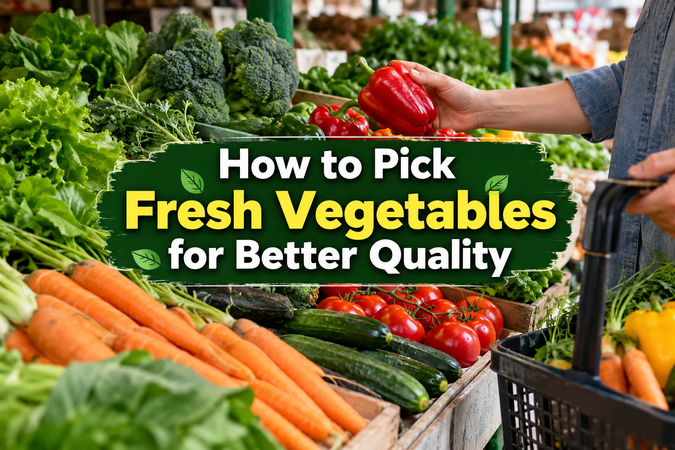
Choosing fresh vegetables may look like a simple task, but it can make a big difference in the quality of your meals. Fresh vegetables usually have better flavor, attractive color, pleasant texture, and useful nutrients. When vegetables are selected carefully, they can also stay fresh for a longer period after you bring them home.
Many people visit the grocery store or vegetable market and simply pick the first vegetables they see. However, learning how to pick fresh vegetables can help you avoid wilted leaves, damaged produce, unnecessary food waste, and disappointing meals. You do not need special knowledge or complicated equipment. Your eyes, hands, and sense of smell can tell you a great deal about vegetable quality.
Understanding a few basic signs of freshness can make grocery shopping easier and more satisfying. Whether you are buying tomatoes, leafy greens, carrots, broccoli, potatoes, cucumbers, or peppers, careful selection can help you bring home better quality produce.
Why Fresh Vegetable Quality Matters
Vegetables begin changing after they are harvested. They gradually lose moisture, firmness, flavor, and some nutritional value during storage and transportation. This is why vegetables that look fresh and firm are usually more enjoyable to eat than vegetables that have been stored for a long time.
Fresh vegetables can improve both simple and complex dishes. A crisp cucumber makes a salad more refreshing. Fresh carrots provide a pleasant crunch. Firm tomatoes hold their shape better when sliced. Fresh spinach has a cleaner appearance and better texture.
Good quality vegetables may also reduce food waste. If you buy vegetables that are already soft, damaged, or wilted, they may spoil before you have a chance to use them. Choosing carefully at the store gives you more time to prepare and enjoy them.
Look at the Color
Color is one of the easiest ways to judge vegetable freshness. Most vegetables should have a natural, bright, and healthy appearance.
Leafy vegetables should usually appear green and lively rather than dull, yellow, or brown. Bell peppers should have rich color and smooth skin. Tomatoes should have a color that matches their variety and stage of ripeness.
However, remember that perfect color does not always mean perfect quality. Natural vegetables can have small differences in shade and appearance. You should mainly look for signs of freshness rather than searching for vegetables that look completely identical.
Avoid vegetables with large dark areas, unusual discoloration, mold, or signs of decay.
Check the Firmness
Texture is another useful sign when learning how to pick fresh vegetables. Many fresh vegetables should feel firm when gently touched.
Carrots should normally feel hard and solid. Cucumbers should feel firm rather than soft or flexible. Bell peppers should have firm flesh. Potatoes should feel solid without large soft areas.
You do not need to squeeze vegetables strongly. Gentle pressure is usually enough to notice whether the produce feels firm or unusually soft.
Softness is not always a problem because some vegetables naturally have a softer texture. The important point is to understand how a particular vegetable normally feels when fresh.
Examine the Skin Carefully
The outer surface of vegetables can reveal a lot about their condition.
Fresh vegetables generally have skin that looks healthy and appropriate for the variety. Cucumbers often have smooth or slightly textured skin depending on their type. Peppers should usually have smooth, firm skin. Tomatoes should not have major cracks or leaking areas.
Minor marks are common in naturally grown produce and do not always affect quality. However, deep cuts, large bruises, wet spots, or damaged areas may allow vegetables to spoil more quickly.
When buying vegetables for storage, choosing produce with fewer damaged areas can help it remain usable for a longer time.
Choose Fresh Leafy Vegetables
Leafy vegetables require special attention because they can lose freshness quickly.
When choosing spinach, lettuce, kale, coriander, or similar greens, look for leaves that appear crisp and fresh. The leaves should not look extremely dry, slimy, or heavily wilted.
Check both the outside and inner parts of leafy vegetables when possible. Sometimes the outer leaves look acceptable while the inner leaves show signs of damage.
Fresh leafy greens should normally have a clean appearance and a natural smell. Avoid packages that contain excessive moisture or many damaged leaves.
Once you bring leafy vegetables home, proper refrigeration can help maintain their quality.
Check Vegetable Stems
Stems can also provide useful information about freshness.
Broccoli stems should usually feel firm rather than soft or dried out. The stalks of leafy vegetables should appear fresh and should not be extremely brown or shriveled.
Vegetables with stems that appear dry and aged may have been stored for a longer period. This does not always mean they are unsafe, but their texture and flavor may not be as good as fresher produce.
Looking at both the main vegetable and its stem gives you a more complete idea of its condition.
Smell the Vegetables
Your sense of smell can help you identify vegetables that are no longer fresh.
Most fresh vegetables have a mild and natural smell. Some vegetables have stronger natural aromas, but the smell should still seem fresh.
A sour, fermented, or unpleasant odor may indicate deterioration. This is especially useful when checking packaged vegetables where some damaged areas may not be easy to see.
If something smells clearly unusual, it is often better to choose another piece.
How to Choose Fresh Tomatoes
Tomatoes are common in salads, sauces, sandwiches, and cooked dishes, so knowing how to select them is useful.
Look for tomatoes with a healthy color and mostly smooth skin. They should feel firm but not extremely hard if you plan to eat them soon.
Very soft tomatoes may be overripe, while very hard tomatoes may require additional time to ripen.
Avoid tomatoes with leaking juice, large cracks, mold, or deeply damaged areas.
For immediate use, slightly ripe tomatoes may offer better flavor. If you plan to store them for several days, you may choose firmer tomatoes and allow them to ripen naturally.
How to Pick Fresh Carrots
Fresh carrots should feel firm, strong, and crisp. Avoid carrots that feel extremely soft or rubbery.
If carrots still have their green tops attached, the tops should look relatively fresh rather than completely dry. However, carrot tops can lose moisture faster than the root, so the condition of the carrot itself is more important.
Small marks on the surface are usually not a major concern. Large soft areas, deep damage, or unusual odors are more important warning signs.
Carrots with good firmness often provide better texture in salads, soups, and cooked dishes.
How to Select Fresh Cucumbers
Cucumbers should normally feel firm from one end to the other.
Choose cucumbers with fresh looking skin and avoid those with large soft areas. A little variation in shape is completely normal and does not usually affect quality.
Yellowing can sometimes suggest that a cucumber is becoming overripe, depending on the variety.
Because cucumbers contain a large amount of water, they can become soft when they lose freshness. A firm cucumber usually offers the refreshing crunch that most people expect.
Choosing Fresh Bell Peppers
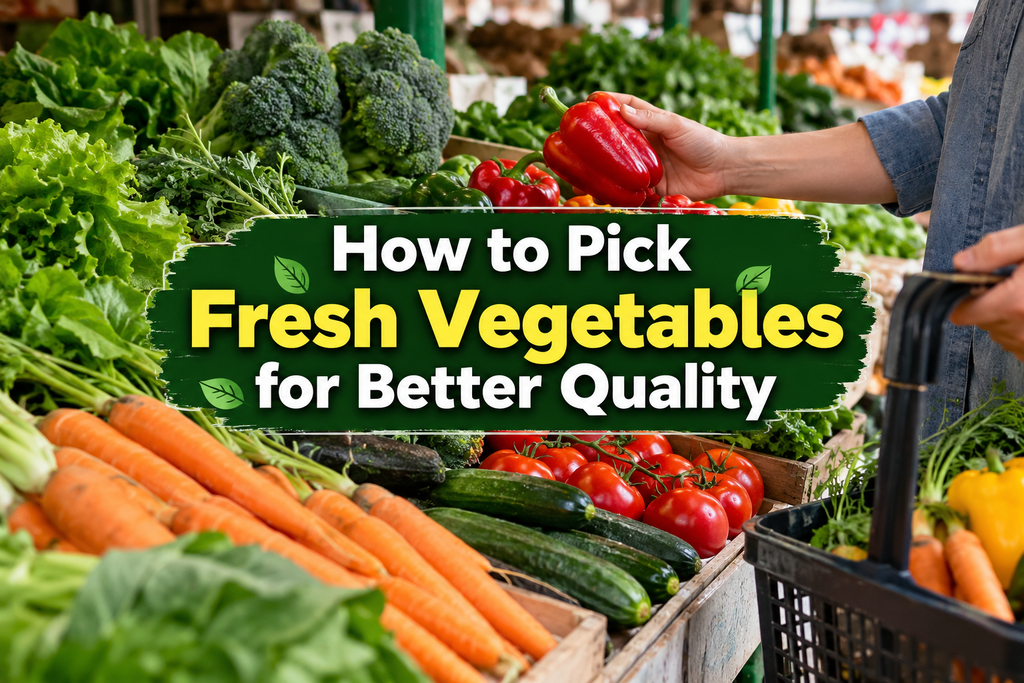
Fresh bell peppers should look bright and feel firm.
Their skin should generally appear smooth and tight. Wrinkled skin often suggests that the pepper has started losing moisture.
Check around the stem because this area can sometimes show early signs of spoilage. The stem should ideally appear fresh rather than heavily dried or moldy.
Whether you choose red, green, orange, or yellow peppers depends on your taste and recipe. Color differences are usually related to variety and maturity rather than freshness alone.
How to Choose Fresh Broccoli
When selecting broccoli, examine both the florets and the stalk.
The florets should appear compact and fresh. Look for a healthy green color and avoid broccoli with extensive yellowing or very soft areas.
The stalk should feel firm. If it appears extremely dry, cracked, or soft, the broccoli may have lost some freshness.
Broccoli can deteriorate relatively quickly, so buying only the amount you plan to use can help reduce waste.
Selecting Fresh Potatoes
Potatoes should feel firm and solid.
Avoid potatoes with large soft areas, heavy wrinkling, mold, or extensive sprouting. Small sprouts may appear during storage, but heavily sprouted potatoes are generally not the best choice for quality.
Green areas on potatoes should also be avoided because greening can be associated with increased levels of naturally occurring compounds that are not desirable to consume in large amounts.
Store potatoes in a cool, dark, and dry place to help maintain their quality after purchase.
Buy Vegetables According to Your Needs
Freshness is important, but smart shopping is equally important.
Think about how much food your household will realistically use. Buying a large amount of fresh vegetables may look economical, but it can become wasteful if much of it spoils before you prepare it.
Plan your meals before shopping when possible. If you know that you will prepare salads, soups, and vegetable dishes during the week, you can choose the right amount of produce for those meals.
Smaller and more frequent purchases may work better for people who prefer extremely fresh vegetables.
Consider Seasonal Vegetables
Seasonal vegetables can be a good choice for freshness, flavor, and value.
When a vegetable is naturally available in greater quantities, it may spend less time in long storage depending on where it is grown and sold. Local seasonal produce may also reach markets relatively quickly.
Seasonal shopping can encourage variety in your diet. Different times of the year provide opportunities to enjoy different vegetables.
Instead of eating exactly the same vegetables throughout the year, try exploring what is naturally abundant in your area.
Do Not Judge Vegetables Only by Appearance
It is easy to assume that the most perfect looking vegetable is always the best one, but appearance can sometimes be misleading.
Fresh vegetables may naturally have unusual shapes, small surface marks, or slight differences in size. These characteristics do not automatically mean the vegetable is poor quality.
Focus on freshness, firmness, smell, and signs of spoilage rather than cosmetic perfection.
A slightly unusual carrot can taste just as good as a perfectly straight one.
Check Packaged Vegetables Carefully
When buying vegetables in sealed bags or containers, look through the package carefully.
Check for excess moisture, damaged vegetables, discoloration, or signs of mold. A small amount of moisture may naturally occur in some packaging, but excessive liquid combined with soft or damaged produce can indicate declining quality.
Also check the date information on the package when available.
Choose packages where the vegetables look fresh and evenly stored.
Handle Vegetables Gently While Shopping
Fresh produce can become damaged through rough handling.
Avoid squeezing vegetables too strongly while checking them. Gentle pressure is enough for most freshness tests.
Place delicate vegetables such as tomatoes and leafy greens near the top of your shopping bag. Heavy items should not be placed directly on top of them.
Preventing damage during transportation helps maintain the quality you carefully selected in the store.
Store Fresh Vegetables Properly at Home
Knowing how to pick fresh vegetables is only the first step. Proper storage is also essential.
Some vegetables should be refrigerated, while others are better stored in cool and dry conditions. Leafy greens, carrots, broccoli, peppers, and cucumbers generally benefit from refrigeration.
Potatoes and onions are usually better kept in a cool, dark, well ventilated location rather than in a warm area.
Avoid washing every vegetable immediately unless you plan to use it soon. Extra moisture can sometimes encourage faster deterioration during storage. Washing vegetables before preparation is often more practical.
Use Older Vegetables First
A simple habit can help you reduce food waste.
When you buy new vegetables, check what you already have at home. Place older produce where it is easy to see and use it before the newer items.
This simple method can prevent vegetables from being forgotten at the back of the refrigerator.
Planning meals around vegetables that need to be used soon can also save money and encourage creative cooking.
Final Thoughts
Learning how to pick fresh vegetables for better quality is a useful skill that can improve everyday cooking and grocery shopping. The process does not need to be complicated. Look at the color, check the firmness, examine the skin, notice the smell, and watch for signs of spoilage.
Fresh leafy vegetables should look lively and crisp. Carrots and cucumbers should feel firm. Peppers should have smooth skin. Broccoli should have compact florets and a firm stalk. Potatoes should be solid and free from major green areas or heavy sprouting.
At the same time, do not reject vegetables simply because they are not perfectly shaped. Natural produce can vary in appearance while still providing excellent flavor and quality.
Buying the right amount, choosing seasonal options, handling vegetables gently, and storing them properly can help you get more value from every shopping trip. With a little practice, selecting fresh vegetables becomes an easy habit. Better choices at the market can lead to tastier meals, less food waste, and a more enjoyable approach to healthy everyday eating.