
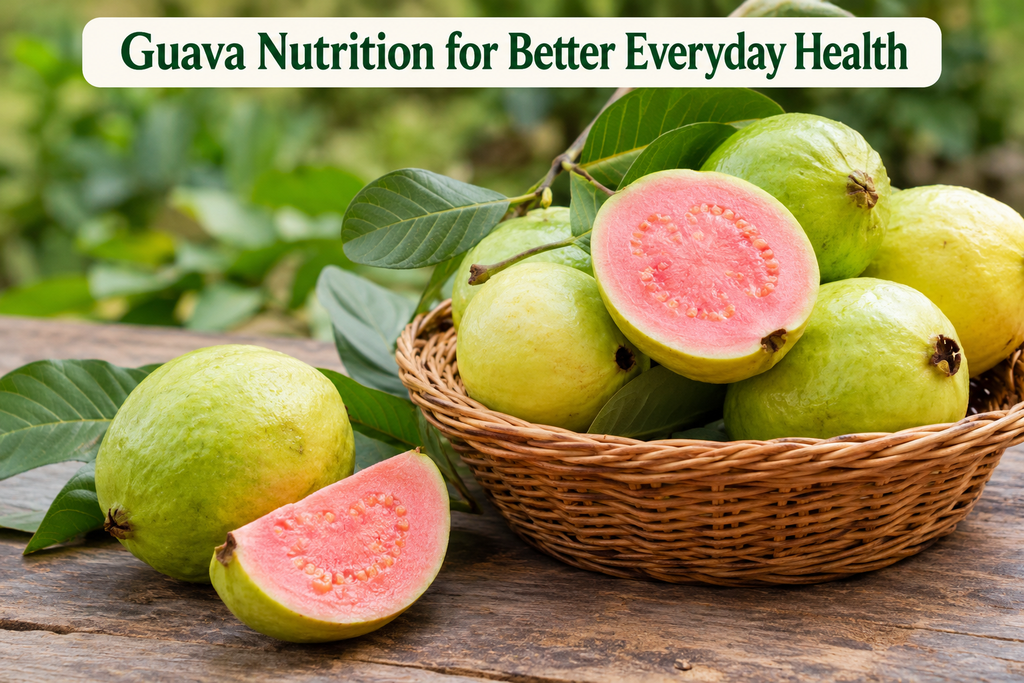
Guava is a simple tropical fruit with an impressive nutritional profile. It is enjoyed in many parts of the world because of its refreshing taste, pleasant aroma, and natural sweetness. Some varieties have white flesh, while others have pink or reddish flesh. Although guava may look ordinary compared with more expensive fruits, its nutritional value makes it an excellent addition to everyday meals.
When people think about healthy eating, they often focus on complicated diets or costly foods. In reality, basic fruits such as guava can provide many useful nutrients without making daily eating difficult. Guava contains vitamin C, dietary fiber, potassium, folate, antioxidants, and several other nutrients that support normal body functions.
Understanding guava nutrition can help us appreciate why this fruit deserves a regular place in a balanced diet. Eating guava is not a treatment for disease, but it can contribute to better everyday health when combined with nutritious meals, physical activity, good sleep, and healthy lifestyle habits.
Nutritional Value of Guava
Guava is naturally rich in important vitamins and minerals. One of its most noticeable nutritional qualities is its vitamin C content. Vitamin C is an essential nutrient that the human body cannot produce on its own, which means it must come from food.
Guava also provides dietary fiber, which is important for digestion. The fruit contains natural carbohydrates that provide energy, along with relatively small amounts of protein and fat.
Other useful nutrients found in guava include potassium, folate, vitamin A related compounds, magnesium, and different plant antioxidants. The exact nutritional content can vary according to the variety, size, freshness, and ripeness of the fruit.
Eating the whole fruit is generally a useful way to receive its nutrients because the flesh and edible seeds also contribute fiber.
Guava Is an Excellent Source of Vitamin C
Vitamin C is one of the main reasons guava is considered a nutritious fruit. This vitamin plays several roles in maintaining normal health.
The body needs vitamin C for the formation of collagen, a protein that supports skin, blood vessels, bones, and connective tissues. It also contributes to normal immune function and helps protect cells from oxidative damage.
Many people associate vitamin C mainly with oranges and other citrus fruits, but guava can also be an excellent dietary source.
Adding fresh guava to breakfast, snacks, or fruit bowls can therefore help increase vitamin C intake naturally.
A varied diet is still important because no single food can provide every nutrient the body requires.
Guava Supports Healthy Digestion
Another important benefit of guava nutrition is its fiber content. Dietary fiber plays an important role in maintaining regular digestion and supporting normal bowel movements.
Fiber adds bulk to food as it moves through the digestive system. For people whose diets contain too many refined foods and not enough vegetables or fruits, increasing fiber rich foods can be helpful.
Whole guava provides more fiber than strained guava juice because much of the fiber remains in the fruit itself.
Eating guava with its edible skin can also increase fiber intake, provided the fruit has been washed properly.
It is usually better to increase dietary fiber gradually and drink enough water throughout the day. A sudden increase in fiber without adequate fluid may cause digestive discomfort in some people.
Guava Can Be Part of Heart Conscious Eating
Healthy eating patterns that include fruits and vegetables are commonly recommended for supporting cardiovascular health. Guava can fit naturally into such eating patterns because it contains fiber, potassium, vitamin C, and protective plant compounds.
Potassium is an essential mineral involved in normal muscle function, nerve activity, and fluid balance. It also plays a role in maintaining normal blood pressure as part of an overall balanced diet.
Fiber is another valuable component of heart conscious eating. Choosing whole fruits instead of heavily processed snacks can help improve the overall quality of the diet.
Guava should not be viewed as a special cure for heart problems. Its value comes from being one nutritious part of a broader eating pattern that includes vegetables, whole grains, legumes, nuts, seeds, and other fruits.
Natural Antioxidants in Guava
The human body regularly experiences oxidative processes as part of normal metabolism. Environmental factors can also contribute to oxidative stress.
Antioxidants are compounds that help protect cells from damage caused by unstable molecules known as free radicals.
Guava contains vitamin C as well as several natural plant compounds with antioxidant properties. Pink guava varieties may also contain pigments such as lycopene, which belongs to a family of protective plant compounds.
A colorful diet containing different fruits and vegetables usually provides a wider variety of antioxidants than depending on one particular food.
This is another reason guava works best as part of a diverse diet.
Guava and Everyday Energy
The body depends largely on carbohydrates for energy, especially during daily activities. Guava contains natural carbohydrates, including naturally occurring fruit sugars.
Because whole guava also contains fiber, it is different from many processed sweet foods that contain large amounts of added sugar but little nutritional value.
A fresh guava can be a practical snack between meals. It can also be combined with other nutritious foods to create a more satisfying snack.
For example, eating guava with plain yogurt or a small serving of nuts adds protein and healthy fats. This combination may be more filling than eating sugary biscuits, sweets, or heavily processed snacks.
The goal is not to avoid natural fruit sugar but to enjoy fruit as part of an overall balanced diet.
Guava May Help Support Immune Function
The immune system depends on many nutrients, and vitamin C is one of them. Since guava is rich in vitamin C, including it in the diet can contribute to normal immune function.
However, immunity is much more complicated than eating one particular fruit. Protein, zinc, vitamin A, vitamin D, iron, selenium, and many other nutrients also contribute to normal immune responses.
Sleep, physical activity, stress management, and general health also influence how well the immune system functions.
Therefore, guava should be considered a useful nutritional food rather than a guaranteed way to prevent illness.
Eating a variety of nutrient rich foods remains the more sensible approach.
Guava Nutrition for Healthy Skin
Nutrition has an important relationship with skin health. Vitamin C contributes to normal collagen production, making foods rich in this vitamin valuable within a skin supportive diet.
Guava also provides water and antioxidant compounds. Fresh fruits can contribute to overall hydration, although drinking enough water is still essential.
Healthy skin also depends on many factors beyond food, including sun protection, adequate sleep, hygiene, genetics, hydration, and overall health.
Eating guava regularly cannot replace proper skin care, but its vitamin and antioxidant content makes it a nutritious addition to a balanced eating pattern.
Guava Can Support Weight Management
People trying to maintain a healthy body weight often benefit from foods that provide nutrients and fiber without excessive calories.
Whole fruits such as guava can be useful because their fiber content helps make meals and snacks more satisfying.
For example, replacing a highly processed snack with fresh guava may reduce the intake of added sugar, unhealthy fats, and unnecessary calories.
This does not mean guava itself causes weight loss. Weight management depends on total food intake, energy needs, physical activity, sleep, metabolism, and many individual factors.
The main advantage of guava is that it can make nutritious eating easier and more enjoyable.
Guava Provides Useful Potassium
Potassium is an important mineral that performs several essential functions in the human body. It contributes to normal nerve signaling, muscle contraction, and fluid balance.
Fruits and vegetables are useful dietary sources of potassium, and guava can contribute to daily intake.
People often consume plenty of sodium through packaged foods while eating fewer potassium rich fresh foods. Increasing the variety of fruits and vegetables can help improve the nutritional balance of the diet.
People with certain medical conditions, particularly some kidney problems, may need specific guidance regarding potassium intake. In such cases, dietary advice from a qualified health professional is important.
Folate and Other Important Nutrients
Guava contains folate, which is a B vitamin needed for normal cell division and the formation of genetic material.
Folate is especially important during periods of rapid growth. A balanced diet containing fruits, vegetables, beans, and fortified foods can help people meet their nutritional requirements.
Guava also provides smaller amounts of several other vitamins and minerals. Although these quantities may appear modest, they contribute to the overall nutritional quality of the fruit.
This demonstrates an important principle of healthy eating. Foods do not need to contain enormous amounts of every nutrient to be useful. The nutrients from different foods work together as part of the total diet.
Best Ways to Eat Guava
Fresh guava is one of the simplest ways to enjoy the fruit. It can be washed carefully, sliced, and eaten directly.
Some people prefer eating guava when it is slightly firm, while others enjoy it when it becomes softer and sweeter.
Guava can also be added to fruit salads, yogurt bowls, smoothies, homemade salads, and other dishes. Fresh pieces can be combined with apples, bananas, oranges, berries, or seasonal fruits.
Smoothies can be nutritious, but keeping the edible fruit pulp is preferable when possible because this helps retain fiber.
Guava juice can also be enjoyed occasionally, but whole fruit generally provides more fiber and may be more satisfying.
Products made with large amounts of added sugar, such as sweetened guava drinks, jams, candies, and desserts, should not automatically be considered equivalent to fresh fruit.
Choosing and Storing Fresh Guava
Selecting good quality guava can improve both flavor and enjoyment.
A ripe guava usually has a pleasant fruity smell and may feel slightly soft when gently pressed. Extremely soft areas, visible mold, or unpleasant odors can indicate spoilage.
Firm guavas can often be kept at room temperature until they ripen. Once ripe, refrigeration can help preserve freshness for a longer period.
The fruit should be washed before eating, especially when the skin will be consumed.
Proper storage reduces unnecessary food waste and helps maintain quality.
Making Guava Part of a Balanced Diet
One of the best things about guava is how easily it can fit into normal meals.
It can be eaten with breakfast, packed as a daytime snack, added to a fruit bowl, or served after a meal.
However, healthy eating should always include variety. Eating guava every day while ignoring vegetables, proteins, whole grains, and other fruits would not create a balanced diet.
A better approach is to rotate different fruits according to availability and season. Guava can be enjoyed alongside apples, oranges, bananas, papaya, watermelon, pomegranate, berries, mangoes, and other fruits.
Each fruit offers a slightly different combination of vitamins, minerals, fiber, and plant compounds.
Final Thoughts
Guava nutrition makes this familiar tropical fruit a valuable choice for better everyday health. It provides vitamin C, dietary fiber, potassium, folate, natural antioxidants, carbohydrates, and several other useful nutrients.
Its vitamin C content supports normal immune function and collagen formation, while its fiber contributes to healthy digestion. Potassium supports important body functions, and the plant compounds in guava add to its overall nutritional value.
Perhaps the greatest advantage of guava is its simplicity. Healthy eating does not always require expensive foods or complicated recipes. A fresh, naturally nutritious fruit can make a meaningful contribution to the quality of everyday meals.
Guava can be eaten on its own or combined with other healthy foods. Choosing the whole fruit most of the time helps preserve its fiber and makes it more satisfying.
No single fruit can guarantee perfect health, but regularly choosing nutritious foods creates a stronger foundation for long term wellbeing. When guava is included alongside vegetables, whole grains, protein rich foods, healthy fats, sufficient water, physical activity, and adequate rest, it can become a delicious and practical part of a healthy lifestyle.
For anyone looking to improve everyday eating through simple food choices, guava is certainly worth including. Its pleasant taste, natural nutrients, versatility, and accessibility make it more than just a seasonal fruit. It is a wholesome food that can support a varied, balanced, and enjoyable approach to daily nutrition.