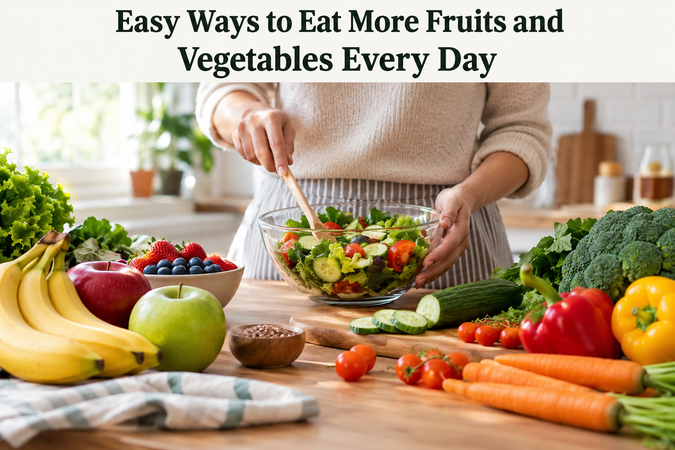
Eating more fruits and vegetables every day is one of the simplest ways to improve the quality of your diet. Fresh produce brings color, flavor, texture, vitamins, minerals, fiber, and natural variety to everyday meals. Still, many people find it difficult to eat enough fruits and vegetables because they are busy, unsure how to prepare them, or simply forget to include them.
The good news is that healthy eating does not have to involve complicated recipes or expensive ingredients. Small changes in your daily routine can make fruits and vegetables a natural part of breakfast, lunch, dinner, and snacks.
Learning easy ways to eat more fruits and vegetables every day can help you build better eating habits without completely changing the foods you already enjoy.
Start With Fruits at Breakfast
Breakfast is an excellent opportunity to add more fruit to your diet. Instead of thinking of fruit as something you only eat between meals, make it part of your morning routine.
Sliced bananas can be added to oatmeal, cereal, yogurt, or whole grain toast. Berries work well with porridge and yogurt. Apples, pears, peaches, and grapes can also make breakfast more colorful and enjoyable.
If you usually eat eggs in the morning, you can enjoy a piece of fresh fruit on the side. Even one orange, apple, or banana can increase the amount of produce you eat during the day.
Keeping breakfast simple makes this habit easier to maintain.
Add Vegetables to Your Morning Meal
Vegetables are often associated with lunch and dinner, but they can also be included at breakfast.
Eggs can be cooked with spinach, tomatoes, onions, mushrooms, bell peppers, or other vegetables you enjoy. Leftover cooked vegetables can also be added to scrambled eggs or an omelet.
Tomatoes and cucumber can be served alongside toast or eggs. A breakfast wrap can contain eggs, lettuce, tomatoes, peppers, and other fresh ingredients.
Adding vegetables in the morning means you do not have to depend entirely on dinner to meet your daily produce needs.
Keep Fresh Fruit Where You Can See It
Sometimes people eat fewer fruits simply because they are hidden inside the refrigerator.
Try keeping suitable fruits in a bowl on the kitchen counter or dining table. Apples, bananas, oranges, pears, and similar fruits can become convenient snacks when they are easy to see.
Visibility can influence food choices. If fruit is the first thing you notice when you feel hungry, you may be more likely to choose it instead of packaged snacks.
Wash or prepare fruits when appropriate so they are ready when you need them.
Prepare Vegetables in Advance
One common reason people avoid vegetables is the preparation time.
Washing, peeling, and chopping vegetables may feel inconvenient when you are already hungry. Preparing some vegetables in advance can solve this problem.
Wash carrots, cucumbers, peppers, celery, or other vegetables and store them properly in the refrigerator. You can then quickly add them to salads, sandwiches, wraps, meals, or snacks.
A few minutes of preparation can make healthy choices much easier during a busy week.
Make Vegetables Part of Lunch
Lunch provides another easy opportunity to eat more vegetables every day.
If you usually eat sandwiches, add lettuce, tomato, cucumber, peppers, onions, or shredded vegetables. Wraps can also hold a generous amount of fresh produce.
Rice dishes can include peas, carrots, corn, spinach, peppers, or beans. Pasta dishes can contain tomatoes, mushrooms, zucchini, spinach, or broccoli.
You do not need to prepare an entirely separate vegetable dish. Adding vegetables directly to the foods you already eat is often much easier.
Eat Fruit as a Simple Snack
Fresh fruit is one of the easiest snacks because it usually requires very little preparation.
An apple, banana, orange, peach, pear, or handful of grapes can be eaten quickly at home, work, or school.
You can also combine fruit with yogurt, nuts, oats, or other foods for a more satisfying snack.
The important thing is convenience. Keep fruit available so you have a practical alternative when hunger appears between meals.
Try Vegetable Snacks
Vegetables can also become enjoyable snacks.
Carrot sticks, cucumber slices, cherry tomatoes, bell pepper strips, or celery pieces are simple options. They can be eaten alone or served with a suitable dip.
Some people enjoy crunchy snacks mainly because of their texture. Fresh vegetables can provide that same crisp feeling while adding variety to the diet.
Experiment with different vegetables until you discover the ones you naturally enjoy eating.
Add Extra Vegetables to Familiar Recipes
You do not have to stop eating your favorite meals in order to increase your vegetable intake.
Instead, improve familiar recipes by adding extra vegetables.
If you are making pasta sauce, add mushrooms, spinach, peppers, carrots, zucchini, or tomatoes. Soups can contain several vegetables at the same time. Rice dishes can easily include peas, carrots, peppers, beans, or leafy greens.
Curries and stews are also excellent places to add more vegetables.
This approach works well because the vegetables become part of a meal you already enjoy.
Make Half Your Plate Colorful
A simple visual habit can help you eat more fruits and vegetables without counting every serving.
When preparing a main meal, look at your plate and ask whether it contains enough colorful produce.
Try filling a generous part of your plate with vegetables. These may be fresh, steamed, roasted, grilled, or lightly cooked depending on your meal.
Different colors also make food more attractive. Green spinach, red tomatoes, orange carrots, purple cabbage, and yellow peppers can turn an ordinary meal into something much more appealing.
Use Frozen Fruits and Vegetables
Fresh produce is useful, but it is not your only option.
Frozen fruits and vegetables can be extremely convenient, particularly when certain foods are not in season or when you want ingredients that last longer.
Frozen berries can be used in smoothies, oatmeal, or yogurt. Frozen peas, spinach, broccoli, carrots, and mixed vegetables can quickly be added to soups, rice, pasta, and other cooked meals.
Having frozen produce available can also reduce the temptation to skip vegetables when the refrigerator is nearly empty.
Make Smoothies With Whole Ingredients
Smoothies can be an easy way to include fruit in your routine.
Bananas, berries, mangoes, peaches, and other fruits can be blended with milk, yogurt, or another suitable base.
Some people also add vegetables such as spinach because its mild flavor combines well with fruit.
However, smoothies should not replace every serving of whole fruit and vegetables. Whole produce offers natural texture and encourages slower eating.
Use smoothies as one convenient option rather than your only method of eating produce.
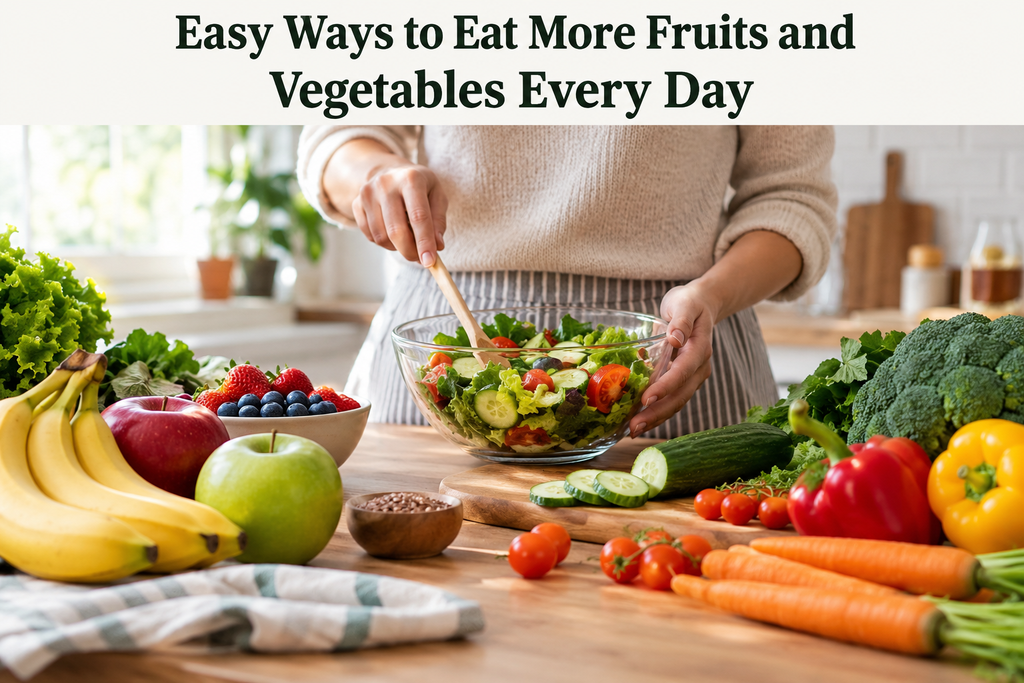
Add Fruit to Desserts
Dessert does not always need to be based on heavily processed foods.
Fresh fruit can create simple and enjoyable desserts.
Try sliced strawberries with yogurt, baked apples with cinnamon, bananas with a small amount of nut butter, or mixed fruit served chilled.
Fruit naturally provides sweetness, color, and variety.
You can also use fruit alongside your usual dessert to gradually increase the amount of fresh produce you eat.
Experiment With Different Cooking Methods
Some people believe they dislike vegetables when they actually dislike a particular way of preparing them.
Boiled vegetables may taste very different from roasted, steamed, grilled, or stir cooked vegetables.
Roasting can create deeper flavors. Steaming keeps many vegetables fresh and tender. Grilling can add a pleasant smoky flavor.
Trying different seasonings can also make vegetables more enjoyable. Herbs, garlic, lemon juice, black pepper, and other simple ingredients can completely change the taste of a vegetable dish.
Finding preparation methods you genuinely enjoy is important for long term healthy eating.
Include Vegetables in Soups
Soup is one of the easiest meals for increasing vegetable intake.
Tomatoes, carrots, potatoes, peas, beans, cabbage, spinach, onions, celery, pumpkin, and many other vegetables can be combined in soups.
Homemade vegetable soup is especially useful because you can choose exactly what goes into it.
Soup can also help use vegetables that are approaching the end of their freshness, which may reduce household food waste.
Try One New Fruit or Vegetable Regularly
Eating the same produce repeatedly can become boring.
Visit the produce section and occasionally choose something different. You might discover a fruit or vegetable that becomes a new favorite.
Trying seasonal produce can make this habit more affordable and interesting.
You do not need to experiment every day. Even trying one unfamiliar fruit or vegetable from time to time can gradually increase the variety of your diet.
Keep Healthy Ingredients Ready for Busy Days
Busy schedules can make healthy eating difficult.
When you know you will have a demanding week, prepare simple ingredients ahead of time. Wash fruit, chop vegetables, prepare salad ingredients, or cook vegetables that can be reheated later.
Small amounts of preparation can save significant time.
You are more likely to eat vegetables when they are ready to add to a meal than when you need to start washing and chopping everything while hungry.
Add Vegetables to Sandwiches and Burgers
Sandwiches and homemade burgers provide an easy place to include fresh vegetables.
Add lettuce, tomatoes, cucumber, onions, shredded cabbage, peppers, spinach, or other vegetables that suit your taste.
Instead of treating vegetables as decoration, use enough to noticeably increase the volume and freshness of the meal.
This simple habit can turn an ordinary sandwich into a more colorful and balanced option.
Keep Produce Available at Home
It is difficult to eat more fruits and vegetables if you rarely buy them.
Before grocery shopping, think about which fruits and vegetables you realistically plan to eat during the week.
Avoid buying very large amounts if they usually spoil before you use them. Start with manageable quantities and gradually increase them as your habits improve.
A practical shopping plan can save money and reduce waste.
Choose Seasonal Produce
Seasonal fruits and vegetables can bring variety throughout the year.
Different seasons naturally introduce different flavors, colors, and ingredients. This keeps meals interesting and can encourage you to try new recipes.
Seasonal produce may also be widely available in local markets when it is naturally abundant.
Instead of relying on the exact same foods throughout the year, allow your meals to change with the seasons.
Build the Habit Gradually
You do not need to transform your entire diet in one day.
Start with one simple habit. Add fruit to breakfast. Include vegetables at lunch. Keep fruit available for snacks. Add one extra vegetable to dinner.
Once the habit feels natural, add another one.
Small changes are often easier to maintain than strict eating plans. The goal is not perfection. The goal is to make fruits and vegetables a normal part of everyday life.
Encourage the Whole Family
Eating more fruits and vegetables becomes easier when everyone at home participates.
Keep different fruits available and allow family members to choose their favorites. Serve colorful vegetables with meals and experiment with different preparation methods.
Children may need repeated exposure before they become comfortable with certain vegetables. Rather than forcing them, continue offering small portions alongside familiar foods.
Making produce part of normal family meals helps create habits that can last for years.
Focus on Variety
Eating more produce is important, but variety also matters.
Instead of choosing only one fruit and one vegetable every day, rotate between different options throughout the week.
Try berries, apples, bananas, citrus fruits, melons, grapes, peaches, or pears. For vegetables, rotate between leafy greens, carrots, tomatoes, broccoli, cauliflower, peppers, peas, cabbage, and other choices.
Different foods contribute different nutrients, flavors, and textures.
A colorful diet is usually more enjoyable than one built around the same few ingredients.
Final Thoughts
Finding easy ways to eat more fruits and vegetables every day does not require complicated meal plans. Simple habits can make a significant difference.
Add fruit to breakfast, vegetables to lunch, fresh produce to snacks, and extra vegetables to familiar dinner recipes. Keep convenient options at home, prepare ingredients ahead of time, try different cooking methods, and experiment with seasonal produce.
Most importantly, choose fruits and vegetables that you genuinely enjoy. Healthy eating becomes much easier when food tastes good and fits naturally into your daily routine.
Instead of trying to make dramatic changes overnight, focus on consistent improvements. One extra fruit, a handful of vegetables, or a more colorful plate may seem like a small step, but these small choices can gradually build a healthier and more varied everyday diet.