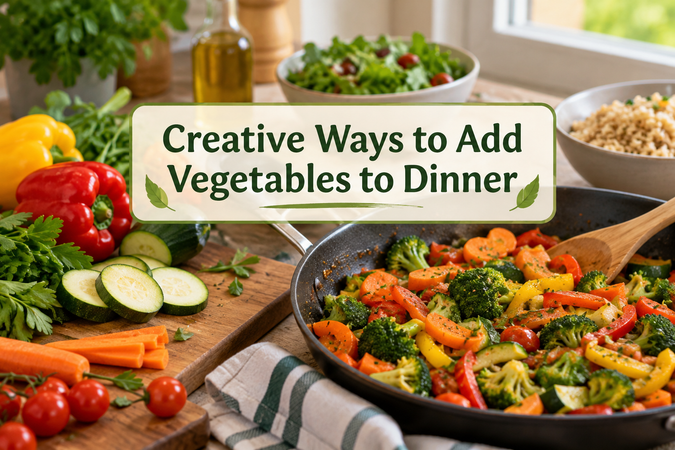
Adding more vegetables to dinner is one of the simplest ways to make everyday meals more colorful, satisfying, and nutritious. Many people know that vegetables are good for health, but they still find it difficult to include enough of them in their daily meals. Sometimes vegetables feel boring. Sometimes family members do not enjoy eating them. In other cases, people simply run out of ideas and continue preparing the same dishes again and again.
The good news is that vegetables do not always have to be served as a separate bowl on the side of the dinner plate. They can become part of soups, sauces, rice dishes, pasta, sandwiches, curries, casseroles, and many other meals. With a little creativity, it becomes much easier to add vegetables to dinner without making the meal feel complicated.
I believe the best approach is to keep things simple. You do not need expensive ingredients or difficult recipes. Basic vegetables such as carrots, tomatoes, onions, spinach, peas, cabbage, cauliflower, bell peppers, potatoes, and broccoli can be used in many different ways.
Here are some creative ways to add vegetables to dinner while keeping meals enjoyable and practical.
Add Vegetables to Pasta Sauce
Pasta is an easy dinner that many people already enjoy. One simple way to increase the vegetable content of pasta is to add vegetables directly to the sauce.
Tomatoes, carrots, onions, spinach, mushrooms, zucchini, and bell peppers work especially well. You can chop the vegetables into small pieces and cook them with the sauce.
Another idea is to cook vegetables until soft and blend them into a smooth tomato sauce. Carrots can provide natural sweetness, while spinach and zucchini can increase the vegetable content without changing the flavor too much.
This can be especially helpful when preparing meals for children or people who do not enjoy large vegetable pieces.
Mix Vegetables into Rice
Rice is served with dinner in many homes, which makes it a convenient place to include extra vegetables.
Instead of preparing plain rice every time, add peas, carrots, corn, spinach, bell peppers, onions, or green beans. These vegetables make rice more colorful and interesting.
Vegetable rice can also become a complete dinner when combined with beans, lentils, eggs, chicken, or another source of protein.
Using several vegetable colors is a simple way to make the meal look more attractive. Colorful meals often feel more enjoyable before the first bite is even taken.
Make Vegetable Filled Omelets
Eggs are not only suitable for breakfast. An omelet can also become a quick and easy dinner.
Try adding chopped tomatoes, onions, spinach, mushrooms, bell peppers, or green peas to eggs. A small amount of cheese can also be added for flavor.
Vegetable omelets are useful on busy evenings because they require very little preparation. They can be served with whole grain bread, salad, rice, or potatoes.
This is also a good way to use small amounts of vegetables that are left in the refrigerator.
Add Vegetables to Homemade Pizza
Pizza can easily become a vegetable rich dinner.
Start with a simple pizza base and tomato sauce. Then add vegetables such as mushrooms, onions, tomatoes, spinach, corn, olives, bell peppers, broccoli, or zucchini.
You do not have to use every vegetable at once. Even two or three vegetables can make a noticeable difference.
Homemade pizza also gives you control over the amount of cheese, sauce, vegetables, and other toppings you use.
Children may enjoy helping with the toppings, which can also encourage them to become more interested in eating vegetables.
Prepare Vegetable Soups
Soup is one of the easiest ways to use several vegetables in a single meal.
Carrots, onions, tomatoes, potatoes, peas, spinach, cabbage, pumpkin, cauliflower, beans, and celery can all be added to homemade soup.
You can prepare a chunky vegetable soup or blend cooked vegetables to create a smooth soup. Adding beans, lentils, chicken, or whole grains can make the soup more filling.
Vegetable soup is particularly useful when you have different vegetables in small amounts and want to use them before they become spoiled.
Add Vegetables to Curries
Vegetable curries are another simple way to increase vegetable intake at dinner.
Potatoes, peas, cauliflower, spinach, tomatoes, carrots, chickpeas, eggplant, and bell peppers can be combined in different ways.
Vegetables absorb spices and sauces very well, so curry can make them much more appealing for people who find plain vegetables boring.
You can also add vegetables to chicken, beef, fish, bean, or lentil curry instead of preparing a completely separate vegetable dish.
This gives you extra vegetables without requiring much additional work.
Use Vegetables in Wraps and Sandwiches
Wraps and sandwiches can make quick dinners when there is not much time for cooking.
Fresh vegetables such as lettuce, cucumber, tomato, cabbage, carrots, onions, and bell peppers can easily be added.
Cooked vegetables also work well. Roasted peppers, mushrooms, spinach, and onions can add extra flavor.
Combine the vegetables with chicken, beans, eggs, tuna, hummus, or another filling of your choice.
A vegetable filled wrap can provide different textures and flavors while still being simple to prepare.
Make Vegetables Part of Your Favorite Casseroles
Casseroles are useful because several ingredients can be cooked together in one dish.
Vegetables such as broccoli, cauliflower, carrots, peas, spinach, mushrooms, zucchini, and potatoes can easily be added to casseroles.
If you already prepare chicken, rice, pasta, or potato casseroles, simply add one or two extra vegetables.
This approach works well because you are improving a familiar dinner rather than learning an entirely new recipe.
Roast a Tray of Mixed Vegetables
Roasting can completely change the taste and texture of vegetables.
Carrots, cauliflower, potatoes, broccoli, onions, sweet potatoes, zucchini, and bell peppers are excellent choices for roasting.
Cut the vegetables into similar sized pieces, add a small amount of oil and seasonings, and roast them until tender.
Roasted vegetables can be served with chicken, fish, beans, rice, or other dinner foods.
You can also prepare a larger tray and use the leftovers the next day in sandwiches, salads, wraps, or rice bowls.

Turn Vegetables into Noodles
Vegetables can sometimes replace part of the traditional noodles in a meal.
Zucchini and carrots can be cut into thin noodle shapes and combined with regular pasta. This allows you to enjoy the familiar texture of pasta while also eating more vegetables.
There is no need to completely replace regular pasta. Mixing vegetable noodles with ordinary noodles is often a more practical approach.
Serve them with tomato sauce, chicken, beans, or another favorite topping.
Add Vegetables to Meat Dishes
Vegetables can easily be included in meals containing meat.
For example, finely chopped carrots, mushrooms, onions, spinach, or bell peppers can be mixed into dishes made with minced meat.
These vegetables work well in meatballs, burgers, pasta sauces, and meat fillings.
Adding vegetables can increase the amount of food you prepare while also bringing more color, texture, and variety to the meal.
Create Colorful Dinner Bowls
Dinner bowls are a flexible way to combine different foods.
Start with a base such as rice, quinoa, potatoes, or another grain. Add a protein such as beans, lentils, chicken, eggs, or fish. Then fill part of the bowl with vegetables.
You might use roasted carrots, cucumber, tomatoes, spinach, cabbage, corn, broccoli, peas, or bell peppers.
A simple sauce or dressing can bring everything together.
The advantage of dinner bowls is that every family member can choose the vegetables they prefer.
Try Stuffed Vegetables
Some vegetables can become the main part of the dinner instead of simply being a side dish.
Bell peppers, tomatoes, zucchini, and potatoes can be filled with different combinations of rice, vegetables, beans, meat, herbs, and spices.
Stuffed vegetables can look impressive even though they are usually made from simple ingredients.
They are also useful when you want to serve vegetables in a different way from the usual boiled or steamed versions.
Add Spinach to Everyday Meals
Spinach is one of the easiest vegetables to add to many dinner recipes because it becomes much smaller when cooked.
A handful of spinach can be added to soup, pasta sauce, curry, eggs, rice, lentils, or casseroles.
Because spinach cooks quickly, it can usually be added near the end of cooking.
Keeping fresh or frozen spinach available can make it easier to add an extra vegetable to dinner without much planning.
Keep Frozen Vegetables Available
Fresh vegetables are excellent, but frozen vegetables can also be very convenient.
Frozen peas, carrots, spinach, broccoli, corn, and mixed vegetables can be stored for longer periods and used whenever needed.
On busy days, you can quickly add frozen vegetables to rice, soup, pasta, noodles, or curry.
Having vegetables ready in the freezer can reduce the temptation to prepare a dinner with very little variety.
Use Vegetables in Noodle Dishes
Noodles are another simple meal that can easily contain more vegetables.
Add cabbage, carrots, bell peppers, peas, onions, mushrooms, spinach, or broccoli.
Cutting vegetables into thin pieces allows them to cook quickly with the noodles.
A colorful vegetable noodle dish can be prepared in a short time, making it a practical choice for busy evenings.
Make Vegetable Toppings More Interesting
Sometimes the easiest way to eat more vegetables is to improve the flavor.
Instead of serving plain steamed vegetables every night, experiment with herbs, spices, yogurt based sauces, tomato sauce, lemon juice, garlic, or a small amount of cheese.
Different seasonings can make the same vegetable taste completely different.
For example, roasted cauliflower with herbs provides a different experience from boiled cauliflower. Spinach cooked with garlic tastes different from plain spinach.
Changing preparation methods can prevent vegetables from becoming boring.
Introduce One New Vegetable at a Time
Adding more vegetables to dinner does not mean completely changing the way you eat overnight.
Start by adding one additional vegetable to meals you already enjoy.
If you usually prepare chicken and rice, add peas or carrots to the rice. If pasta is a regular dinner, add spinach or mushrooms to the sauce.
Small changes are easier to maintain than complicated meal plans.
Over time, adding vegetables can become a normal part of preparing dinner.
Use Seasonal Vegetables
Seasonal vegetables can bring variety to dinner throughout the year.
Different vegetables may be more affordable and flavorful during certain seasons. Choosing vegetables that are easily available can make meal planning simpler.
Instead of buying the exact same vegetables every week, look at what is fresh and reasonably priced.
This naturally encourages you to try different recipes and flavors.
Make Vegetables Convenient
One reason people avoid vegetables is that they believe preparation requires too much time.
Washing and chopping some vegetables in advance can make dinner easier.
Keep prepared carrots, bell peppers, cabbage, broccoli, or other vegetables ready in the refrigerator when practical.
When vegetables are already prepared, it becomes much easier to throw them into a soup, curry, omelet, rice dish, or stir fry.
Convenience plays an important role in developing healthier everyday eating habits.
Focus on Variety Rather Than Perfection
You do not need a perfect dinner every evening.
Some meals may contain several vegetables, while others may contain only one or two. What matters is building a regular habit of including vegetables in different forms.
Try different colors, cooking methods, textures, and combinations.
One evening you might have roasted vegetables. Another evening you might have vegetable soup, spinach pasta, or colorful rice.
Variety can make healthy eating feel enjoyable instead of restrictive.
Final Thoughts
Finding creative ways to add vegetables to dinner does not require complicated recipes or unusual ingredients. Simple changes to meals you already prepare can make a major difference.
Vegetables can be mixed into rice, pasta sauces, curries, soups, omelets, sandwiches, casseroles, pizzas, noodles, and many other familiar dishes. They can also be roasted, stuffed, blended, chopped, or served as colorful toppings.
The most practical approach is to start with vegetables you already enjoy and gradually experiment with new combinations. Keep fresh or frozen vegetables available, make preparation convenient, and look for opportunities to add an extra handful whenever you cook.
Healthy eating becomes much easier when it fits naturally into everyday life. Instead of thinking of vegetables as something that must always be eaten separately, think of them as flexible ingredients that can improve the color, texture, flavor, and variety of dinner.
With a little planning and creativity, vegetables can become a regular and enjoyable part of family meals.