
Eating a balanced diet does not have to feel complicated. One of the easiest ways to improve everyday meals is to add more colorful vegetables to the plate. Vegetables come in many natural colors, including green, red, orange, yellow, purple, and white. Each color brings its own combination of nutrients, flavors, and textures.
When I started paying more attention to nutrition, one simple idea stood out to me. A colorful plate usually encourages greater variety. Instead of eating the same vegetables every day, choosing different colors makes meals more interesting and helps the body receive a wider range of useful nutrients.
Colorful vegetables for a more balanced plate can be included in breakfast, lunch, dinner, salads, soups, snacks, and side dishes. There is no need to completely change your diet overnight. Small changes can make everyday meals more enjoyable and nutritious.
Why Colorful Vegetables Matter
Vegetables are naturally rich in vitamins, minerals, fiber, water, and plant compounds. Different vegetables contain different amounts of these nutrients, which is why variety is important.
For example, leafy green vegetables may provide nutrients that are different from those found in tomatoes, carrots, or purple cabbage. Eating several colors gives you a simple way to increase variety without needing to calculate every nutrient in your meals.
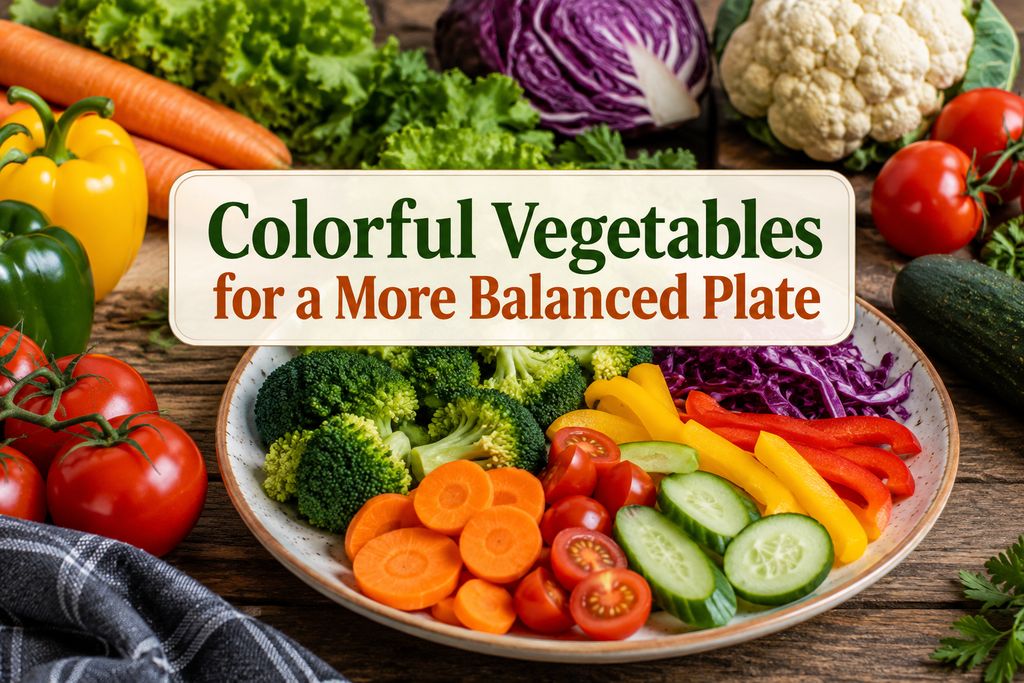
Colorful vegetables also make food more appealing. A plate filled with green broccoli, orange carrots, red peppers, purple cabbage, and white cauliflower looks much more inviting than a plate that contains only one color.
This visual variety can encourage people to enjoy vegetables more often.
Green Vegetables for Everyday Nutrition
Green vegetables are among the easiest vegetables to include in regular meals. Spinach, broccoli, peas, green beans, lettuce, cabbage, zucchini, cucumber, and kale are common examples.
Many green vegetables provide important nutrients such as vitamin C, vitamin K, folate, fiber, and minerals. The exact nutritional content varies from one vegetable to another.
Spinach can be added to eggs, soups, pasta, rice dishes, and salads. Broccoli can be steamed, roasted, or lightly cooked with other vegetables. Green peas are easy to mix into rice, soups, and vegetable dishes.
Cucumber is another refreshing option. It can be sliced into salads or eaten as a simple snack.
Green vegetables do not need complicated preparation. In many cases, simple cooking methods are enough to bring out their natural flavor.
Red Vegetables for a Bright Plate
Red vegetables can instantly make a meal look more colorful. Tomatoes, red bell peppers, red cabbage, radishes, and some varieties of chili peppers are popular examples.
Tomatoes are especially versatile. They can be used fresh in salads, cooked into sauces, added to sandwiches, or included in soups and vegetable dishes.
Red bell peppers have a naturally sweet flavor and crisp texture. They work well in salads, stir fried meals, pasta, wraps, and roasted vegetable dishes.
Red vegetables contain a range of plant compounds that contribute to their natural color. Tomatoes are well known for containing lycopene, while red peppers provide vitamin C and other nutrients.
Adding just one red vegetable to a meal can make an ordinary plate appear brighter and more attractive.
Orange Vegetables for Natural Sweetness
Orange vegetables are another valuable part of a colorful plate. Carrots, sweet potatoes, orange bell peppers, and pumpkin are excellent choices.
These vegetables often contain carotenoids, including beta carotene, which the body can convert into vitamin A.
Carrots are convenient because they can be eaten raw or cooked. They can be grated into salads, sliced into soups, roasted with other vegetables, or served as crunchy snacks.
Sweet potatoes are naturally filling and slightly sweet. They can be baked, boiled, mashed, or roasted. They can also replace regular potatoes in many meals when you want a different flavor and texture.
Pumpkin works well in soups, curries, vegetable dishes, and baked recipes.
Including orange vegetables adds both visual warmth and nutritional variety to the plate.
Yellow Vegetables Add Variety
Yellow vegetables can bring a cheerful appearance to meals. Yellow bell peppers, sweet corn, yellow squash, and some varieties of tomatoes are simple options.
Sweet corn can be added to salads, soups, rice dishes, wraps, and vegetable mixes. It provides carbohydrates along with fiber and several nutrients.
Yellow bell peppers have a mild and slightly sweet flavor. Their crunchy texture makes them suitable for both raw and cooked meals.
Yellow squash can be cooked with herbs, added to soups, or combined with other vegetables.
Using yellow vegetables alongside green and red vegetables creates an attractive combination without requiring any special cooking skills.
Purple Vegetables for Something Different
Purple vegetables may not appear on every plate, but they are worth adding when available. Purple cabbage, eggplant, purple carrots, purple cauliflower, and purple potatoes are examples.
Their deep colors come from natural plant pigments. Many purple vegetables contain compounds called anthocyanins.
Purple cabbage is particularly easy to use. It can be finely sliced into salads, added to wraps, or lightly cooked with other vegetables.
Eggplant is another versatile vegetable. It can be roasted, grilled, baked, or cooked in curries and stews. Its soft texture allows it to absorb the flavors of herbs and spices.
Purple vegetables are a good way to make familiar meals look different and more interesting.
White Vegetables Should Not Be Ignored
When people think about colorful vegetables, they sometimes forget about white and pale vegetables. However, vegetables such as cauliflower, onions, garlic, mushrooms, turnips, and white cabbage can still be valuable parts of a balanced diet.
Cauliflower is especially flexible. It can be roasted, steamed, boiled, or added to vegetable curries and soups.
Onions and garlic are often used to build flavor in meals. They can make simple vegetable dishes taste richer without requiring complicated sauces.
Mushrooms have a unique savory flavor and can be added to eggs, pasta, soups, rice, sandwiches, and vegetable dishes.
Color is useful for creating variety, but nutritional value is not limited to bright vegetables.
Build a Rainbow Vegetable Plate
A rainbow plate does not mean that every meal needs six or seven different vegetables. The main idea is to eat a range of vegetables throughout the day and week.
For lunch, you might prepare a salad with lettuce, tomatoes, carrots, cucumber, purple cabbage, and sweet corn.
For dinner, you could serve broccoli, roasted sweet potato, cauliflower, and red bell pepper beside your main dish.
Another day might include peas, tomatoes, eggplant, and carrots.
The combinations are almost endless.
Changing vegetables from meal to meal can prevent boredom and make healthy eating easier to maintain.
Use Seasonal Vegetables
Seasonal vegetables can be an excellent choice for building a colorful plate. Vegetables that are naturally available during a particular season are often easier to find and may have better flavor.
Instead of following a strict list, look at what is fresh and available in your local market or grocery store.
During one season, you may find plenty of tomatoes, cucumbers, peppers, and zucchini. In another season, cabbage, carrots, cauliflower, pumpkin, and leafy greens may be more common.
Using seasonal produce also encourages variety throughout the year.
Keep Cooking Simple
One reason people avoid vegetables is that they think healthy meals require complicated preparation. In reality, vegetables can be prepared very simply.
Roasting is one of the easiest methods. Carrots, cauliflower, peppers, onions, broccoli, pumpkin, and sweet potatoes can all be roasted until tender.
Steaming is another simple choice, especially for broccoli, cauliflower, carrots, and green beans.
Fresh vegetables such as cucumber, tomato, lettuce, carrots, and peppers can be served raw.
Soups are useful when you want to combine several vegetables in one meal.
Simple preparation often allows the natural taste and color of vegetables to remain the main focus.
Avoid Overcooking Vegetables
Cooking vegetables for too long can affect their texture, color, and sometimes their nutritional quality.
Broccoli, for example, is often more enjoyable when it remains slightly firm and bright green. Bell peppers can also lose some of their fresh texture if cooked for too long.
The best cooking time depends on the vegetable and the recipe, but gentle cooking methods can help maintain color and flavor.
Experimenting with different cooking methods can help you discover which textures you enjoy most.
Add Vegetables to Familiar Meals
You do not need to prepare special vegetable recipes every day. One of the easiest ways to eat more colorful vegetables is to add them to foods you already enjoy.
Add spinach and tomatoes to eggs.
Mix peas, carrots, and peppers into rice.
Add mushrooms, tomatoes, spinach, and peppers to pasta.
Use lettuce, cucumber, tomatoes, and cabbage in sandwiches or wraps.
Add carrots, onions, cauliflower, and peas to soups.
These small additions can gradually increase vegetable intake without making meals feel completely different.
Make Vegetables Convenient
Convenience plays a major role in everyday food choices. When vegetables are washed, prepared, and easy to reach, they are more likely to be eaten.
After shopping, you can wash suitable vegetables and store them properly. Carrots, cucumbers, peppers, and other vegetables can be prepared in advance for quick meals.
Keeping a few simple vegetables available can make healthy eating easier on busy days.
Frozen vegetables can also be useful. Frozen peas, spinach, broccoli, cauliflower, and mixed vegetables can save preparation time and reduce food waste.
Encourage the Whole Family to Enjoy Color
Colorful vegetable plates can be especially helpful when preparing meals for families. Children and adults often respond well to visually appealing food.
Instead of presenting vegetables as something that must be eaten, try making them a normal part of everyday meals.
Serve several colors and allow family members to choose what they enjoy.
A simple plate might include carrot sticks, cucumber slices, cherry tomatoes, sweet corn, and steamed broccoli.
Different shapes, colors, and textures can make vegetables feel more interesting.
Balance Matters More Than Perfection
A balanced plate is not about creating a perfect meal every time. Healthy eating is built through regular habits.
Some meals may contain several vegetables, while others may contain only one or two. What matters is the overall pattern of eating.
Try to include vegetables regularly, choose different colors, and experiment with new varieties when possible.
There is no need to force yourself to eat vegetables you strongly dislike. Start with vegetables you already enjoy and gradually explore others.
Healthy eating becomes easier when it feels flexible rather than restrictive.
Simple Ideas for a More Colorful Plate
Start by choosing two or three vegetable colors for a meal.
You could combine green broccoli, orange carrots, and red peppers.
Another combination could include purple cabbage, cucumber, tomatoes, and sweet corn.
For a warm vegetable dish, try cauliflower, spinach, carrots, onions, and peas.
For a salad, combine leafy greens, cucumber, tomato, peppers, carrots, and cabbage.
These combinations provide different textures as well as different colors.
Final Thoughts
Colorful vegetables for a more balanced plate offer a simple and practical way to improve everyday meals. Green, red, orange, yellow, purple, and white vegetables each bring their own flavors, textures, nutrients, and visual appeal.
You do not need expensive ingredients or complicated recipes to create a healthier plate. Start with vegetables that are easy to find, choose several colors throughout the week, and prepare them in simple ways that you enjoy.
Carrots can add crunch and sweetness. Broccoli can bring fresh green color. Tomatoes and peppers can brighten salads and cooked meals. Purple cabbage can make an ordinary plate more interesting. Cauliflower, onions, and mushrooms can add flavor and variety.
The goal is not to create the perfect rainbow plate at every meal. The goal is to develop a habit of eating different vegetables regularly.
With a little planning and creativity, colorful vegetables can become a natural part of breakfast, lunch, dinner, and snacks. Over time, a plate filled with different colors can make balanced eating feel easier, more enjoyable, and more satisfying.