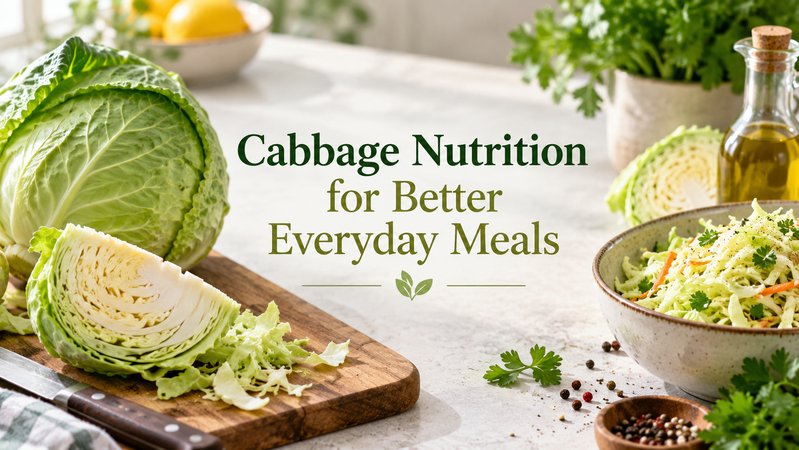
Cabbage is one of those simple vegetables that can easily become part of everyday meals. It is affordable, widely available, easy to cook, and full of useful nutrients. Many people see cabbage as an ordinary vegetable, but its nutritional value makes it a smart choice for anyone trying to build healthier eating habits.
Cabbage can be eaten raw, lightly cooked, steamed, boiled, roasted, or added to soups and other dishes. This flexibility makes it useful in many types of meals. It also has a mild taste that works well with vegetables, rice, meat, beans, and many other common foods.
When we look at cabbage nutrition, we find that it provides vitamins, minerals, fiber, water, and natural plant compounds. At the same time, it is relatively low in calories. This combination can make cabbage a valuable food for balanced everyday eating.
Understanding Cabbage Nutrition
Cabbage belongs to the family of vegetables that also includes broccoli, cauliflower, kale, and Brussels sprouts. These vegetables are known for containing several nutrients that support normal body functions.
Fresh cabbage contains a large amount of water, which gives it its crisp texture. It also provides dietary fiber, vitamin C, vitamin K, folate, potassium, and smaller amounts of other vitamins and minerals.
One of the useful things about cabbage is that it gives the body nutrients without adding a large number of calories to a meal. This can be helpful when trying to create meals that are both filling and nutritious.
Different varieties of cabbage may have slightly different nutritional profiles. Green cabbage is very common, while red cabbage contains colorful plant pigments called anthocyanins. Both varieties can be useful parts of a balanced diet.
Cabbage Is a Good Source of Vitamin C
Vitamin C is one of the important nutrients found in cabbage. The body needs vitamin C for several normal processes.
It contributes to the normal function of the immune system and also helps the body produce collagen. Collagen is a protein found in skin, bones, blood vessels, and other tissues.
Vitamin C also works as an antioxidant. Antioxidants help protect cells from oxidative stress caused by unstable molecules known as free radicals.
Including vegetables such as cabbage in everyday meals can help increase the amount of vitamin C obtained from food.
Raw or lightly cooked cabbage can be a particularly useful choice because long cooking times may reduce some of the vitamin C content.
Provides Important Vitamin K
Cabbage also contains vitamin K, another important nutrient.
Vitamin K plays a role in normal blood clotting and supports normal bone health. Green vegetables are among the common dietary sources of this vitamin.
Adding cabbage to salads, soups, vegetable dishes, and other meals can contribute to daily vitamin K intake.
People taking certain blood thinning medicines may need to keep their vitamin K intake consistent. In such cases, dietary changes should be discussed with a qualified healthcare professional.
Cabbage Provides Dietary Fiber
Fiber is another reason cabbage can be useful in a healthy eating pattern.
Dietary fiber supports normal digestion and helps food move through the digestive system. Eating enough fiber can also support regular bowel movements.
Fiber may also help meals feel more satisfying. Foods that contain fiber usually take longer to eat and digest compared with highly processed foods with very little fiber.
Cabbage can easily increase the fiber content of a meal. Adding shredded cabbage to salads, sandwiches, rice dishes, or vegetable bowls is a simple way to include more vegetables and fiber in everyday eating.
It is still important to eat a variety of fiber rich foods, including fruits, vegetables, beans, whole grains, nuts, and seeds.
Helpful for Balanced Calorie Intake
Cabbage contains relatively few calories compared with many processed foods.
This does not mean that cabbage should replace other important foods. Instead, it can be used to increase the volume and nutritional value of a meal.
For example, a plate containing rice and protein can be made more balanced by adding cooked or fresh cabbage. The cabbage increases the amount of vegetables in the meal without adding many calories.
This approach can be helpful for people trying to improve portion balance while still enjoying satisfying meals.
Healthy eating is not only about reducing calories. It is about choosing foods that provide useful nutrients while creating meals that are enjoyable and sustainable.
Cabbage Contains Folate
Folate is another nutrient naturally present in cabbage.
The body uses folate in normal cell division and in the production of genetic material. It is especially important during periods of growth.
Many vegetables contain folate, which is one reason health professionals often encourage people to eat a variety of vegetables regularly.
Cabbage can contribute to folate intake when combined with other foods such as leafy greens, beans, peas, citrus fruits, and fortified grains.
Natural Plant Compounds in Cabbage
Cabbage contains several natural plant compounds.
Like other vegetables in the same family, cabbage contains compounds known as glucosinolates. These substances are naturally present in cruciferous vegetables.
Researchers continue to study these compounds and their possible roles in human health. The best approach is not to depend on one individual vegetable but to eat a variety of plant foods regularly.
Red cabbage also contains anthocyanins, which are natural pigments responsible for its purple and red colors.
These plant compounds have antioxidant properties and are one reason colorful vegetables are often recommended as part of a varied diet.

Cabbage Can Support Digestive Health
Eating vegetables regularly can support digestive health because vegetables provide both water and fiber.
Cabbage contains both of these components.
Fiber helps support normal bowel function, while water contributes to overall hydration.
Some people may experience gas or bloating after eating large amounts of cabbage, especially if they are not used to eating fiber rich foods. Gradually increasing vegetable intake and drinking enough water may help the digestive system adjust.
Cooking cabbage can also make it easier for some people to digest.
Raw Cabbage for Fresh Everyday Meals
Raw cabbage has a crisp texture and refreshing taste.
One of the easiest ways to eat raw cabbage is to shred it finely and add it to salads. It can be combined with carrots, cucumber, tomatoes, onions, or fresh herbs.
A simple dressing made with lemon juice, olive oil, herbs, and a small amount of seasoning can create a light and nutritious side dish.
Raw cabbage can also be added to wraps and sandwiches. Its crunchy texture can make simple meals more interesting.
Because raw cabbage requires very little preparation, it can be useful for busy days when there is not enough time to cook a complicated vegetable dish.
Steamed Cabbage for a Simple Side Dish
Steaming is another easy way to prepare cabbage.
The cabbage can be sliced into smaller pieces and steamed until it becomes tender while still keeping some texture.
Steamed cabbage works well with rice, potatoes, chicken, fish, beans, lentils, and many other foods.
A little olive oil, black pepper, garlic, lemon juice, or fresh herbs can add flavor without making the dish complicated.
Avoiding excessive cooking can help cabbage maintain a pleasant texture and preserve more of its heat sensitive nutrients.
Add Cabbage to Soups
Cabbage is an excellent vegetable for soups because it becomes soft while absorbing the flavors of other ingredients.
It can be combined with carrots, tomatoes, onions, beans, lentils, potatoes, chicken, or other vegetables.
Soup made with cabbage can be especially useful during colder months when warm meals are more appealing.
Instead of making cabbage the only ingredient, combining several vegetables can create a more balanced range of nutrients, colors, and flavors.
Homemade vegetable soup is also a practical way to use cabbage that has been sitting in the refrigerator for several days.
Use Cabbage in Rice Dishes
Cabbage can easily be added to rice based meals.
Finely chopped cabbage can be cooked with onions, carrots, peas, and other vegetables before being mixed with rice.
It can also be added to fried rice style dishes. Using a moderate amount of cooking oil and including a source of protein can make the meal more balanced.
Eggs, chicken, fish, beans, lentils, or tofu can be used as protein sources depending on personal preference.
This is a simple way to turn cabbage into part of a complete everyday meal instead of serving it only as a side vegetable.
Combine Cabbage With Protein Rich Foods
Cabbage does not provide large amounts of protein, so combining it with protein rich foods can create a more complete meal.
For example, cabbage can be served with chicken, fish, eggs, beans, lentils, chickpeas, or tofu.
A plate containing vegetables, protein, and a source of carbohydrates such as rice, potatoes, or whole grains can provide a better balance of nutrients.
Cabbage works especially well in vegetable and bean dishes because it absorbs spices and sauces easily.
Green Cabbage and Red Cabbage
Both green and red cabbage are nutritious choices.
Green cabbage has a mild flavor and works well in soups, salads, and cooked dishes.
Red cabbage has a stronger color and contains anthocyanin pigments. Its bright color can also make salads and meals look more attractive.
There is no need to choose only one variety. Using different types of cabbage can add variety to everyday meals.
Eating vegetables of different colors is a simple way to obtain a wider range of natural plant compounds.
How to Choose Fresh Cabbage
Fresh cabbage should usually feel firm and heavy for its size.
The leaves should look crisp rather than extremely soft or damaged. Some outer leaf damage is normal and these leaves can usually be removed before preparation.
For green cabbage, look for fresh green leaves. Red cabbage should have a deep purple or reddish color.
Avoid cabbage with a strong unpleasant smell, extensive decay, or very soft areas.
Choosing good quality cabbage can improve both the taste and texture of meals.
How to Store Cabbage
Cabbage usually keeps well in the refrigerator.
A whole cabbage can often stay fresh longer than many softer vegetables. Once it has been cut, it should be covered or stored in a suitable container in the refrigerator.
Only wash cabbage shortly before using it if possible. Keeping excess moisture away during storage may help maintain freshness.
Remove damaged outer leaves before cutting. The remaining cabbage can then be rinsed properly and prepared according to the recipe.
Make Cabbage Part of a Varied Diet
No single vegetable can provide every nutrient the body needs.
Cabbage is nutritious, but it works best as part of a diet containing many different foods.
Try combining cabbage with carrots, tomatoes, peppers, spinach, broccoli, peas, beans, whole grains, fruits, nuts, seeds, dairy products, eggs, fish, or other protein sources depending on your dietary preferences.
Variety helps provide different vitamins, minerals, fiber, protein, healthy fats, and plant compounds.
Eating cabbage regularly can be useful, but there is no need to eat it every day. What matters most is maintaining an overall balanced eating pattern.
Final Thoughts
Cabbage nutrition makes this simple vegetable a valuable addition to everyday meals. It provides vitamin C, vitamin K, folate, dietary fiber, water, and several natural plant compounds while remaining relatively low in calories.
One of the biggest advantages of cabbage is its versatility. It can be eaten raw in salads, steamed as a side dish, cooked with rice, added to soups, or combined with beans, meat, eggs, and other vegetables.
You do not need complicated recipes to benefit from nutritious foods. Sometimes the most useful foods are the simple ingredients that can easily become part of normal family meals.
By including cabbage along with a wide variety of fruits, vegetables, whole grains, healthy fats, and protein rich foods, you can create meals that are nutritious, satisfying, colorful, and enjoyable.
For anyone looking to improve everyday eating without making food preparation difficult or expensive, cabbage is a practical vegetable worth keeping in the kitchen.