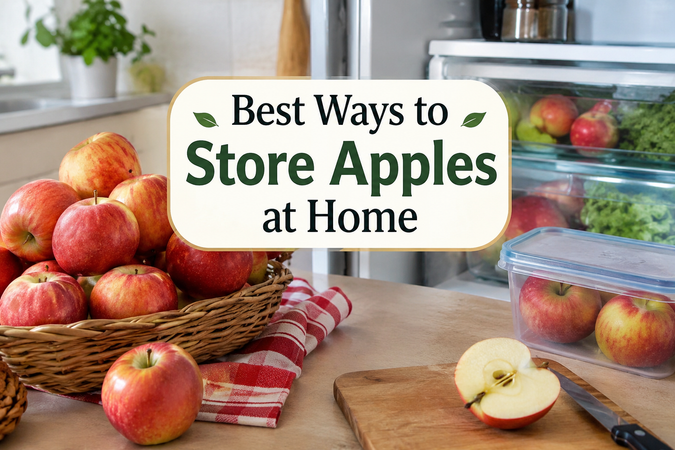
Apples are one of the easiest fruits to keep at home, but proper storage can make a big difference in their freshness, flavor, and texture. Many people buy several apples at once because they are convenient for breakfast, lunch boxes, snacks, desserts, and everyday meals. However, apples can lose their crispness or develop soft spots if they are kept in the wrong place.
Learning the best ways to store apples at home can help you enjoy them for a longer time and reduce unnecessary food waste. The good thing is that storing apples does not require expensive equipment. A few simple habits can protect their natural quality and keep them tasting fresh.
In my experience, the most important things to consider are temperature, moisture, air circulation, and the condition of the apples before storage. When these factors are managed properly, apples can stay crisp and enjoyable for much longer.
Choose Good Apples Before Storage
Proper apple storage begins before you put the fruit in the refrigerator or pantry. Always check the condition of each apple first.
Choose apples that feel firm when held in your hand. The skin should look fresh and should not have large bruises, deep cuts, mold, or very soft areas. A small natural mark on the skin is usually not a problem, but damaged apples should be used sooner.
One damaged apple can affect other apples stored beside it. This is why it is useful to inspect your fruit before storing a large batch.
If you notice an apple with a bruise or soft area, keep it separately and eat it first. Apples in excellent condition can be stored for a longer period.
Store Apples in the Refrigerator
For most households, the refrigerator is one of the best places to store apples.
Cool temperatures slow down the natural ripening process and help apples maintain their crisp texture. Apples left at room temperature usually become soft much faster than refrigerated apples.
Place the apples in the fruit or vegetable drawer of your refrigerator. This area often provides a more suitable environment for fresh produce.
Try not to pack too many apples tightly into one small space. Allowing a little room between them can reduce pressure and prevent bruising.
If you buy apples in large quantities and want them to last, refrigeration is usually the most practical storage method.
Use the Crisper Drawer
The crisper drawer is designed to help fresh fruits and vegetables retain their quality. It is therefore an excellent place for apple storage.
Apples naturally contain moisture, and they can gradually lose it during storage. When too much moisture is lost, the fruit may become wrinkled, dry, or less crisp.
A crisper drawer helps create a more stable environment than an open refrigerator shelf.
Before placing apples in the drawer, make sure the area is clean and dry. Remove spoiled produce and wipe away excess moisture.
A clean storage space reduces the chance of unwanted odors and helps maintain the natural taste of your apples.
Keep Apples Cool
Temperature is one of the most important factors when storing apples at home.
Apples generally stay fresh longer in a cool environment. Warm conditions encourage faster ripening and can cause the fruit to soften quickly.
If you plan to eat your apples within a few days, keeping a small number in a fruit bowl may be fine. However, if you want to store them for a longer period, move them to the refrigerator.
During cooler months, some people also store apples in a cool pantry, cellar, or similar area. This can work if the temperature remains stable and the location is clean and protected.
Avoid places that become warm during the day.
Do Not Store Apples Near Heat
Heat can reduce the storage life of apples.
Avoid placing apples near ovens, stoves, heaters, sunny windows, or other warm areas. Even if the fruit looks attractive in a bowl near the kitchen window, direct sunlight can increase the temperature and speed up ripening.
A shaded kitchen counter is better than a sunny area if you are keeping apples at room temperature.
For long term storage, however, the refrigerator remains the better choice.
Separate Damaged Apples
It is worth checking stored apples regularly.
If one apple begins to develop mold, excessive softness, or an unpleasant smell, remove it immediately. A spoiled apple should not remain in contact with healthy fruit.
This simple habit helps protect the rest of your supply.
When storing a large number of apples, I find it useful to check them every few days. It only takes a minute and makes it easier to use softer apples before they become unusable.
You can also use slightly soft apples for cooking, baking, sauces, or smoothies if they are still safe and fresh enough to eat.
Avoid Washing Apples Before Long Storage
It may seem convenient to wash all your apples as soon as you bring them home, but washing them before storage is not always the best idea.
Extra surface moisture can encourage faster deterioration, especially if the apples are placed into storage while still wet.
For longer storage, it is usually better to keep apples dry and wash them just before eating or preparing them.
If you prefer to wash apples in advance, dry them thoroughly with a clean towel before placing them in the refrigerator.
Never store apples while water is still sitting on their surface.
Keep Apples Away From Strong Smells
Apples should be stored away from foods with very strong odors whenever possible.
Refrigerators often contain onions, garlic, sauces, cooked foods, cheese, and other items with powerful aromas. Proper food containers can help prevent odors from spreading.
Keeping your refrigerator clean also makes a difference.
Apples naturally have a light, fresh aroma and flavor. Good storage conditions help preserve those qualities.
Use a Food Storage Bag Carefully
A food storage bag can help reduce moisture loss from apples, but it should not trap excessive moisture.
You can place apples loosely inside a clean food storage bag and leave a small opening for air circulation. Another option is to use a bag designed for fresh produce.
The goal is to keep the apples from drying out without creating a wet environment.
Check the bag occasionally. If you notice water collecting inside, improve ventilation and remove the moisture.
Apples should feel fresh and dry rather than wet.
Store Apples Separately From Some Produce
Apples naturally release ethylene gas as they ripen. Ethylene is a natural plant hormone that can influence the ripening of nearby fruits and vegetables.
Because of this, storing apples directly beside certain sensitive produce may cause that produce to mature more quickly.
For better organization, keep apples in their own section of the refrigerator when possible.
This is especially useful when your refrigerator contains leafy vegetables or other produce that you want to keep fresh for several days.
Proper separation can help you manage different foods more effectively.

Keep a Small Amount at Room Temperature
Not every apple needs to stay in the refrigerator.
If you enjoy eating apples at room temperature, you can keep a few in a fruit bowl and leave the rest refrigerated.
This method gives you convenient access to ready to eat apples while protecting the larger supply from rapid ripening.
Only place enough apples on the counter for the next few days.
Once the fruit bowl becomes nearly empty, move a few more apples from the refrigerator.
This simple rotation system works especially well for families that eat apples regularly.
Use Older Apples First
A good storage system follows a simple principle. Eat the older fruit before the newer fruit.
When you buy fresh apples, avoid automatically placing them in front of the apples that are already in your refrigerator. Move the older ones forward and place newer apples behind them.
This habit helps prevent forgotten fruit from becoming soft or spoiled.
It also makes grocery management easier and can reduce food waste.
The same principle works well for many fruits and vegetables.
Handle Apples Gently
Apples may look strong, but they can bruise when dropped or pressed against hard surfaces.
A bruised area often becomes soft sooner than the rest of the fruit.
When bringing apples home from the grocery store, avoid placing heavy items on top of them. Store them carefully and do not throw them into the refrigerator drawer.
Gentle handling can noticeably improve their storage life.
If you buy a large bag of apples, empty it carefully and inspect each piece before storing it.
Store Cut Apples Differently
Once an apple is cut, its storage needs change.
Cut apples should be refrigerated in a clean, covered container. Exposure to air causes the cut surface to turn brown because of a natural oxidation process.
A small amount of lemon juice can help slow browning. You can lightly coat apple slices with lemon juice before storing them.
Keep cut apples cold and try to use them soon for the best flavor and texture.
Whole apples generally last much longer than sliced apples, so it is better to cut only what you need.
Freeze Apples for Longer Storage
If you have more apples than you can eat, freezing can be a useful option.
Frozen apples will not have exactly the same crisp texture as fresh apples after thawing, but they can still be useful for cooking, baking, smoothies, sauces, and desserts.
Wash the apples, remove the core, and cut them into slices or pieces. Place them in suitable freezer containers or bags.
Freezing is especially helpful when apples are becoming ripe and you do not want them to go to waste.
Labeling the container with the storage date can also help you keep your freezer organized.
Consider Making Applesauce
Another practical way to preserve extra apples is to turn them into applesauce.
Homemade applesauce can be prepared with simple ingredients and stored according to safe food storage practices.
This is a useful option when you have several apples that are still good but are no longer as crisp as you prefer for fresh eating.
Applesauce can be enjoyed on its own or used with breakfast foods, desserts, and other recipes.
Using apples creatively is often better than allowing them to become spoiled.
Do Not Overcrowd Your Storage Area
Crowding apples tightly together can lead to bruising and make it harder to notice damaged fruit.
Whenever possible, arrange apples so that you can easily inspect them.
You do not need to place every apple in a separate container, but avoid crushing them under heavy produce.
A well organized refrigerator makes food easier to find and can encourage better eating habits because fresh foods remain visible.
Check Stored Apples Regularly
Even with excellent storage conditions, apples should still be checked occasionally.
Look for changes in texture, smell, appearance, and firmness.
If an apple is becoming soft but is still suitable to eat, use it soon. You can add it to oatmeal, bake it with cinnamon, mix it into yogurt, prepare a smoothie, or use it in a fruit salad.
Regular checks help you get the most from every apple you buy.
Best Storage Method Depends on Your Needs
There is no single storage method that fits every situation.
If you will eat your apples quickly, a cool fruit bowl may be enough. If you purchase apples for the entire week or longer, refrigeration is a better choice.
For large quantities, careful refrigerator storage combined with regular inspection works well.
If you have too many ripe apples, freezing, cooking, or making applesauce can prevent waste.
The important thing is to choose a method based on how soon you plan to use the fruit.
Final Thoughts
The best ways to store apples at home are simple and easy to follow. Start by choosing firm, healthy apples and separating any fruit with bruises or damaged areas. Keep apples cool, dry, and protected from heat. For longer freshness, store them in the refrigerator, preferably in the crisper drawer.
Avoid washing apples until you are ready to eat them unless you dry them completely before storage. Keep them away from excessive moisture, strong odors, and produce that may be sensitive to natural ripening gases. Handle each apple gently and check your stored fruit regularly.
You can keep a few apples at room temperature for convenience while refrigerating the rest. If you have more apples than you can use fresh, freezing, baking, or making applesauce can help reduce waste.
Proper apple storage is not complicated. A little attention to temperature, moisture, cleanliness, and organization can keep your apples crisp and enjoyable for much longer. By following these simple apple storage tips, you can protect the quality of your fruit, save money, reduce food waste, and enjoy fresh apples whenever you want a naturally sweet and convenient snack.