Eating enough fiber every day is one of the simplest ways to improve the overall quality of your diet. Fiber supports healthy digestion, helps meals feel more satisfying, and is naturally present in many nutritious plant foods. Among the easiest and most enjoyable sources are fresh fruits.
High fiber fruits can fit into breakfast, snacks, salads, smoothies, and simple desserts. They provide more than fiber alone. Most fruits also contain water, vitamins, minerals, and naturally occurring plant compounds. This makes them a practical choice for people who want to build a balanced eating routine without making their meals complicated.
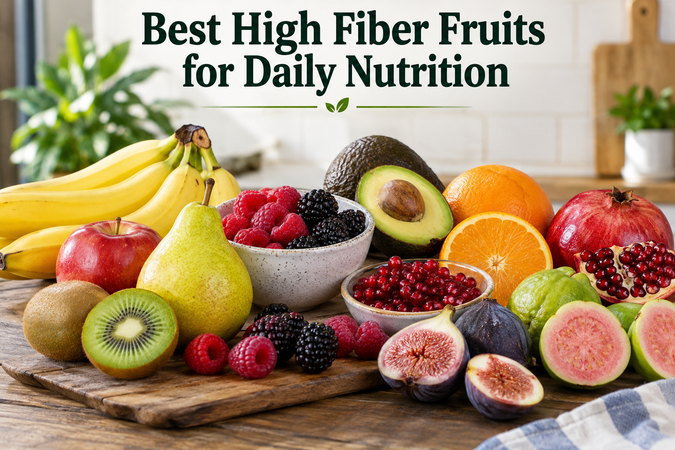
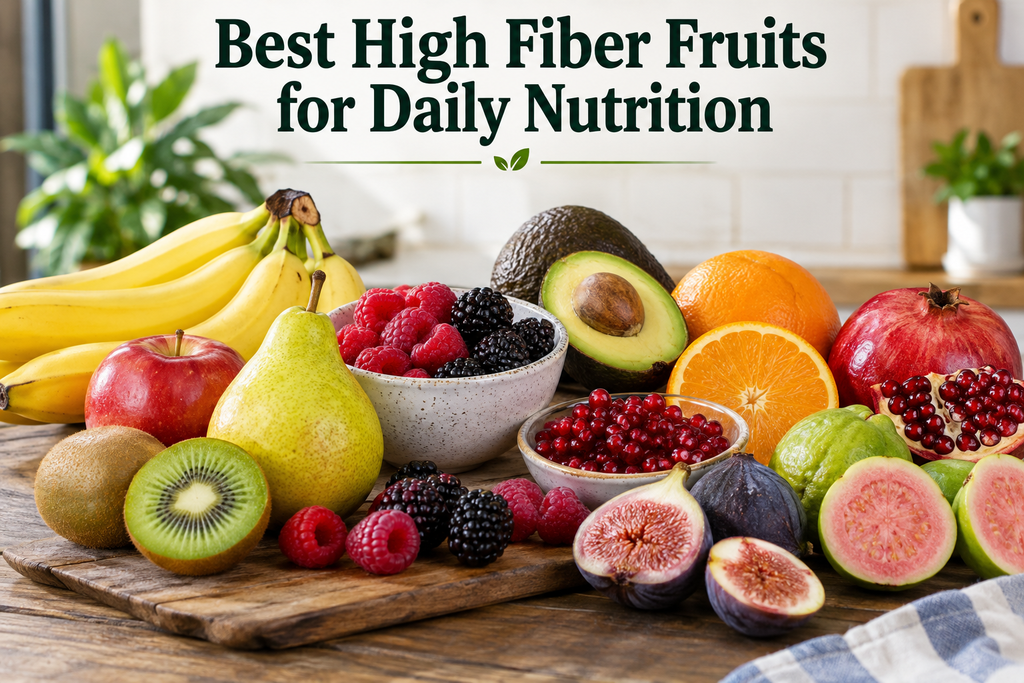
The best high fiber fruits for daily nutrition include raspberries, pears, apples, avocados, blackberries, oranges, bananas, guava, kiwi, pomegranate, and several other familiar options. Eating a variety of these fruits can help make everyday meals more nutritious and enjoyable.
Why Fiber Is Important in Daily Nutrition
Dietary fiber is the part of plant foods that is not fully digested in the same way as carbohydrates, proteins, and fats. Instead, it moves through the digestive system and plays several useful roles.
Fiber helps support normal bowel movements and adds bulk to the diet. It can also help food feel more filling, which may make it easier to maintain balanced portions throughout the day.
There are different types of dietary fiber. Soluble fiber absorbs water and forms a softer gel like substance during digestion. Insoluble fiber adds bulk and helps food move through the digestive tract. Many fruits contain a combination of both types.
Eating a mixture of fruits, vegetables, whole grains, beans, nuts, and seeds is a practical way to include different forms of fiber in your daily diet.
Raspberries
Raspberries are among the best high fiber fruits for daily nutrition. Their small seeds contribute significantly to their fiber content, while their soft texture makes them easy to enjoy in many meals.
Raspberries are naturally sweet with a slightly tart flavor. They work well with plain yogurt, oatmeal, breakfast bowls, and fruit salads. Frozen raspberries are also useful when fresh berries are not available.
Because berries can spoil quickly, it is usually better to wash them shortly before eating rather than storing them wet.
A simple bowl of raspberries can add both flavor and fiber to breakfast or an afternoon snack.
Pears
Pears are another excellent choice when trying to increase fruit fiber intake. Much of their fiber is found in and near the skin, so eating pears with the peel can help you get more nutritional value from the fruit.
Ripe pears have a naturally juicy texture and mild sweetness. They are easy to carry as a snack and do not require complicated preparation.
Pears can also be sliced into oatmeal, mixed into salads, or served with yogurt. For a simple dessert, ripe pear slices can be combined with cinnamon and a small amount of nuts.
Choose pears that feel slightly soft near the stem when you want to eat them soon. Firmer pears can be left at room temperature until they ripen.
Apples
Apples are one of the most convenient high fiber fruits for everyday eating. They are widely available, easy to store, and come in many different flavors and textures.
Like pears, apples contain useful fiber in their skin. Washing the fruit properly and eating it with the peel is a simple way to retain more fiber.
Apples can be eaten alone or sliced into breakfast cereals, salads, and yogurt bowls. They also pair well with nut butter for a more satisfying snack.
Different apple varieties can help prevent boredom. Some are crisp and tart, while others are softer and sweeter. Keeping apples at home makes it easier to choose fresh fruit when hunger appears between meals.
Blackberries
Blackberries are another fiber rich berry that deserves a regular place in a balanced diet. Their many tiny seeds naturally contribute to their fiber content.
They also have a deep, slightly sweet flavor that works well in both simple snacks and more complete meals.
Add blackberries to overnight oats, yogurt, smoothies, or fresh fruit bowls. They can also be enjoyed on their own after washing.
Frozen blackberries are convenient for smoothies and cooked oatmeal. Keeping frozen berries available can make it easier to eat fruit throughout the year.
Avocado
Although avocado is often treated like a vegetable in meals, it is botanically a fruit. It is also a useful source of dietary fiber.
Avocado is different from most sweet fruits because it contains healthy fats and has a creamy texture. This combination can make meals feel satisfying.
Avocado can be spread on whole grain toast, added to salads, served with eggs, or mashed into simple dips. It can also be included in sandwiches and grain bowls.
Because avocado is energy dense, moderate portions usually work well within a balanced eating pattern.
Guava
Guava is an excellent tropical fruit for people looking for naturally fiber rich foods. Its flesh and edible seeds contribute to its fiber content.
Guava has a distinctive sweet aroma and can be eaten fresh when ripe. Depending on the variety, the inside may be white, pink, or reddish.
After washing the fruit properly, it can be sliced and eaten with the peel if the skin is tender. It can also be added to fruit salads or blended into drinks.
Guava is especially useful for adding variety to a diet that relies heavily on more common fruits such as apples and bananas.
Oranges
Oranges are commonly known for vitamin C, but they can also contribute fiber to daily nutrition when eaten as whole fruit.
Whole oranges are generally a better fiber choice than strained orange juice because much of the fruit structure is removed during juicing.
Peeling an orange and eating the individual sections provides both water and fiber. The white material around the segments is also part of the fruit and does not need to be removed completely.
Oranges make an easy snack and can also be added to salads for a fresh, juicy flavor.
Kiwi
Kiwi is a small fruit with a surprisingly useful amount of fiber for its size. Its green or golden flesh contains many tiny edible seeds.
Kiwi can be cut in half and eaten with a spoon or peeled and sliced. Some people also eat the washed skin, although its texture is not preferred by everyone.
Sliced kiwi works well in yogurt, fruit bowls, oatmeal, and simple desserts. Its bright flavor is particularly refreshing during warm weather.
Including kiwi alongside other fruits helps bring greater variety to your daily meals.
Bananas
Bananas are not usually the first fruit people think of when discussing high fiber foods, but they can still make a useful contribution to daily fiber intake.
They are affordable, easy to carry, and require no washing or cutting before eating. This makes bananas one of the most practical fruits for busy schedules.
Bananas can be added to oatmeal, smoothies, yogurt, or whole grain toast. They can also be frozen and blended for naturally creamy desserts.
Combining a banana with higher fiber foods such as oats, chia seeds, berries, or nuts can create a more balanced meal or snack.
Pomegranate
Pomegranates contain juicy seeds known as arils, which can add texture, color, and fiber to meals.
Removing the seeds may require slightly more preparation than peeling an apple or banana, but prepared pomegranate seeds can be stored in the refrigerator for convenient use.
They can be sprinkled over salads, yogurt, oatmeal, or fruit bowls. Their sweet and tart flavor helps make simple meals more interesting.
Instead of relying only on pomegranate juice, eating the whole edible seeds allows you to keep the natural fiber.
Figs
Fresh figs are another useful fruit for adding fiber to the diet. Their soft flesh contains numerous small edible seeds.
Figs have a naturally rich sweetness, so even a small portion can add plenty of flavor to breakfast or snacks.
Fresh figs can be sliced over yogurt or oatmeal. They also pair well with nuts and whole grain foods.
Dried figs contain fiber as well, but dried fruits are more concentrated in natural sugars and calories because much of their water has been removed. Smaller portions are therefore usually appropriate.
Passion Fruit
Passion fruit is often overlooked, but its seed filled pulp makes it an interesting high fiber fruit.
The inside can be scooped out with a spoon and eaten directly or mixed into yogurt, smoothies, and fruit bowls.
Its strong tropical flavor means a small amount can transform a simple meal. Combining passion fruit with milder fruits such as banana or pear creates an enjoyable balance of flavors.
Trying less familiar fruits occasionally is a good way to make healthy eating more interesting.
How to Add More High Fiber Fruits to Your Diet
Eating more fruit does not require major changes to your routine. Small habits can gradually increase your fiber intake.
Start by adding fruit to breakfast. Berries, sliced pear, banana, kiwi, or apple can be mixed into oatmeal or yogurt.
Keep convenient fruits where they are easy to see. A bowl of apples, pears, or oranges on the kitchen counter can encourage better snack choices.
You can also prepare fruit in advance. Wash grapes and berries, cut melon, or prepare pomegranate seeds and keep them in covered containers in the refrigerator.
Fruit can also replace some highly processed desserts. A bowl containing berries, kiwi, apple, and yogurt can provide natural sweetness while contributing valuable nutrients.
Eat Whole Fruits More Often
Whole fruit is usually the best option when fiber is your main goal.
Fruit juices can contain vitamins and minerals, but much of the natural fiber may be removed during processing. Smoothies may retain more fiber when the entire edible portion of the fruit is blended, although eating whole fruit often feels more satisfying because it takes longer to chew.
Whenever possible, choose whole apples instead of apple juice, whole oranges instead of orange juice, and whole berries instead of strained fruit drinks.
This simple habit can significantly improve the fiber quality of your daily fruit intake.
Keep Edible Peels When Possible
Peeling every fruit automatically can remove some valuable fiber.
Apples, pears, peaches, plums, and some varieties of kiwi have edible skins. Washing them thoroughly and keeping the skin can help preserve more of their natural fiber.
Of course, not every fruit skin should be eaten. Bananas, oranges, pineapples, and similar fruits are normally peeled.
The goal is simply to avoid removing edible skin unnecessarily.
Increase Fiber Gradually
If your current diet contains very little fiber, suddenly eating large amounts may cause temporary digestive discomfort.
It is usually better to increase fiber gradually. Start by adding one extra serving of fruit or another fiber rich food each day.
Drinking enough water is also important because fiber works best when the body receives adequate fluids.
Over time, a balanced combination of fruits, vegetables, whole grains, beans, seeds, and nuts can provide a broad range of fiber sources.
Choose Variety Instead of One Fruit
No single fruit needs to provide all the nutrition you require.
Eating different fruits throughout the week gives you a broader range of vitamins, minerals, fiber types, flavors, and textures.
You might have raspberries with breakfast, an apple for a snack, pear slices at lunch, and kiwi after dinner. The next day could include banana, orange, avocado, and blackberries.
Variety also makes healthy eating more enjoyable and reduces the chance of becoming bored with your food choices.
High Fiber Fruit Meal Ideas
High fiber fruits can easily become part of regular meals.
For breakfast, prepare oatmeal topped with raspberries, sliced pear, and a spoonful of seeds.
For a snack, combine an apple with a small serving of nuts or nut butter.
At lunch, add avocado and orange pieces to a fresh salad.
For an afternoon snack, eat kiwi or guava with plain yogurt.
After dinner, enjoy a fresh fruit bowl containing berries, pomegranate seeds, and sliced pear.
Simple combinations like these can help improve daily nutrition without requiring complicated recipes.
Fresh and Frozen Fruits Are Both Useful
Fresh fruit is excellent, but frozen fruit can also be a practical choice.
Frozen raspberries, blackberries, mango, cherries, and other fruits are convenient for smoothies, oatmeal, and yogurt bowls.
Keeping both fresh and frozen fruit at home helps reduce waste and makes it easier to maintain healthy habits when certain fruits are out of season.
When buying packaged frozen fruit, choosing plain fruit without large amounts of added sugar keeps the ingredient list simple.
Final Thoughts
The best high fiber fruits for daily nutrition include raspberries, pears, apples, blackberries, avocados, guava, oranges, kiwi, bananas, pomegranates, figs, and passion fruit. Each provides a different combination of fiber, flavor, water, vitamins, minerals, and naturally occurring plant nutrients.
You do not need to eat every high fiber fruit each day. A better approach is to include different fruits regularly while also eating vegetables, whole grains, legumes, nuts, and seeds.
Choosing whole fruit, keeping edible peels when appropriate, drinking enough water, and increasing fiber gradually are simple habits that can support a balanced diet.
Healthy eating does not have to depend on complicated meals or expensive ingredients. Something as simple as adding berries to breakfast, carrying an apple for a snack, or including pear and avocado in your meals can improve the nutritional quality of your day.
By making high fiber fruits a regular part of everyday eating, you can create a practical, colorful, and enjoyable approach to better daily nutrition.