
Snacking is a normal part of everyday life. Many people eat something between breakfast and lunch, enjoy a snack during the afternoon, or reach for food while watching television in the evening. The problem is not always snacking itself. The real issue is what we choose to eat when hunger appears.
Processed snacks are easy to find and convenient to eat. Chips, cookies, packaged cakes, sugary cereal bars, flavored crackers, and similar products can quickly become part of a daily routine. They may taste good, but many of them contain large amounts of added sugar, salt, refined ingredients, and fats while providing limited nutritional value.
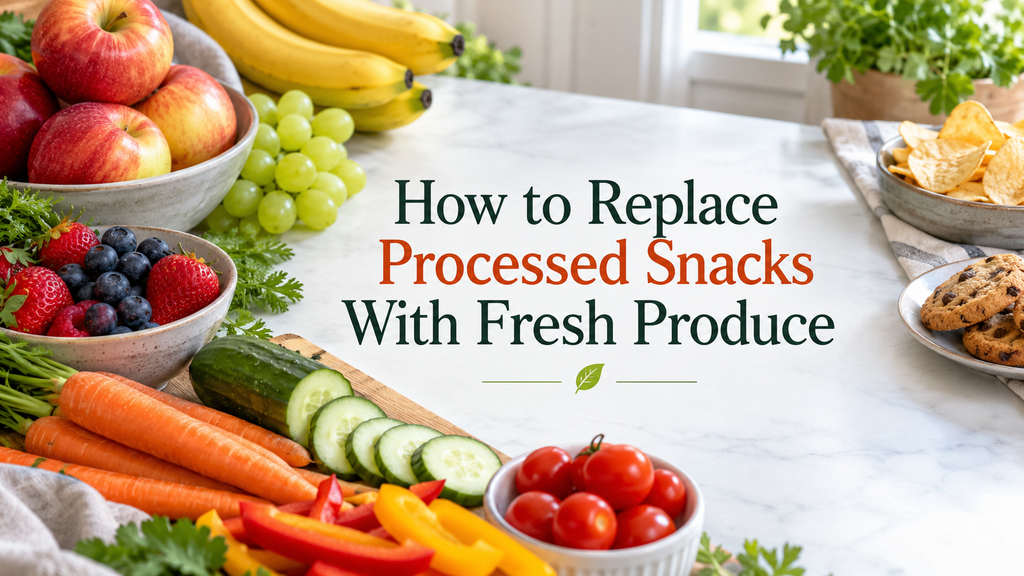
Fresh fruits and vegetables offer a simple alternative. They provide natural flavor, color, texture, fiber, vitamins, minerals, and water. Replacing processed snacks with fresh produce does not mean that every snack has to become boring or difficult to prepare. With a few practical changes, fruits and vegetables can become some of the easiest and most enjoyable foods to eat throughout the day.
Start With Small Changes
Changing eating habits becomes easier when the process is gradual.
If you usually eat several processed snacks every day, you do not have to remove all of them immediately. Start by replacing one snack with fresh produce. You might eat an apple instead of packaged cookies in the afternoon or choose cucumber slices instead of salty crackers.
Once this change feels normal, replace another processed snack.
Small changes are easier to maintain because they allow your taste preferences and daily routine to adjust naturally. Over time, reaching for fresh produce can become just as automatic as opening a packet of chips once was.
Keep Fresh Fruit Where You Can See It
Visibility has a strong influence on food choices.
When fruit is hidden inside a refrigerator drawer, it is easy to forget about it. A bowl filled with apples, oranges, bananas, pears, or other suitable fruits placed on a kitchen counter or dining table makes healthy snacking much easier.
Seeing fresh fruit regularly reminds you that it is available.
If a bag of cookies is the first food you notice when you enter the kitchen, you may choose it without thinking. When a colorful fruit bowl is more visible, the healthier option becomes easier to remember.
You can also keep washed fruit in a convenient place in the refrigerator.
Prepare Vegetables in Advance
One reason people choose processed snacks is convenience. A packet can be opened within seconds.
Vegetables can be almost as convenient when they are prepared ahead of time.
Wash and cut carrots, cucumbers, bell peppers, celery, radishes, or other vegetables that you enjoy. Store them in clean containers in the refrigerator so they are ready when hunger appears.
Preparing vegetables once or twice during the week can save time on busy days.
Instead of washing and chopping vegetables every time you want a snack, you simply open the container and start eating.
Choose Naturally Sweet Fruits for Sugar Cravings
Many processed snacks are popular because people enjoy sweet flavors.
Fresh fruit can help satisfy this preference naturally. Bananas, grapes, mangoes, oranges, berries, melons, apples, pears, peaches, and other fruits provide sweetness along with useful nutrients.
A ripe banana can be especially satisfying when you want something soft and sweet. Chilled grapes can feel like a refreshing treat. Apple slices provide sweetness with a crisp texture.
The goal is not to pretend that fruit tastes exactly like candy or cake. It does not.
Instead, allow yourself to appreciate the natural sweetness and flavor of fruit. As you eat fewer highly sweetened processed foods, the sweetness of fresh fruit may become more noticeable and enjoyable.
Replace Crunchy Snacks With Crunchy Vegetables
Sometimes a craving is connected to texture rather than a particular food.
If you enjoy crunchy chips or crackers, try choosing vegetables that provide a similar satisfying crunch.
Carrots, cucumber slices, bell pepper strips, celery, radishes, and snap peas are useful options.
You can eat them plain or pair them with a simple dip such as hummus or yogurt based dip. This creates a more filling snack while keeping fresh vegetables at the center of the meal.
Crunchy fruits can also work well. Apples and firm pears are excellent choices when you want something crisp.
Make Fruit Easy to Carry
One of the biggest advantages of packaged snacks is portability.
Fortunately, many fruits are naturally portable too.
Bananas, apples, oranges, pears, mandarins, and grapes can easily be taken to work, school, university, or while traveling.
Before leaving home, place one or two fruits in your bag. If you know that fresh food is already available when hunger appears, you are less likely to buy processed snacks from a vending machine or convenience store.
For cut fruit, use a small reusable container.
A little preparation before leaving home can make a large difference later in the day.
Create a Colorful Snack Plate
Healthy snacks do not have to look plain.
A colorful plate can make fresh produce more appealing, especially for children and people who enjoy variety.
Try combining several fruits or vegetables instead of eating only one item.
For example, you could prepare a plate with apple slices, grapes, strawberries, cucumber, and carrot sticks.
Different colors usually provide different flavors and textures. This makes the snack more interesting and encourages variety in your diet.
A beautiful plate of fresh produce can feel much more enjoyable than eating directly from a packet.
Pair Produce With Filling Foods
Sometimes fruit or vegetables alone may not feel satisfying enough, particularly when there is a long gap between meals.
Pairing produce with another nourishing food can create a more balanced snack.
Apple slices can be eaten with a small amount of nut butter. Carrot sticks can be paired with hummus. Fresh berries can be added to plain yogurt. Cucumber and tomato can be eaten with cottage cheese. A banana can be combined with a small handful of nuts.
These combinations provide different nutrients and can help make snacks more satisfying.
Fresh produce remains an important part of the snack while additional foods provide variety and substance.
Stop Buying Large Amounts of Processed Snacks
Your home environment can strongly influence what you eat.
If cupboards are filled with cookies, chips, crackers, sweets, and other packaged snacks, resisting them every day requires repeated effort.
One simple strategy is to buy fewer of these products.
You do not necessarily have to ban every processed snack from your home. Instead, reduce how much you purchase and increase the amount of fresh produce available.
When fruits and vegetables are the easiest foods to find, you are more likely to eat them.
Healthy choices become simpler when your kitchen supports them.
Try Different Fruits and Vegetables
Some people say they do not enjoy fresh produce, but they may simply be eating the same few options repeatedly.
There are many fruits and vegetables available, and each has a different taste and texture.
If you are tired of apples, try pears, kiwi, oranges, grapes, berries, peaches, plums, melon, pineapple, or pomegranate.
If raw carrots are becoming boring, try cucumber, bell peppers, cherry tomatoes, celery, radishes, cauliflower, or snap peas.
Seasonal produce can also bring more variety into your routine.
Experimenting with different foods helps prevent healthy eating from feeling repetitive.
Use Fruit as a Simple Dessert
Dessert is another time when processed foods often appear.
Fresh fruit can be a refreshing way to finish a meal.
A bowl of berries, sliced mango, watermelon, grapes, oranges, or mixed fruit can provide a naturally sweet ending.
You can also combine fruit with plain yogurt or sprinkle a small amount of cinnamon over sliced apples.
This does not mean you can never enjoy traditional desserts. The idea is simply to make fresh fruit a normal dessert option rather than automatically choosing heavily processed sweets every day.
Make Healthy Snacks Convenient for Children
Children often choose foods based on convenience, appearance, and familiarity.
Parents can make fresh produce easier to choose by preparing it in simple and attractive ways.
Cut apples into slices. Wash grapes and place them in small bowls. Prepare cucumber rounds or carrot sticks. Keep bananas or mandarins where children can easily see them.
Offering different colors together can make the snack more interesting.
It is also helpful for adults to eat fruits and vegetables regularly. Children often learn eating habits by observing the people around them.
When fresh produce is treated as normal everyday food, children may become more comfortable eating it.
Learn to Recognize Real Hunger
Not every desire to snack comes from physical hunger.
People sometimes eat because they are bored, stressed, tired, watching television, or simply following a habit.
Before opening a snack, take a moment to ask yourself whether you are actually hungry.
If you are hungry, choose something nourishing.
If you are simply bored, another activity may be more helpful. Drink some water, take a short walk, read something, or continue with another task.
Understanding your hunger signals can reduce unnecessary snacking and make food choices more intentional.
Do Not Expect Perfection
Healthy eating is not about making perfect choices every day.
You may sometimes want chips, cookies, chocolate, or another processed snack. Enjoying these foods occasionally does not erase the benefits of eating fruits and vegetables regularly.
The main goal is to change your usual pattern.
If most of your snacks begin to include fresh produce, your overall diet can improve even if processed foods are still eaten sometimes.
Thinking in terms of long term habits is more realistic than creating strict rules that are difficult to maintain.
Shop With Fresh Snacks in Mind
Healthy snacking begins before hunger appears.
When grocery shopping, choose fruits and vegetables specifically for snacks rather than buying produce only for main meals.
Think about your week.
If you need snacks for work, buy portable fruits. If you spend most of your time at home, choose vegetables that can be washed and cut in advance. If your children need school snacks, select fruits that are easy to pack.
Buying food with a clear purpose reduces waste and makes it more likely that the produce will actually be eaten.
Keep Your Choices Simple
You do not need complicated recipes to replace processed snacks with fresh produce.
An apple is already a snack.
A banana is already a snack.
A bowl of grapes is already a snack.
Carrot sticks, cucumber slices, or a handful of berries require very little preparation.
People sometimes believe healthy eating must involve elaborate meal preparation. In reality, some of the healthiest foods are also the simplest.
Fresh produce can fit into busy lifestyles when we stop making healthy eating more complicated than necessary.
Build a Routine That Works for You
Everyone has different schedules and eating habits.
Some people become hungry during the morning. Others need an afternoon snack. Some prefer something light after dinner.
Notice when you usually reach for processed foods and prepare a fresh alternative for those moments.
If you normally eat chips at 4 PM, have fruit or prepared vegetables available at that time.
If you often eat cookies with evening tea, try sliced fruit on some days.
Connecting fresh produce with an existing routine can make the new habit easier to remember.
Final Thoughts
Learning how to replace processed snacks with fresh produce is not about following a strict diet. It is about making simple everyday choices that gradually improve the quality of your food.
Start with one snack. Keep fruit visible. Prepare vegetables ahead of time. Carry portable produce when you leave home. Experiment with different colors, textures, and flavors. Pair fruits and vegetables with filling foods when necessary.
Most importantly, make fresh produce convenient.
Processed snacks are popular partly because they are easy to reach. When fruits and vegetables become equally easy to access, choosing them requires much less effort.
Over time, fresh produce can become a natural part of your snacking routine rather than something you feel forced to eat. A kitchen filled with colorful fruits and vegetables gives you many simple choices, and every healthier snack is a small step toward a more balanced way of eating.