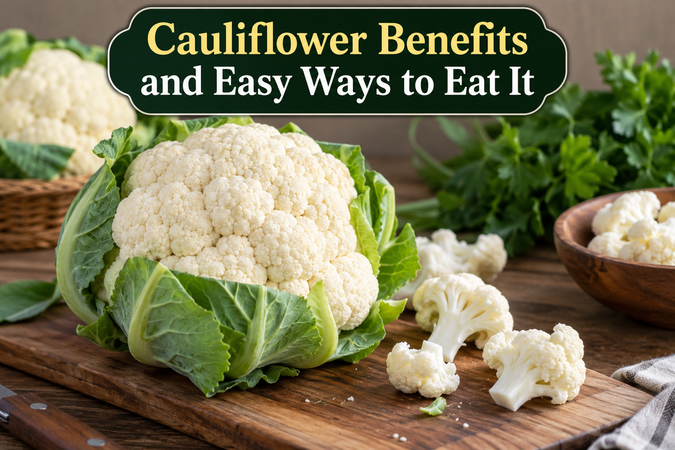
Cauliflower is one of those simple vegetables that can easily become part of almost any healthy diet. It may not look as colorful as carrots, tomatoes, spinach, or bell peppers, but its nutritional value makes it an excellent food choice. The mild taste of cauliflower also makes it easy to combine with many different ingredients.
When I look at cauliflower from a nutritional point of view, what stands out most is its balance. It provides important vitamins, minerals, fiber, antioxidants, and plant compounds while remaining naturally low in calories. This combination makes cauliflower useful for people who simply want to improve the quality of their everyday meals.
Another advantage is its flexibility in cooking. Cauliflower can be boiled, roasted, steamed, baked, mashed, added to soups, cooked with spices, or turned into cauliflower rice. Because its flavor is mild, it works well with many different cuisines.
Understanding the benefits of cauliflower and learning easy ways to eat it can make this familiar vegetable much more interesting.
Nutritional Value of Cauliflower
Cauliflower contains several nutrients that the body needs for normal daily functions. It is particularly known for providing vitamin C, vitamin K, folate, fiber, and other useful micronutrients.
Vitamin C is an important antioxidant and also supports normal immune function. Folate is involved in the formation of new cells, while vitamin K contributes to normal blood clotting and bone health.
Cauliflower also contains small amounts of minerals such as potassium and magnesium.
One of its biggest nutritional advantages is that you can eat a satisfying portion without adding a large number of calories to your meal. This makes cauliflower useful when trying to create meals that are both filling and nutritionally balanced.
Cauliflower Is a Good Source of Vitamin C
People often associate vitamin C mainly with citrus fruits, but vegetables can also make an important contribution to daily vitamin C intake.
Cauliflower naturally contains vitamin C, which performs several useful roles in the body.
Vitamin C supports the normal functioning of the immune system. It is also required for collagen production. Collagen is an important structural protein found in the skin, bones, cartilage, and other tissues.
Vitamin C also works as an antioxidant. Antioxidants help protect cells from oxidative stress caused by unstable molecules known as free radicals.
Eating a variety of fruits and vegetables, including cauliflower, can help provide the body with a regular supply of antioxidant nutrients.
Cauliflower Supports Healthy Digestion
One of the important cauliflower benefits is its fiber content.
Dietary fiber plays an important role in digestive health. It adds bulk to food passing through the digestive system and supports regular bowel movements.
Fiber also serves as food for some beneficial bacteria living in the digestive tract. A diverse population of beneficial gut bacteria is associated with normal digestive function.
Adding vegetables such as cauliflower to meals is an easy way to increase fiber intake naturally.
However, people who are not used to eating fiber rich vegetables may prefer to increase their intake gradually. Eating a large amount of cauliflower suddenly may cause temporary gas or bloating in some individuals.
Cauliflower May Help With Healthy Weight Management
Cauliflower can fit very well into a balanced eating plan designed for healthy weight management.
It is naturally low in calories while containing water and dietary fiber. Foods with this combination can add volume to meals without dramatically increasing their calorie content.
This can help make meals feel more satisfying.
For example, adding roasted cauliflower to a plate can increase the amount of food you are eating while also supplying useful nutrients.
Some people also replace a portion of rice or potatoes with cauliflower. This does not mean traditional foods need to be completely removed. Instead, cauliflower can simply provide another option for adding more vegetables to meals.
Long term weight management depends on overall eating habits, activity, sleep, and many other factors. No single vegetable causes weight loss by itself, but cauliflower can certainly be part of a healthy lifestyle.
Cauliflower Contains Beneficial Plant Compounds
Cauliflower belongs to the cruciferous vegetable family.
Other vegetables in this family include broccoli, cabbage, kale, Brussels sprouts, and radishes.
Cruciferous vegetables naturally contain compounds known as glucosinolates. During cutting, chewing, and digestion, these substances can be converted into other biologically active compounds.
Scientists continue to study cruciferous vegetables because of the interesting plant chemicals they contain.
This is another reason why eating different vegetables throughout the week is a good idea. Different vegetables provide different combinations of vitamins, minerals, antioxidants, and natural plant compounds.
Cauliflower Can Support Heart Friendly Eating
A heart friendly diet usually emphasizes vegetables, fruits, whole grains, legumes, nuts, seeds, and other nutrient rich foods.
Cauliflower fits naturally into this type of eating pattern.
Its fiber content can contribute to overall dietary fiber intake, while its naturally low fat content makes it easy to include in many balanced meals.
The way cauliflower is prepared also matters.
Steaming, roasting, or lightly cooking cauliflower with herbs and spices can keep the dish relatively simple. Heavy amounts of butter, cream, cheese, or salty sauces can greatly change the nutritional profile of the meal.
For everyday eating, simple cooking methods are often the best choice.
Cauliflower Supports a Varied Healthy Diet
One of the most important lessons in nutrition is that variety matters.
Eating only one healthy vegetable every day does not provide the same range of nutrients as eating several different vegetables.
Cauliflower can be combined with spinach, carrots, peas, tomatoes, peppers, beans, lentils, and many other foods.
A plate containing several different plant foods often provides a wider variety of nutrients and natural compounds.
Instead of thinking of cauliflower as a special health food, it is more useful to see it as one part of an overall balanced eating pattern.
Cauliflower Is Naturally High in Water
Fresh cauliflower contains a significant amount of water.
Water rich vegetables contribute to the total amount of fluid we consume through food. Drinking water remains essential, but fruits and vegetables can also contribute to normal hydration.
Foods that contain both water and fiber can also create greater meal volume.
This is one reason vegetables are commonly recommended as an important part of everyday meals.
Cauliflower Provides Folate
Folate is a B vitamin needed for important processes inside the body.
It contributes to normal cell division and is especially important during periods of rapid growth.
Cauliflower provides folate along with other vegetables, beans, lentils, leafy greens, and fortified foods.
Rather than depending on only one source, eating a varied diet is the best way to obtain a broad range of essential nutrients.
Cauliflower Can Be an Alternative to Refined Foods
One reason cauliflower has become popular is its ability to replace part of certain foods in creative recipes.
Finely chopped cauliflower can be used as cauliflower rice. Mashed cauliflower can sometimes be combined with potatoes. It can also be used in vegetable based pizza crusts and baked dishes.
These alternatives are especially useful for people who want to increase their vegetable intake.
It is important to remember that foods such as rice and potatoes can also be part of a healthy diet. Cauliflower does not need to completely replace them.
A more practical approach is to use cauliflower as another option that helps create variety.
Easy Ways to Eat Cauliflower
Knowing that cauliflower is nutritious is useful, but knowing how to prepare it makes it much easier to include regularly.
Fortunately, cauliflower is extremely versatile.

Eat Steamed Cauliflower
Steaming is one of the easiest ways to prepare cauliflower.
Cut the cauliflower into evenly sized florets and steam them until they become tender but not overly soft.
Steamed cauliflower can be served with black pepper, herbs, lemon juice, or a small amount of olive oil.
This simple preparation allows the natural flavor of the vegetable to remain noticeable.
Roast Cauliflower in the Oven
Roasting can completely change the flavor of cauliflower.
The edges become lightly browned while the inside becomes tender. This creates a deeper and slightly sweeter taste compared with boiling.
Place cauliflower florets on a baking tray, add a small amount of oil, and season them with spices.
Paprika, garlic, cumin, black pepper, turmeric, and herbs all work well.
Roasted cauliflower can be served as a side dish or added to grain bowls and salads.
Make Cauliflower Rice
Cauliflower rice is one of the easiest ways to increase vegetable intake.
The cauliflower is finely chopped or processed until the pieces resemble grains of rice.
It can then be cooked briefly in a pan.
Cauliflower rice can be eaten on its own, mixed with regular rice, or served alongside beans, chicken, fish, lentils, and vegetables.
Mixing cauliflower rice with normal rice is a particularly easy option for people who are trying it for the first time.
Add Cauliflower to Curry
Cauliflower works very well in curries because it absorbs spices and sauces easily.
It can be combined with potatoes, peas, chickpeas, lentils, tomatoes, or other vegetables.
Spices such as turmeric, cumin, coriander, garlic, ginger, and chili pair naturally with cauliflower.
A homemade cauliflower curry can provide a satisfying way to eat more vegetables while enjoying familiar flavors.
Add Cauliflower to Soup
Cauliflower is also excellent in soups.
It can be added as small florets to vegetable soup or blended into a creamy texture.
Blended cauliflower can make soup feel rich and smooth even without large amounts of cream.
Combining cauliflower with garlic, onion, herbs, potatoes, carrots, or beans can create a filling homemade meal.
Try Mashed Cauliflower
Mashed cauliflower is simple to prepare.
Cook the florets until tender, drain them well, and mash or blend them.
A little black pepper, garlic, herbs, or olive oil can add flavor.
You can also mix mashed cauliflower with regular mashed potatoes. This gives the familiar texture of potatoes while increasing the vegetable content of the meal.
Add Raw Cauliflower to Salads
Cauliflower does not always need to be cooked.
Fresh cauliflower florets can be eaten raw when properly washed and prepared.
Small crunchy pieces work well in salads with cucumber, carrots, lettuce, cabbage, tomatoes, or other vegetables.
Raw cauliflower can also be served with hummus or another simple dip as a snack.
Use Cauliflower in Stir Fries
Cauliflower is excellent for quick stir fried meals.
Cut it into small pieces so that it cooks evenly. Combine it with vegetables such as peppers, carrots, peas, onions, mushrooms, or broccoli.
Add your preferred herbs, spices, or light sauce.
This method is useful when you need a quick meal but still want plenty of vegetables.
Bake Cauliflower With Herbs and Spices
Baked cauliflower can be prepared in many ways.
Instead of relying heavily on cheese or cream, try seasoning it with garlic, herbs, black pepper, paprika, or other spices.
This keeps the recipe flavorful while allowing cauliflower to remain the main ingredient.
It can be served with grilled protein, beans, lentils, or whole grains.
How to Choose Fresh Cauliflower
When buying cauliflower, look for a head that feels firm and compact.
The florets should generally appear fresh rather than soft or heavily discolored. The leaves surrounding the cauliflower should also look reasonably fresh.
Small natural marks do not always mean the vegetable is bad, but cauliflower with strong unpleasant odors, excessive softness, or clear signs of spoilage should be avoided.
Fresh cauliflower can be stored in the refrigerator until you are ready to use it.
Washing it shortly before preparation rather than storing it wet may help maintain its quality.
Is Cauliflower Healthy to Eat Regularly?
For most people, cauliflower can be enjoyed regularly as part of a varied diet.
It provides useful nutrients and can be prepared in many different ways.
However, eating a wide range of vegetables is more beneficial than depending heavily on one food.
A healthy eating pattern might include cauliflower on some days and broccoli, leafy greens, carrots, tomatoes, beans, peas, peppers, or other vegetables on different days.
This variety helps provide a broader nutritional profile.
Final Thoughts
The benefits of cauliflower go far beyond its simple appearance. It is a nutrient rich vegetable that provides vitamin C, folate, fiber, water, antioxidants, and beneficial natural plant compounds.
Cauliflower can support digestive health, contribute to a heart friendly eating pattern, help create filling meals, and make it easier to increase daily vegetable intake.
Perhaps its greatest advantage is versatility.
You can steam it, roast it, mash it, turn it into cauliflower rice, add it to curry, blend it into soup, include it in stir fries, or enjoy it raw in salads.
There is no need to follow complicated recipes to enjoy cauliflower. Simple preparation methods with herbs, spices, and other fresh ingredients are often enough.
Good nutrition usually comes from consistent everyday choices rather than one special food. Adding cauliflower alongside a variety of fruits, vegetables, whole grains, legumes, and other nutritious foods can be a simple and practical step toward a more balanced diet.