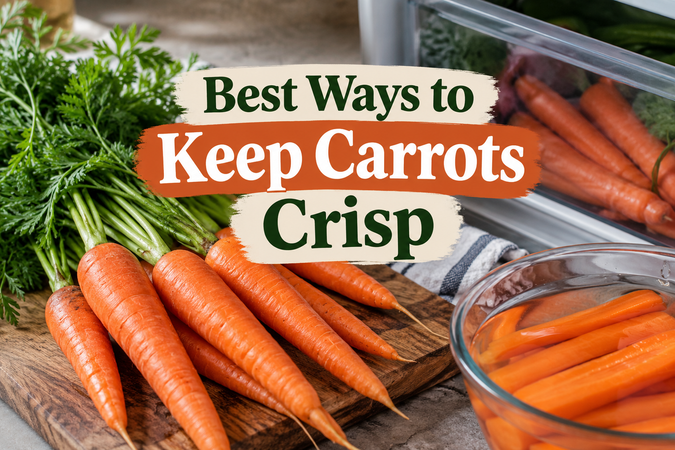
Carrots are one of the most useful vegetables to keep in the kitchen. They can be eaten raw, added to salads, cooked in soups, used in curries, roasted with other vegetables, or enjoyed as a simple snack. Fresh carrots have a naturally firm texture and a pleasant crunch, but they can quickly become soft if they are not stored correctly. Learning the best ways to keep carrots crisp can help reduce food waste and make everyday meal preparation easier.
Carrots contain a large amount of water, which is one of the main reasons they feel fresh and crunchy. Once they begin losing moisture, their texture starts changing. They may become flexible, dry, or slightly rubbery. The good thing is that proper storage can slow this process and help carrots stay fresh for much longer.
Why Carrots Lose Their Crisp Texture
Before learning how to keep carrots crisp, it helps to understand why they become soft. Fresh carrots are made up of plant cells filled with water. This internal moisture creates pressure inside the cells and keeps the carrot firm.
When carrots are exposed to dry refrigerator air, they slowly lose water. As moisture escapes, the cells become less firm, and the carrot starts to bend instead of snapping.
Temperature also plays an important role. Carrots generally stay fresh longer in a cool environment. Warm temperatures can increase moisture loss and speed up natural deterioration.
Another common problem is improper packaging. Leaving carrots uncovered in the refrigerator can cause them to dry out much faster.
Remove Carrot Greens Before Storage
One of the simplest ways to keep carrots crisp is to remove the green tops before storing them.
If you buy carrots with the leaves still attached, cut the greens off as soon as possible. The leaves continue using moisture from the carrot after harvesting. This can make the root lose firmness more quickly.
You do not need to cut into the carrot itself. Simply remove the leafy tops while leaving the root intact.
The greens can be stored separately if you plan to use them. They can be added to certain sauces, soups, or homemade vegetable stock.
Removing the greens helps the carrot retain more moisture and usually improves its storage life.
Store Carrots in the Refrigerator
The refrigerator is usually the best place to store fresh carrots.
A cool temperature slows moisture loss and helps preserve texture. The vegetable drawer is especially useful because it is designed to maintain suitable humidity levels for fresh produce.
Before placing carrots in the refrigerator, inspect them carefully. Remove any damaged or spoiled carrots because deterioration can spread more quickly when vegetables are stored closely together.
If the carrots are clean and dry, place them in a storage container or food safe bag. Avoid leaving them completely uncovered.
Proper refrigeration is one of the most dependable methods for keeping carrots crisp for everyday use.
Use an Airtight Container
An airtight container can help reduce moisture loss.
Place clean carrots inside a container with a tight lid. The closed environment protects them from the dry air circulating inside the refrigerator.
You can place a clean paper towel inside the container if there is too much moisture. The towel can absorb extra condensation and help prevent the carrots from becoming excessively wet.
Check the container occasionally. If the paper towel becomes very damp, replace it with a dry one.
This simple storage method is useful for both whole carrots and peeled carrots.
Store Carrots in Water
Another popular method is storing carrots in water.
Peeled or trimmed carrots can be placed inside a container and completely covered with clean cold water. Close the container and store it in the refrigerator.
The water helps prevent the carrots from drying out. This can be especially helpful for carrots that have already been peeled.
Change the water regularly so it stays fresh and clean. Fresh water also helps maintain the quality of the carrots.
This method can keep carrots firm and convenient for salads, snacks, and quick cooking.
However, carrots should not be forgotten in the container for long periods. Check their smell, appearance, and texture before using them.
Keep Carrots Away From Certain Fruits
Carrots should be stored carefully around fruits that release ethylene gas.
Ethylene is a natural plant hormone produced by many fruits during ripening. Apples, pears, bananas, peaches, and some other fruits can release noticeable amounts of ethylene.
Long exposure may affect the flavor or quality of certain vegetables.
For better storage, keep carrots in the vegetable drawer or in their own sealed container rather than placing them directly beside ripening fruit.
Separating produce can help maintain better freshness throughout the refrigerator.
Do Not Wash Carrots Too Early
If carrots are very fresh and still have some natural soil on them, you do not always need to wash them immediately.
Excess moisture can sometimes encourage spoilage if carrots are stored wet.
If you prefer washing them before storage, dry them thoroughly with a clean kitchen towel before placing them in a container.
The important thing is to avoid storing carrots while they are dripping wet.
For long term freshness, many people prefer washing carrots shortly before they are used.
Keep Cut Carrots Crisp
Cut carrots require slightly more care because the exposed surfaces lose moisture faster.
Carrot sticks, slices, and peeled pieces can be stored in cold water inside a sealed refrigerator container.
This method is useful when preparing healthy snacks in advance.
You can cut several carrots at the beginning of the week and keep them ready for lunch boxes, salads, or quick snacks.
Check the water frequently and replace it when necessary.
Keeping prepared carrots properly refrigerated saves time while helping them stay crunchy.

Restore Soft Carrots With Cold Water
Sometimes carrots become soft even though they are still safe to eat.
In many cases, placing soft carrots in cold water can improve their texture.
Fill a bowl or container with cold water and place the carrots inside. Let them sit in the refrigerator for several hours.
The carrots may absorb some water and become firmer.
This method works best when the softness is caused mainly by dehydration rather than spoilage.
If the carrots have an unpleasant smell, heavy discoloration, slime, or visible mold, they should be discarded.
Cold water can refresh dehydrated carrots, but it cannot make spoiled carrots safe.
Choose Fresh Carrots at the Store
Proper storage begins before you reach home.
When buying carrots, choose ones that feel firm and solid. Fresh carrots should not feel rubbery or unusually soft.
Look for smooth carrots with good color and minimal damage. Small cracks are not always a serious problem, but deep cuts can reduce storage quality.
Avoid carrots with large soft areas, strong discoloration, or signs of decay.
If the green tops are attached, fresh looking greens can sometimes indicate recent harvesting, although the condition of the root itself is more important.
Starting with high quality carrots gives you a better chance of keeping them crisp for longer.
Keep the Refrigerator Clean
A clean refrigerator can help protect fresh vegetables.
Spilled liquids, spoiled produce, and strong food odors can affect storage conditions.
Clean the vegetable drawer regularly and remove old vegetables before adding new ones.
Keeping the storage area dry and organized also makes it easier to notice carrots that need to be used soon.
Good refrigerator habits can improve the quality of many fruits and vegetables, not only carrots.
Avoid Freezing Carrots for Raw Crunch
Freezing can preserve carrots for future cooking, but frozen carrots usually do not keep the same crisp raw texture after thawing.
Water inside the carrot expands when frozen, which can affect its cellular structure.
After thawing, carrots may become softer.
For this reason, freezing is better when carrots will later be used in soups, stews, casseroles, or cooked dishes.
If your goal is to keep carrots crisp for raw eating, refrigeration is usually the better option.
Store Baby Carrots Properly
Baby carrots can also lose moisture quickly.
Keep them sealed in their original package if it is designed for refrigerated storage, or transfer them to a clean airtight container.
If they start drying out, cold water can sometimes help restore firmness.
Because baby carrots have already been processed and peeled, they may require more moisture protection than whole unpeeled carrots.
Always keep them refrigerated and check them regularly for freshness.
Use Older Carrots First
Good kitchen organization can prevent vegetables from being forgotten.
When buying new carrots, place older carrots where they are easier to reach.
Use the older batch first before opening the newer one.
This simple habit is often called first in, first out storage. It is commonly used in professional kitchens but works equally well at home.
Using vegetables in the correct order can reduce waste and help you enjoy them while they still have their best texture.
Signs That Carrots Are No Longer Fresh
A carrot becoming slightly flexible does not always mean it is spoiled. Sometimes it simply needs more moisture.
However, certain signs indicate that the carrot should not be used.
Visible mold is an obvious warning sign. A slimy surface, strong unpleasant odor, or severe decay can also indicate spoilage.
Dark areas should be inspected carefully. Minor surface marks may be removable, but deeply damaged or rotting carrots are better discarded.
Always use your senses and good judgment before eating stored vegetables.
Best Everyday Method for Crisp Carrots
For most households, a simple refrigerator method works very well.
Remove the leafy tops, keep the carrots dry, place them in a suitable container, and store them in the vegetable drawer.
If the carrots are peeled or cut, storing them in cold water can help maintain firmness.
Keeping carrots away from warm temperatures and dry refrigerator air is the main goal.
There is no need for complicated equipment. Simple storage habits can make a noticeable difference.
Final Thoughts
Learning the best ways to keep carrots crisp is mainly about protecting their natural moisture. Carrots become soft when they lose water, so cool temperatures and proper containers are important.
Removing the green tops, storing whole carrots in the refrigerator, using airtight containers, and keeping peeled carrots in clean cold water can all help maintain freshness.
It is also useful to buy firm carrots, avoid storing them beside certain ripening fruits, and use older carrots before newer ones.
With a little care, carrots can remain crunchy, fresh, and ready for everyday meals. Proper storage not only improves texture but also helps reduce unnecessary food waste. Whether you enjoy carrots in salads, lunch boxes, soups, or simple snacks, keeping them crisp makes them more enjoyable and convenient to use.